
Mission & Beneficiaries
Clarify public value, core service targets, and what the organization does not do.
For associations, foundations, incorporated bodies, and non-profit education and culture organizations, the Foundation helps connect mission, governance, public-benefit projects, resource mobilization, impact management, and public communication into one workable system. The goal of support is not more activities, but a clear answer to: who you serve, who decides, how resources are allocated, how impact is proven, and how public trust is sustained.
Clarify public value, core service targets, and what the organization does not do.
Clarify decision-making, oversight, delegation, execution, and reporting.
Let programs connect with one another, instead of stacking new activities each year.
Preserve outcomes, feedback, learning, and the basis for the next round of improvement.
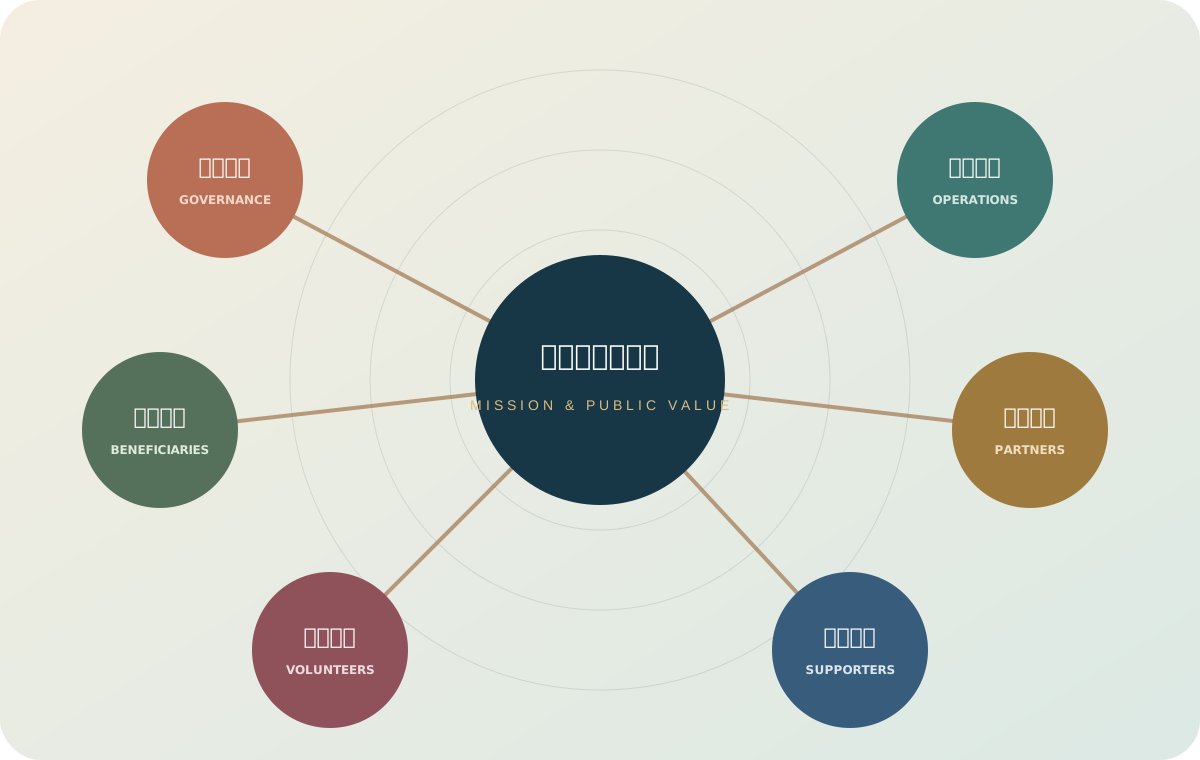
Associations and nonprofits often start with a group of people who share the same vision, but as service recipients, projects, partners, and resources grow, relying solely on core members can lead to centralized decision-making, blurred work boundaries, projects competing for resources, and results that fail to accumulate.
Our support work begins by clarifying the organization's mission and beneficiaries, then maps the board, executive team, project leads, volunteers, donors, and external partners onto a single governance chart, so every role knows when to decide, when to act, and what evidence to leave behind.
Before granting support, we need to identify whether the problem lies in mission, governance, projects, resources, or outcomes. Only by finding the right problem can we avoid blaming every difficulty on lack of funding and manpower.
Annual activities keep growing, yet it's hard to explain how each effort responds to the core mission and key beneficiaries.
There is a lack of clear authorization, reporting, and accountability boundaries among the board, secretariat, project teams, and volunteers.
Funding, manpower, venues, expertise, and partnerships are concentrated on a few individuals or a single project, leaving little resilience against risk.
Many activities are completed, yet there is a lack of complete evidence on changes in beneficiaries, execution quality, partner feedback, and learning for improvement.
The six pillars are interconnected. Mission sets project direction, governance defines responsibility, resources determine feasibility, and evidence of impact enables learning, communication, and trust.
Clarify core public value, key beneficiaries, scope of service, priority issues, and annual strategic choices.
MISSION · STRATEGYEstablish authorization, oversight, decision-making, and reporting links among the board, executive leadership, project leads, and administration.
GOVERNANCE · ACCOUNTABILITYDesign a program portfolio based on mission, beneficiaries, and resources, avoiding competition or duplication among projects.
PROGRAM · PORTFOLIOIntegrate funding, manpower, volunteers, expertise, venues, media, and networks to build a diverse and mutually beneficial support structure.
RESOURCE · PARTNERSHIPSet observable outcome indicators and preserve feedback from beneficiaries, teams, and partners to drive project improvement and organizational learning.
IMPACT · LEARNINGCommunicate mission, methods, outcomes, and use of resources in a consistent and credible way, building public understanding and lasting trust.
BRAND · PUBLIC TRUSTClick on a role to see its core responsibilities, the governance evidence it should leave behind, and its collaboration boundaries with other roles. This is not a fixed org chart, but a starting point for building shared understanding of responsibilities.
Safeguards the organization's mission and public accountability, confirming major direction, resource commitments, and risk boundaries—rather than directly managing daily operations.
A nonprofit's annual operations should be more than an event calendar. From mission review to outcome reporting, every stage must leave evidence of decisions, execution, and learning.

Confirm this year's primary beneficiaries, priority issues, what the organization will not do, and the definition of success.
Assess each project's contribution to the mission, cost, risk, responsible roles, and required partners.
Use milestones, budgets, responsibility charts, and issue logs so projects can be adjusted along the way.
Compile changes in beneficiaries, engagement quality, partner observations, team learning, and reasons for shortfalls.
Communicate clearly and understandably, both internally for learning and externally, forming the basis for next year's decisions.
Choose a single package to match your organization's stage, or combine them into a three-month, six-month, or annual companion path. Actual scope and outputs will be confirmed together through interviews and your organization's capacity.
Suited for organizations in their early stages, in transition, or where core members lack a shared direction.
Helps the board and executive team establish clear boundaries of responsibility and a steady rhythm of reporting.
Turns public-benefit ideas into projects with clear goals, sustainable resourcing, and observable results.
Helps organizations shift from one-off fundraising thinking toward long-term, mutually beneficial resources and partnerships.
Builds an impact-tracking approach suited to your organization's scale, so public benefit isn't measured by activity count alone.
Through quarterly meetings and project reviews, gradually institutionalize governance, projects, resources, and impact.
The next page moves into "Support for Local Culture and Community Teams," focusing on local needs, resident participation, cultural assets, community collaboration, and local branding.