Performance Technique
Intonation, rhythm, tone, posture, control, and completeness of a piece—building reliable and sustainable fundamental abilities.
Starting from the personal learning journeys of Taiwanese students, we organize performance technique, musical understanding, teamwork, stage experience, learning autonomy, and cultural perspective into a growth path that can be observed, given feedback, and continuously developed. Talent development is not about pushing every child toward the same standard, but helping each learner find their own strengths, next steps, and long-term direction.
This "Music Education" section follows Taiwan's visual guidelines, primarily featuring Taiwanese students, campuses, and orchestras as settings; publicly sourced images do not represent actual foundation activities.

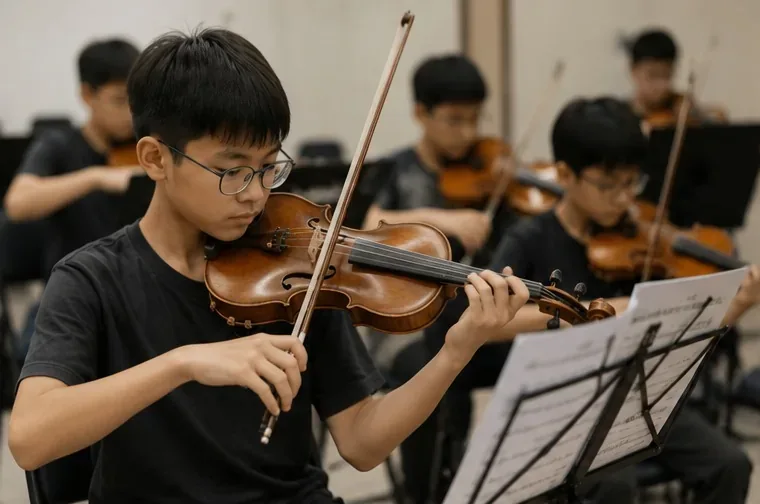
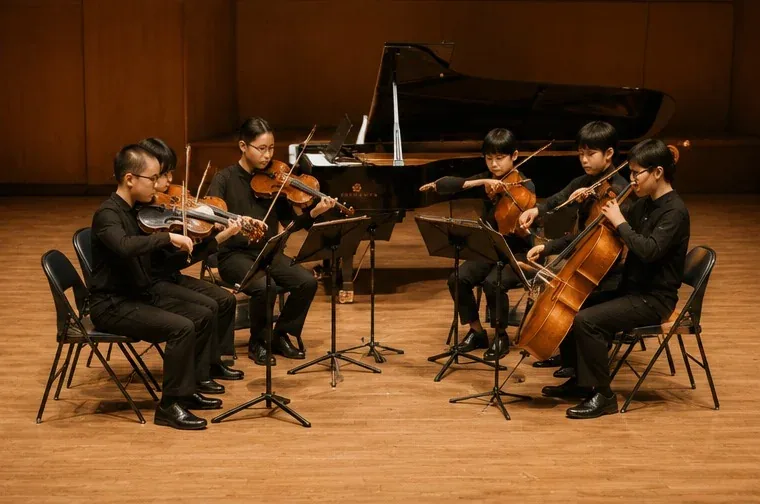
Some students reveal technical potential through solo performance, some excel at listening and collaboration, some gradually build confidence on stage, and others show distinct abilities in organizing, leading, and cultural communication. Genuine cultivation requires long-term observation, turning every lesson, rehearsal, performance, piece of feedback, and reflection into the foundation for the next stage of learning.
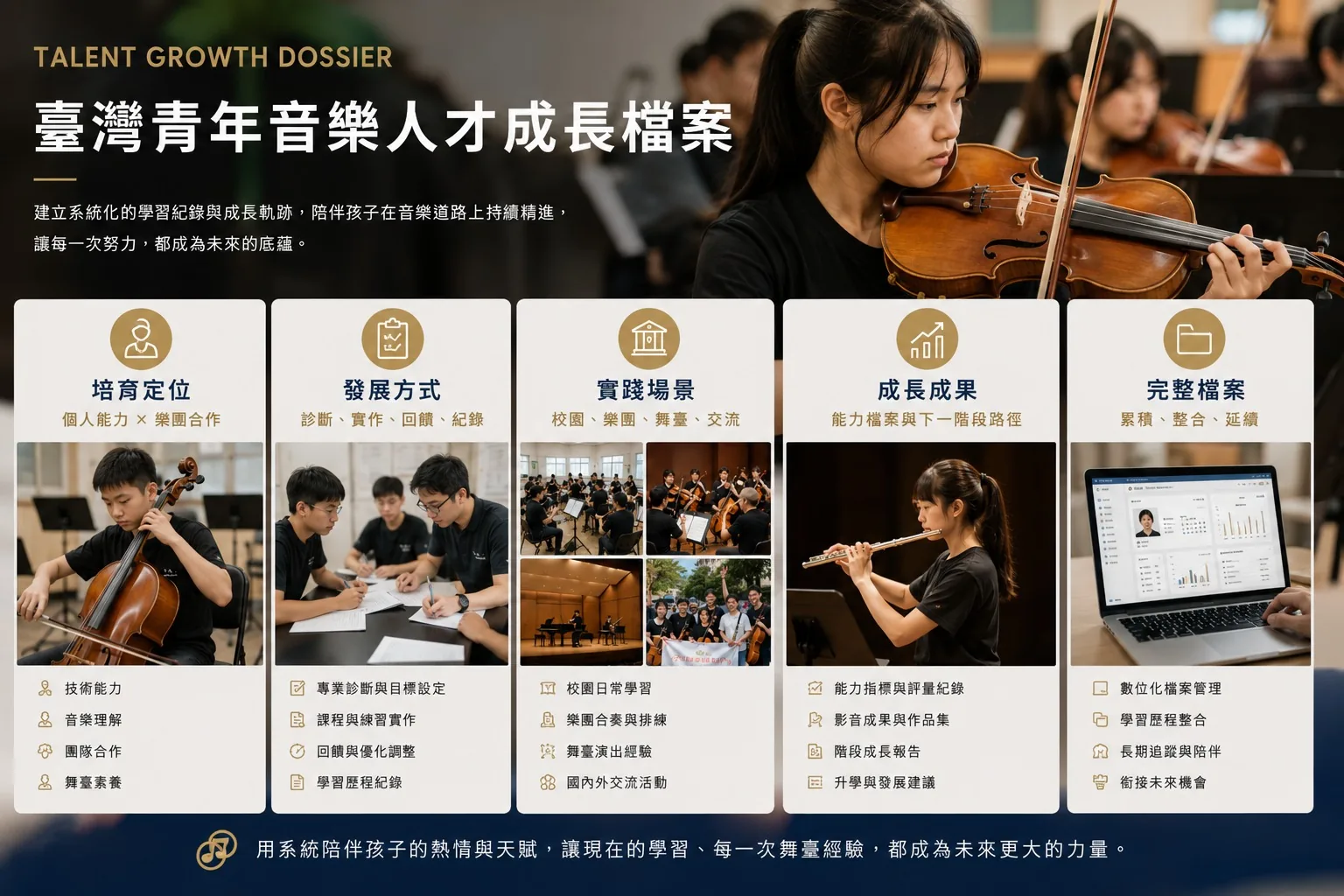
Learning technique is only the starting point. Talent development should also focus on understanding, collaboration, expression, autonomy, and cultural connection—helping students not only "play better," but also gradually understand why they learn, how to work with others, and how to move toward a bigger stage.
Intonation, rhythm, tone, posture, control, and completeness of a piece—building reliable and sustainable fundamental abilities.
From score reading, phrasing, harmony, style, and background, gradually forming one's own imagination of sound and interpretive judgment.
Listening, responding, adjusting, and taking responsibility in chamber music and orchestras—understanding how the individual becomes part of the whole.
Facing an audience, pressure, and uncertainty, learning to perform steadily, convey the emotion of a piece, and build confidence on stage.
Setting goals, planning practice, recording problems, seeking feedback, and continually refining—gradually forming one's own way of learning.
Understanding musical languages across different regions, eras, and cultures, and learning to express one's own background and viewpoint through exchange.
Students need not be confined to a single model of success. Through ongoing observation and practice, they can gradually discover whether they are better suited to focused performance, teamwork, artistic leadership, or cross-cultural expression, and plan future courses and stages accordingly.
Building deeper professional training focused on the major instrument, work completion, personal expression, and stage stability.
Through small-ensemble collaboration, deepening listening, breathing, intonation, rhythm, and shared interpretation skills.
From section principal roles and team communication to rehearsal observation and youth conducting, cultivating organizational and artistic leadership potential.
Through inter-school and international exchanges, learning to introduce works, share Taiwanese culture, and collaborate with partners from different backgrounds.
Talent development isn't a one-time selection, but a paced journey of growth. Each stage brings different tasks, and students may adjust their pace and direction as needed.
Observing interests, attitude, basic ability, and collaborative traits.
Building steady practice, basic technique, and music reading skills.
Arranging individual, sectional, or focused training based on strengths and needs.
Taking on challenges in chamber music, orchestra, stage, and exchange settings.
Building a portfolio of repertoire, footage, feedback, reflection, and learning outcomes.
Connecting to masterclasses, international exchange, advanced training, or further study.
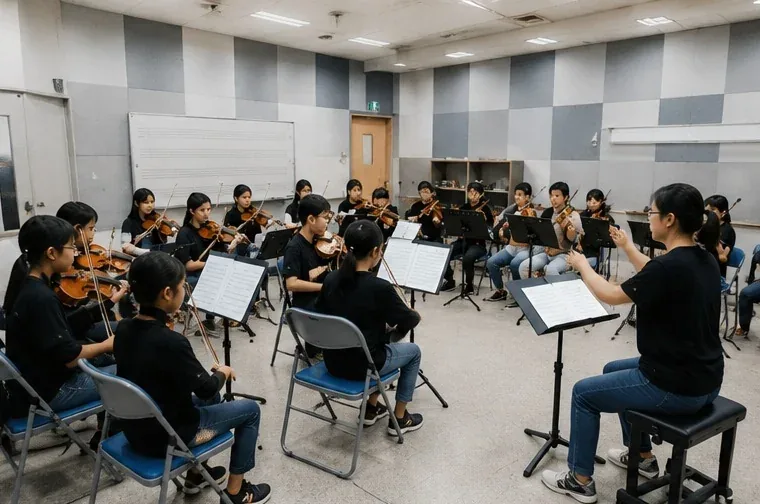
A complete talent profile shouldn't just include certificates and awards—it should also show how a student practices, receives feedback, and grows within a team, as well as what challenges lie ahead. It helps teachers, parents, and students see long-term progress together, rather than judging ability by a single result.
Schools, student ensembles, music teachers, parents, and educational institutions throughout Taiwan are welcome to inquire about individual mentorship, ensemble practice, masterclasses, showcase documentation, and pathways to international exchange.