Establish School and Educational Consensus
Confirm the orchestra's positioning, target students, administrative support, and annual development goals.
Building on the student development pathway of "Youth Orchestra Cultivation," campus orchestra (school team) development returns further to the frontlines of Taiwanese schools, starting from school-wide consensus, student recruitment, instrument resources, teaching curriculum, rehearsal systems, showcase concerts, and sustainable operation to help schools build a student orchestra that can operate long-term, keep growing, and connect with international exchange.
Imagery in this "Music Education" section is unified around Taiwanese students, Taiwanese campuses, and Taiwanese orchestras; contextual images depict the scene of music education on Taiwanese campuses.
Confirm the orchestra's positioning, target students, administrative support, and annual development goals.
Take stock of existing resources to establish workable staffing, curriculum, and rehearsal conditions.
Establish recruitment, sectioning, rehearsal, performance, parent communication, and outcome evaluation.
Connect with cross-school learning, music festivals, masterclasses, and international partner schools.
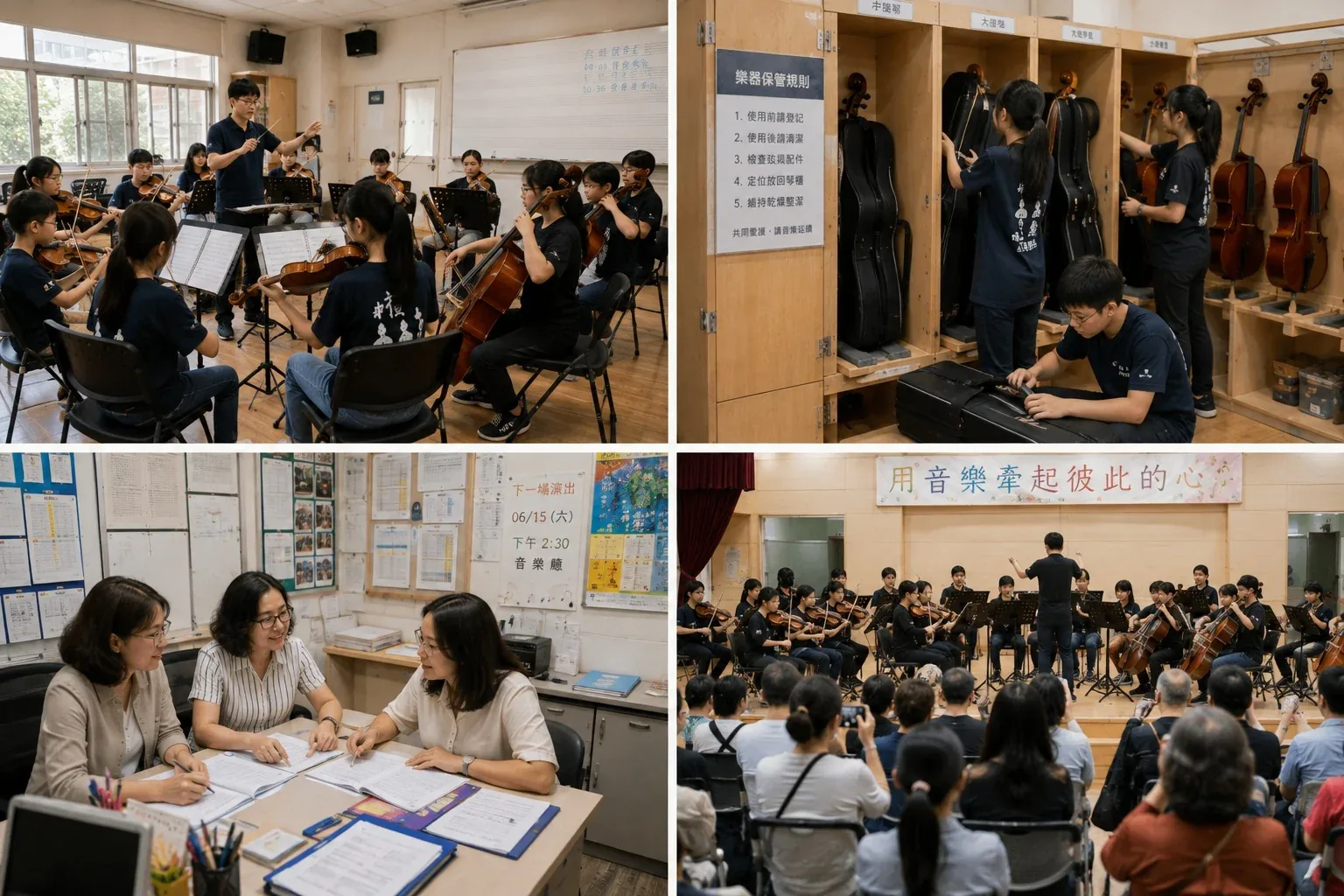
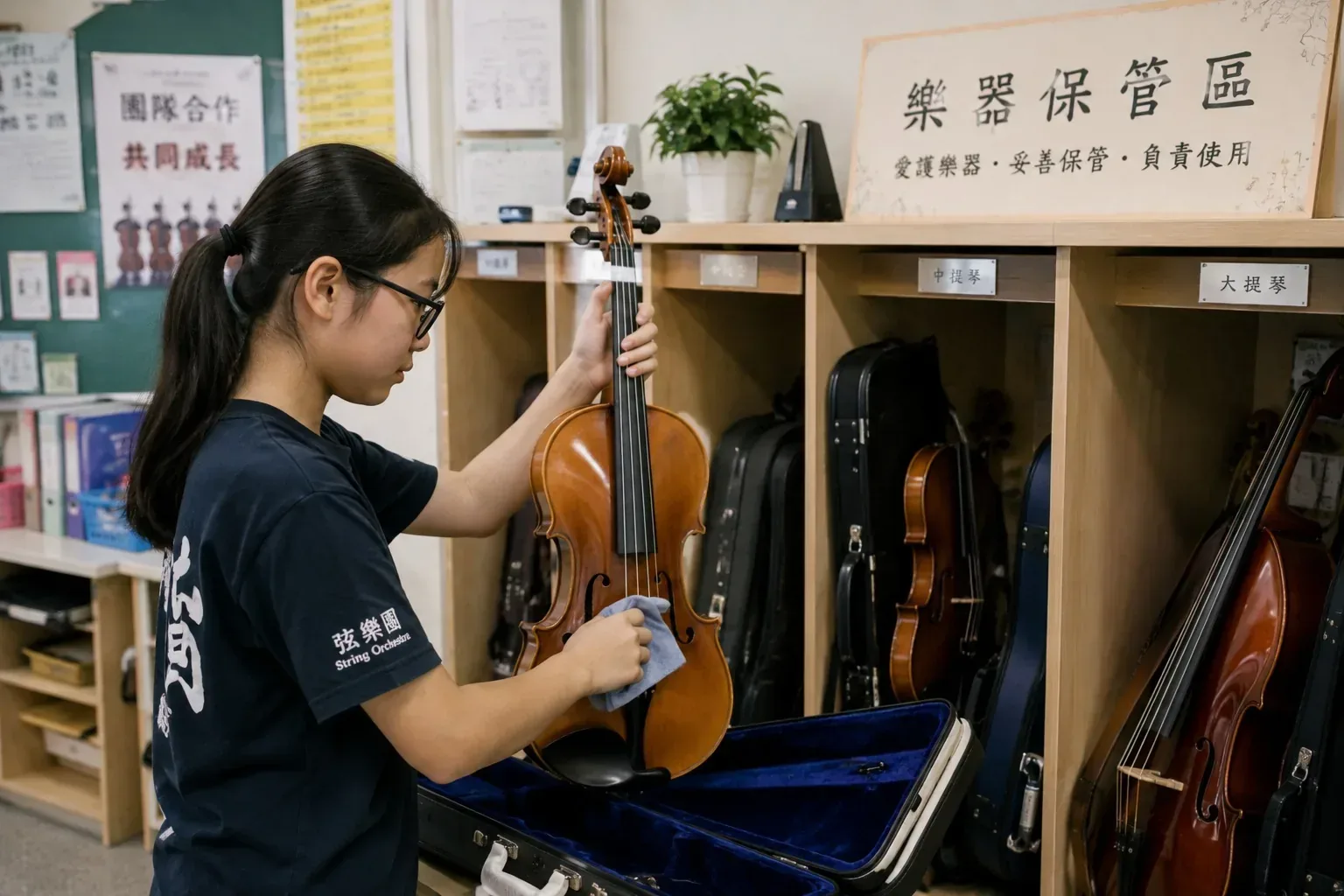
Youth orchestra development focuses on how children grow within a team; campus orchestra building goes further, addressing how schools provide the stable systems and environment needed for that growth to continue.
From administrative support, instrument care, teacher scheduling, and student recruitment, to rehearsal space, parent communication, performance planning, and funding sources — every link affects whether an orchestra can carry across school years and build a lasting campus culture.
"A truly mature campus orchestra doesn't start over each year — it passes down experience, systems, and culture from one class to the next."
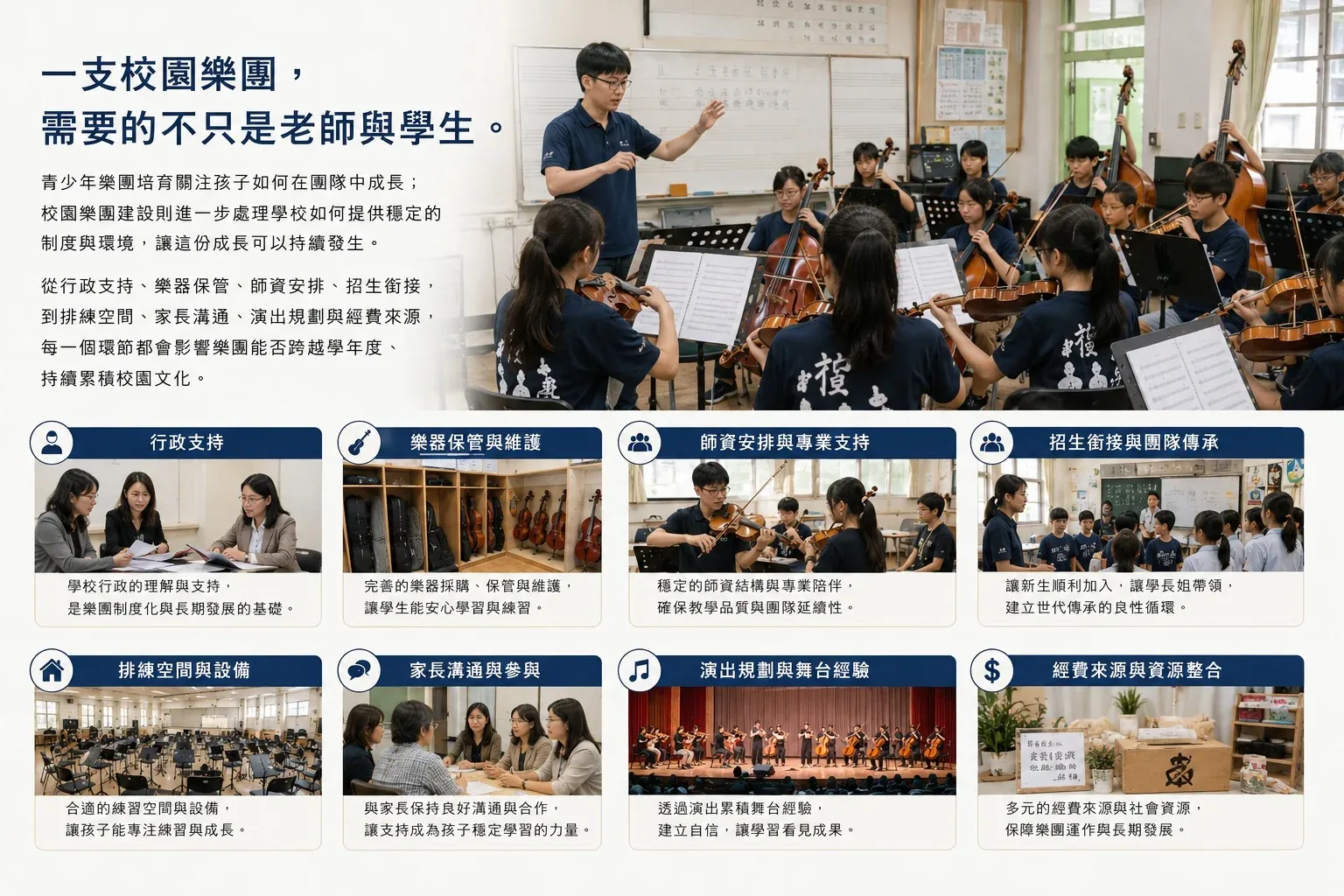
Founding a campus orchestra is only the beginning. For a team to grow steadily, schools must build six systems at once: administration, students, resources, teaching, operations, and development.
Clarify the orchestra's educational purpose, point of contact, internal division of labor, annual goals, and key decision-making processes, so the team isn't sustained by individual passion alone.
Establish mechanisms for recruitment, auditions, beginner classes, the formal ensemble, and graduation transitions, so students at every level can find a suitable place to learn.
Track instrument inventory, specifications, storage, borrowing, repair, and replacement needs to ensure students have safe, usable tools suited to their level.
Integrate the conductor, section teachers, administrative staff, and guest specialists to build a curriculum rhythm of individual foundations, sectional rehearsals, ensemble practice, and stage performance.
Establish fixed rehearsal times, attendance rules, sheet music management, seating arrangements, parent communication, performance logistics, and safety management.
Through on-campus performances, inter-school exchanges, community service, international events, and collaborative proposals, build up achievements, support, and resources for the following year's development.
Every school starts from a different point. Begin with basic instrumentation and regular rehearsals, then gradually build systems and expand achievements, eventually developing into a mature orchestra with campus character and international connections.
Suited for schools preparing to form an orchestra, or existing teams still lacking stable systems.
Suited for schools with regular members and rehearsals, needing to improve systems and performance quality.
Suited for schools with mature operations, ready to build school-based character and outside connections
Campus orchestras must align with the semester calendar, school affairs, recruitment, and performance milestones. Through an annual cycle, administrators, teachers, students, and parents all know their tasks at each stage, allowing the team to keep improving year after year.
Confirm student numbers, section makeup, teaching staff, instruments, budget, rehearsal times, repertoire direction, and yearly activities.
Conduct new-student orientation, skill assessment, section placement, parent briefings, and establishment of team guidelines.
Through sectional and ensemble training, regularly review attendance, learning progress, section balance, and repertoire completion.
Arrange on-campus concerts, inter-school exchanges, community performances, or event applications, so achievements are seen and turned into team identity.
Compile feedback from students, teachers, administrators, and parents, complete instrument maintenance and record archiving, and plan improvements for the following year.
From students sitting down to listen for the first time, entering rehearsals, joining campus showcase concerts, to the whole school witnessing the musical results together—these everyday scenes gradually shape a school's artistic culture.
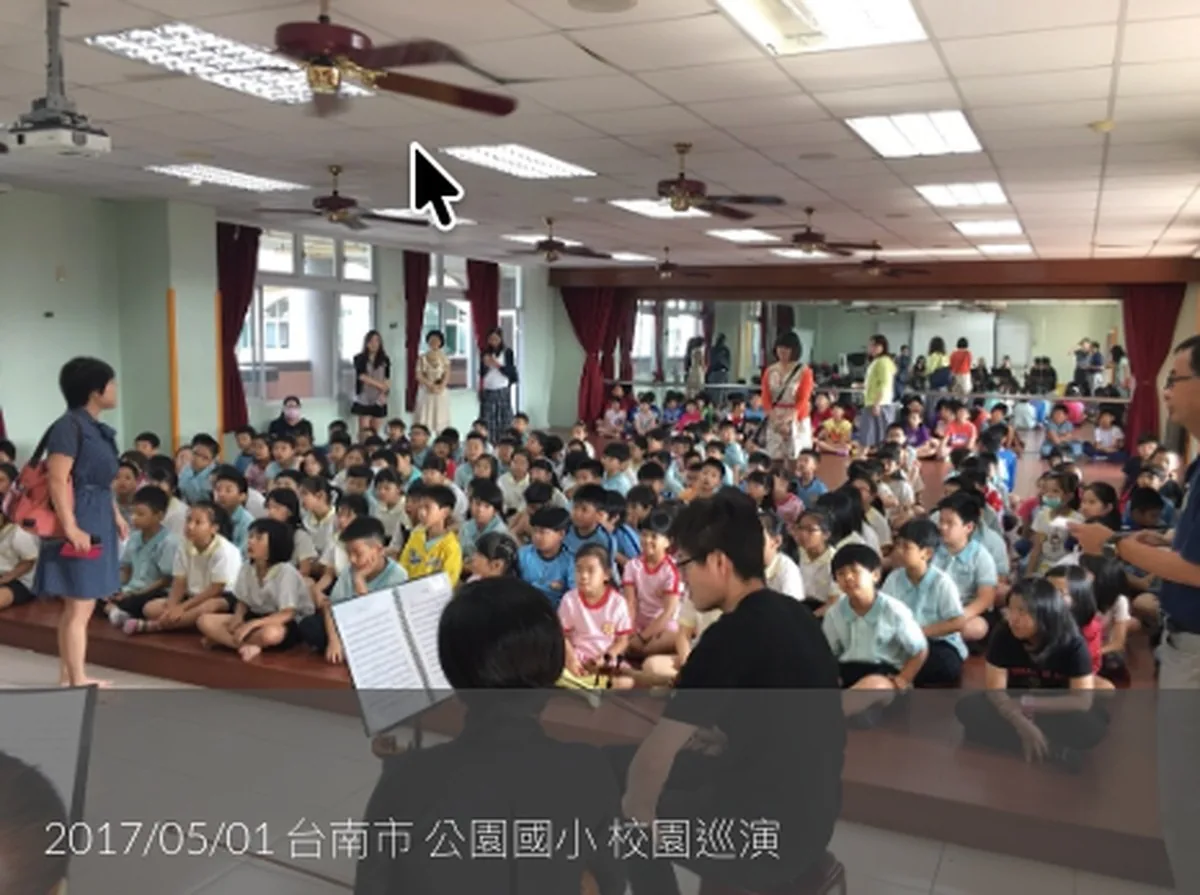
Campus tours, demonstration performances, and hands-on activities give more children the chance to first hear and see, and then choose to take part.
When an orchestra serves not just its members but shares with the whole school, music gradually becomes a shared language on campus.
Through demonstration, observation, interaction, and practice, students move from being listeners to becoming participants and performers.
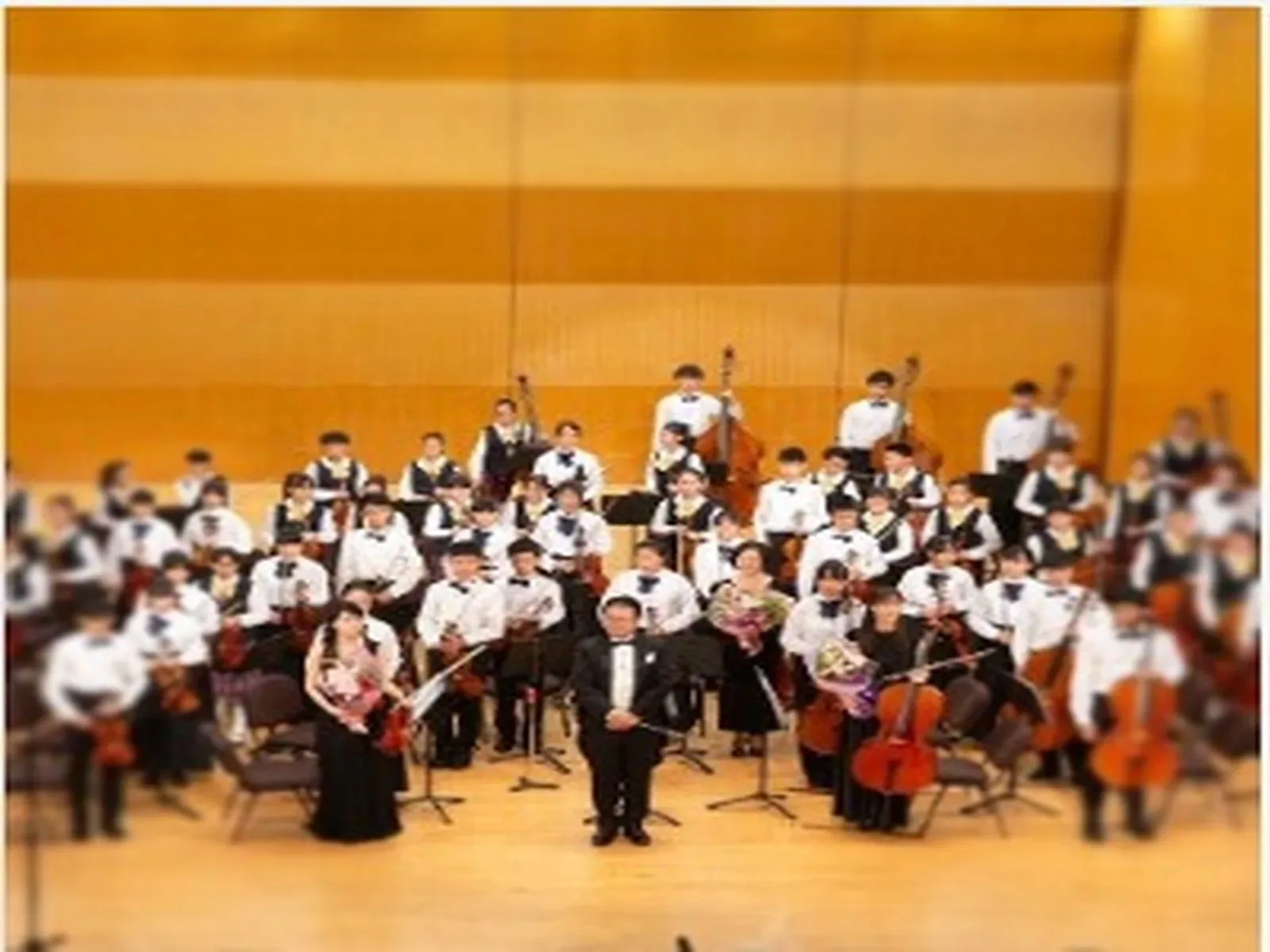
As systems, teaching staff, and rehearsals gradually mature, students can complete collective works on the formal stage, building school honor and legacy.
Check the conditions your school already has to quickly see whether it's at the launch, setup, or stable stage. Results are saved only in your browser and are not uploaded automatically.
Please check the conditions your school currently has, and the system will suggest next steps.
When student development, teacher expertise, administrative systems, and campus support connect with one another, the orchestra does more than perform — it shapes the school's educational identity, shared memory, and capacity for outreach.
From basics to ensemble to the stage, students can build steadily within the school, not by chance.
Administrators, conductors, and section instructors can collaborate within a shared framework, easing the long-term burden on any one person.
The orchestra can link ceremonies, curricula, community, inter-school, and international events, becoming part of campus culture.
With clear communication, schedules, and results, parents can better understand the value of long-term music learning.
Once the basic groundwork is complete, schools can, as needed, move on to teacher training, masterclasses, public welfare music education, cross-school exchange, event applications, and formal partnership proposals—gradually deepening their educational reach and outside connections.
back to students' abilities, sense of team responsibility, stage confidence, and long-term growth.
NEXT · TEACHERHelping school teachers and instructing teams strengthen their skills in organizing, rehearsing, curriculum design, and administrative coordination.
RESOURCEBy integrating instruments, teaching talent, and social resources, we support Taiwanese schools with fewer resources.
EXCHANGEAllowing different schools to learn from one another through joint rehearsals, campus showcases, and shared coursework.
Schools, educational institutions, and partner organizations across Taiwan are welcome to consult us on campus assessment, orchestra founding, teacher planning, instrument resources, rehearsal systems, showcase concerts, and ongoing exchange and development.