Personal Warm-up and Technique Review
Short, focused exercises to rebuild touch, breath, and tone.
Music doesn't belong only to childhood, exams, or the professional stage. For many Taiwanese adults, picking up an instrument again means rediscovering focus, rhythm, and self-expression amid work, family, and life's responsibilities. The Foundation centers on personal restart, chamber collaboration, evening rehearsals, stage practice, and lifelong learning to accompany learners in building a sustainable musical life.
This page primarily features Taiwanese adults, cross-generational ensembles, and local music-education settings; the images shown are not all necessarily records of the Foundation's actual activities.
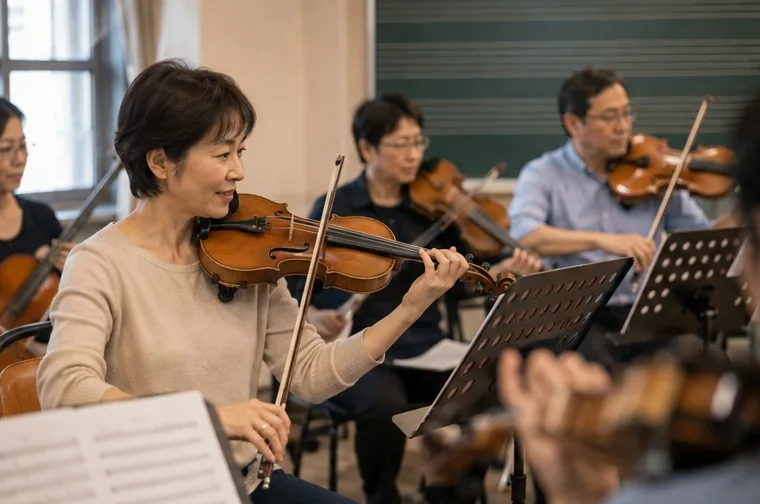
Short, focused exercises to rebuild touch, breath, and tone.
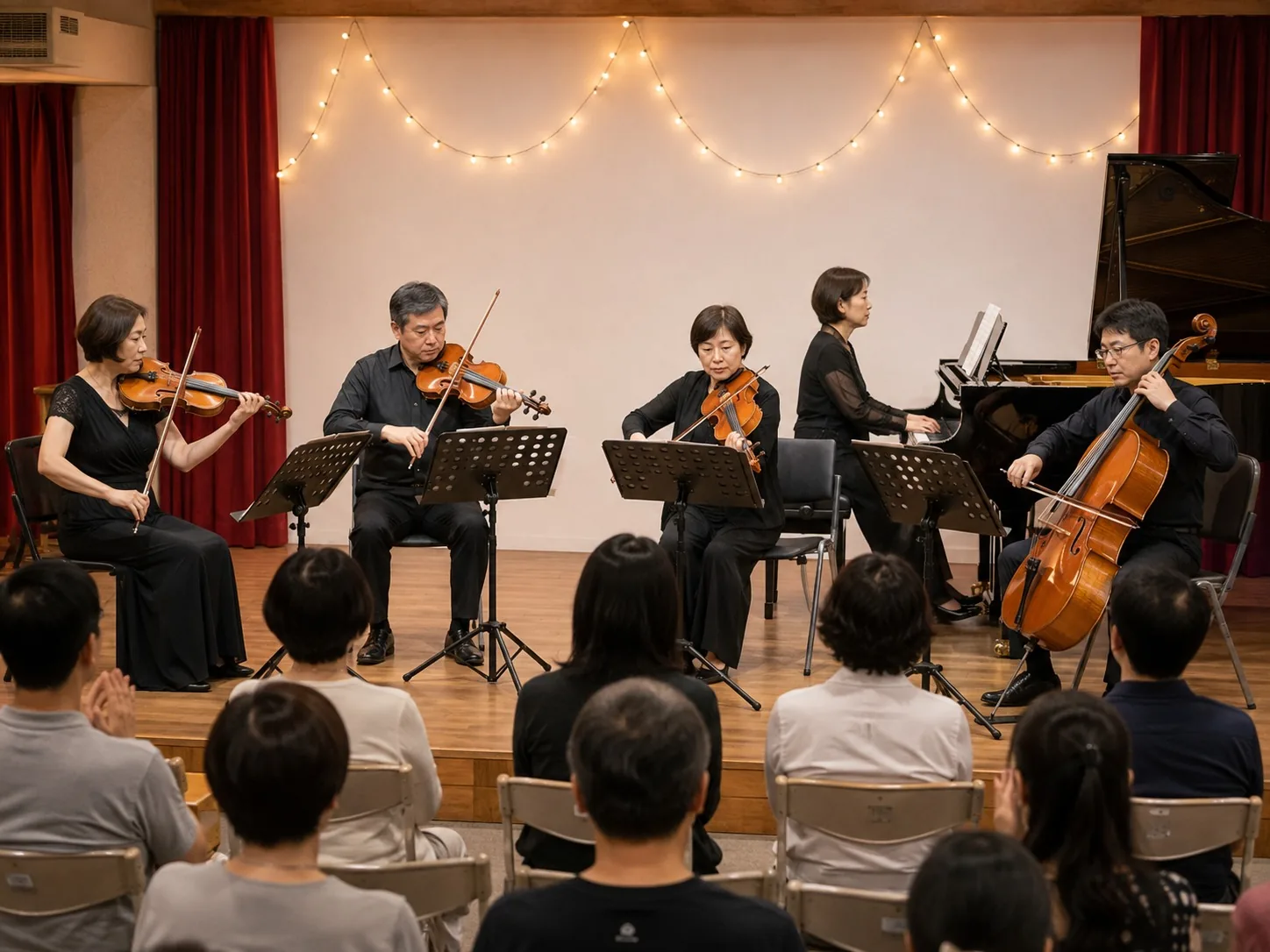
Hearing one another in small ensembles, moving from individual practice to collaboration.
Working toward a shared piece, gradually building toward the stage and a shared outcome.
Adult learners have clearer choices, yet they also face constraints of time, energy, work, and family commitments. Good adult music education, therefore, does not seek to restart with children's or professional training models, but instead helps music truly become part of life through a sustainable pace, clear repertoire goals, and peer support.
Whether you're learning for the first time, picking up an instrument again after many years, or hoping to join chamber music or an adult orchestra, what matters most is finding your own pace and seeing progress through steady participation.
Every adult learner starts from a different place, with different time and expectations. Lessons can begin with individual technique, picking up an instrument again, chamber music, or stage practice, then adjust as things progress.
Beginning with instrument basics, posture, rhythm and reading, building steadiness and confidence through achievable short pieces.
BEGINNER FOUNDATIONFor those who once studied, took a long break, or want to regain their feel — rebuilding fundamentals and practice habits.
RETURN TO MUSICThrough duets, trios and small ensembles, learners practice listening, coordination, rhythmic responsibility and musical understanding.
CHAMBER & ENSEMBLEJoining regular rehearsals, showcase concerts and exchange performances, turning long-term learning into a shared stage experience.
ORCHESTRA & STAGEFor adult learners, what matters most isn't practicing for hours at once, but building time that can be sustained in daily life. Twelve weeks can serve as a first complete cycle, moving gradually from regaining feel to ensemble playing and sharing results.
Confirm posture, basic technique, and short exercises you can do daily.
Centered on one piece, build a method of sectional practice and review.
Begin duets, chamber music, or sectional rehearsals, understanding your part's responsibility.
Through a small salon, recorded showcase, or public performance, complete your first learning milestone.
Learning isn't limited to private lessons. Adults need varied settings that balance life, collaboration, and a sense of achievement — making music a warm, steady social connection.
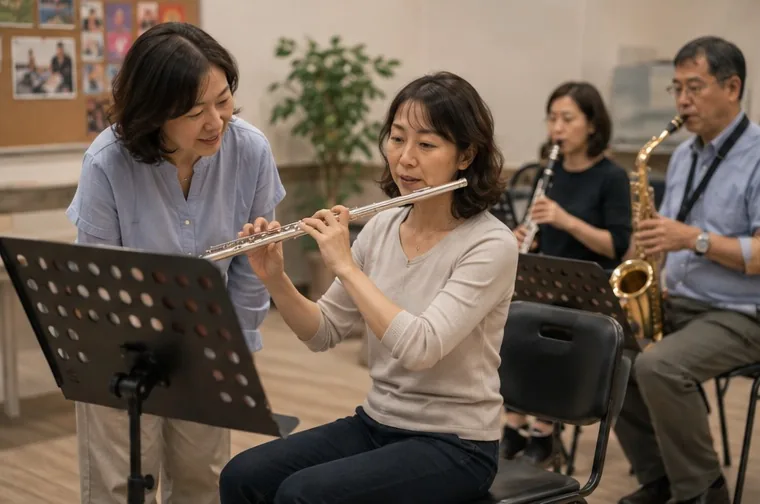
Structured ensemble time arranged around life after work.
Building listening, collaboration, and musical dialogue in a smaller ensemble.
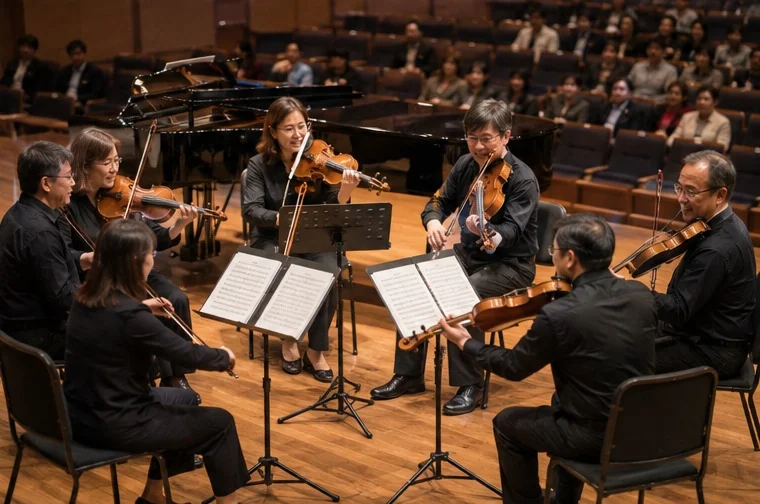
Completing a public or semi-public musical sharing in a way that suits you.
Keeping learners engaged through peer support, while building cross-age and cross-field connections.
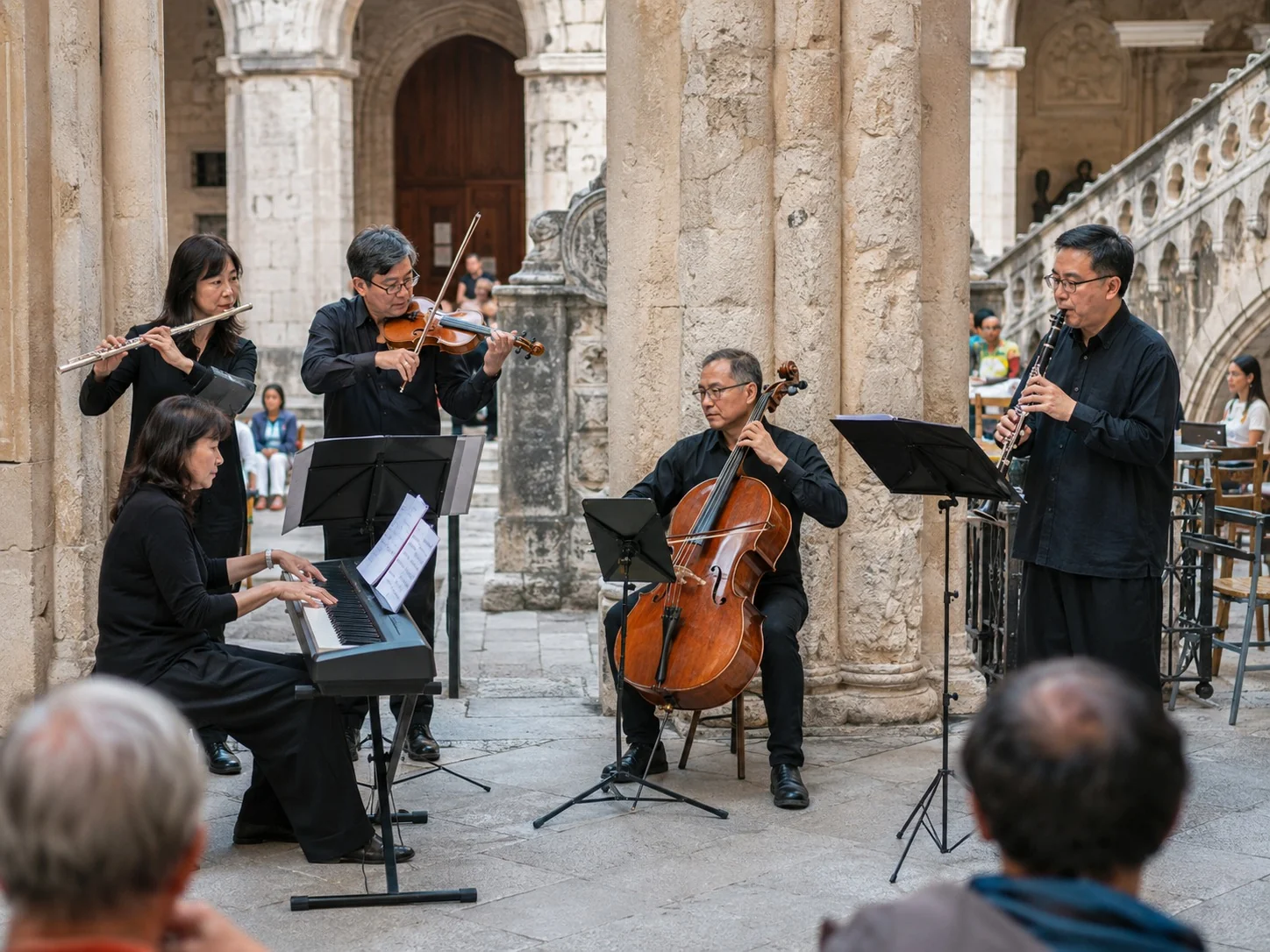
Extending from local showcase concerts to city, cultural, and international music exchange.
When learning is sustained over time, music gradually reshapes the rhythm of life, helping people rebuild focus, cooperation, confidence, and community connections.
Regular practice brings clear pauses and structure to life, offering a lasting sense of progress.
Through chamber music and adult ensembles, sharing works and shared goals with people of different backgrounds.
Completing a piece, a recording, or a performance lets adults rediscover their capacity to learn and grow.
Through works, cities, and exchange events, music becomes a way to understand culture and the world.
We welcome adult learners, community groups, corporate ensembles, and local music partners to inquire about individual lessons, chamber music, adult orchestras, and themed workshops.