International Campus ExchangeSchool Exchange
JAPAN · WAKAYAMA LEARNING JOURNEY
Wakayama Prefecture
Wakayama Prefecture
International Music Education Exchange
Let every overseas exchange become a complete learning journey where students can be seen, recorded, and carried forward.
Built around three core pillars — International Campus Exchange × Cultural Course Experience × Joint Concert Showcase — the program spans pre-trip preparation, cross-school learning, local cultural observation, joint rehearsals, stage performance, and post-trip reflection, forming an international music education pathway with clear educational goals, learning evidence, and continued development.
Cultural Course ExperienceCultural Learning
Joint Concert ShowcaseJoint Concert
Learning PortfolioLearning Portfolio
01 · LEARNING FRAMEWORKNot just a trip abroad,
Not just a trip abroad,
but a complete learning path
Every exchange segment corresponds to clear learning goals and lasting outcomes. Students don't just attend exchange activities—they gradually build their own international learning experience through preparation, interaction, observation, performance, and reflection.
Turning "seen, heard, performed" into "understood, collaborated, reflected, and carried forward."
Pre-Trip Preparation|Knowing why before setting off
Setting team goals, exchange tasks, shared repertoire, and cultural background knowledge, so students arrive with questions and purpose.
Campus Learning|Understanding each other through real interaction
Entering Japanese schools, students experience differences in educational culture through joint rehearsals, class observation, peer interaction, and campus life.
Cultural Curriculum|Turning the city and its spaces into a classroom
Designing observation tasks around local history, daily life, architecture, and cultural sites, transforming travel into contextual learning.
Joint Showcase Concert|Turning preparation into a shared stage
From blocking and rehearsals to stage etiquette and the actual performance, students learn listening, collaboration, responsibility, and confidence before an unfamiliar audience.
Reflection & Follow-Up|Turning one experience into the next step
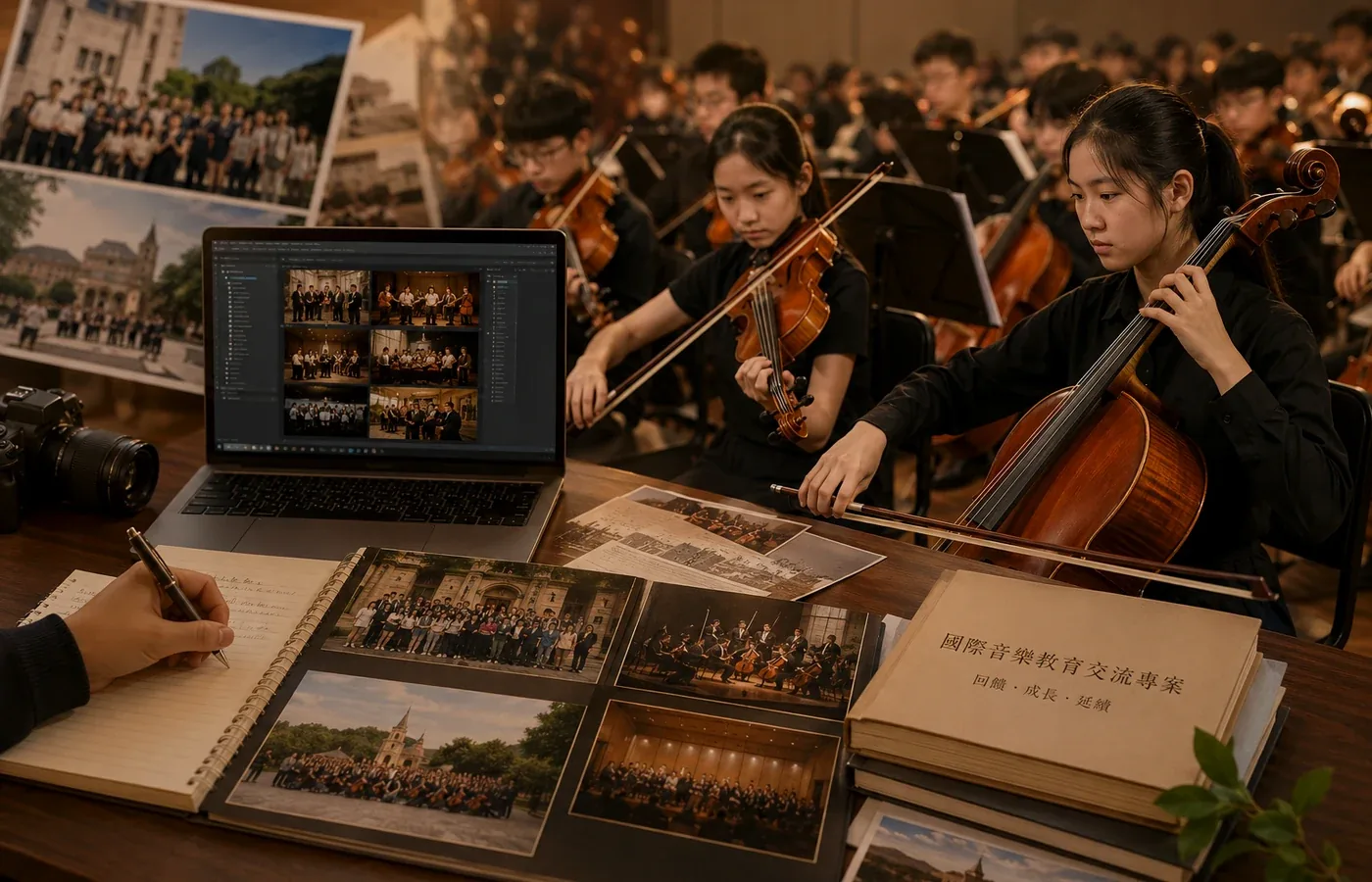
Compiling photos, videos, student feedback, and teacher observations into a lasting portfolio of the team's learning journey.
02 · THREE CORE MODULESThree core scenarios,
Three core scenarios,
forming a complete international learning journey
Flexibly combined according to the group's age, level, size, and exchange goals. The three modules are not independent activities, but a continuous learning journey from "understanding people" to "understanding place" to "completing the stage together."
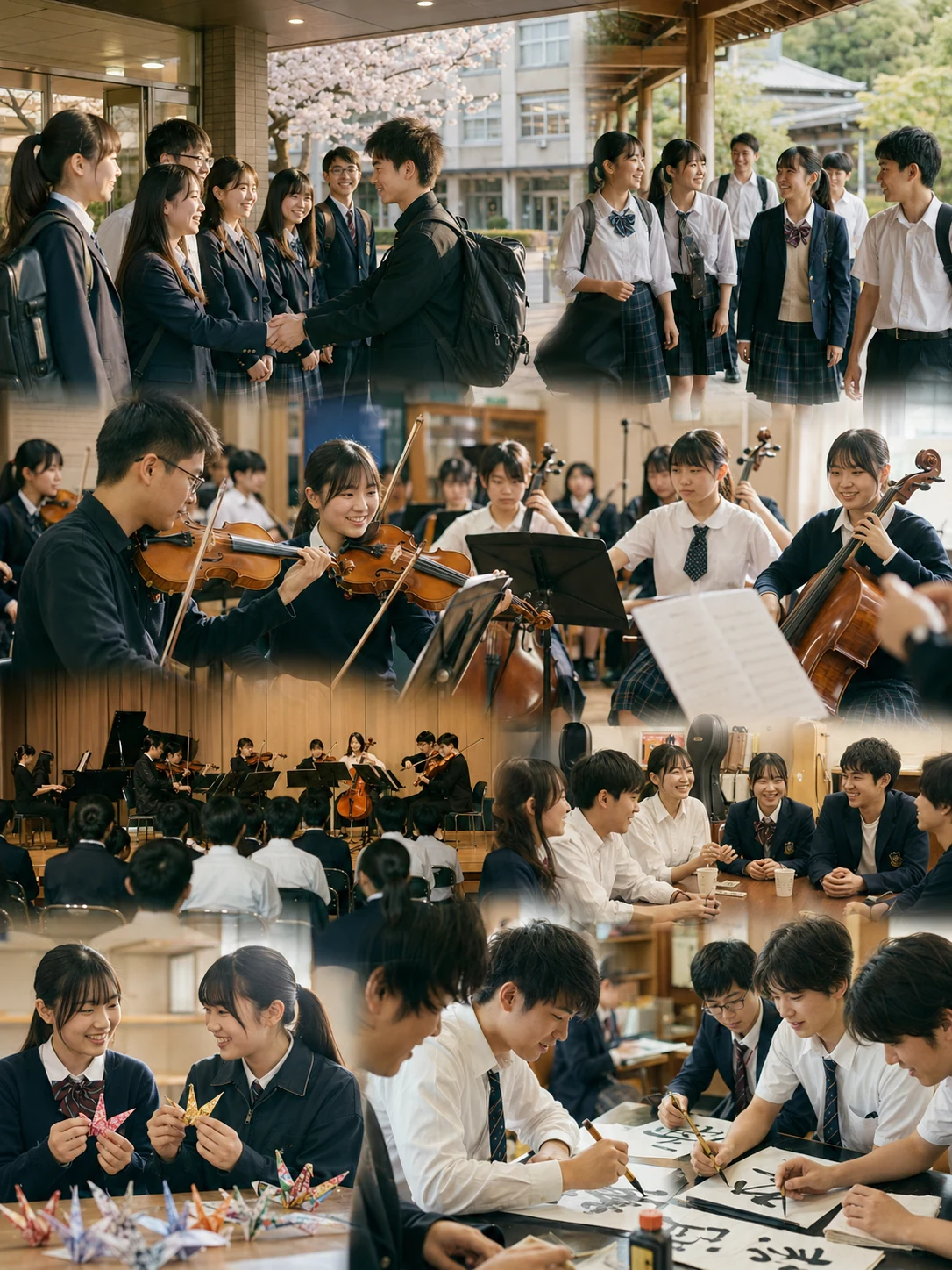
PROGRAMME 01 · SCHOOL EXCHANGE
International Campus Exchange
Step into a Japanese school and build genuine connections between students through welcome ceremonies, campus visits, joint rehearsals, shared performances, break-time interaction, or cultural exchange classes.
Joint RehearsalCampus VisitPeer InteractionTeacher Exchange
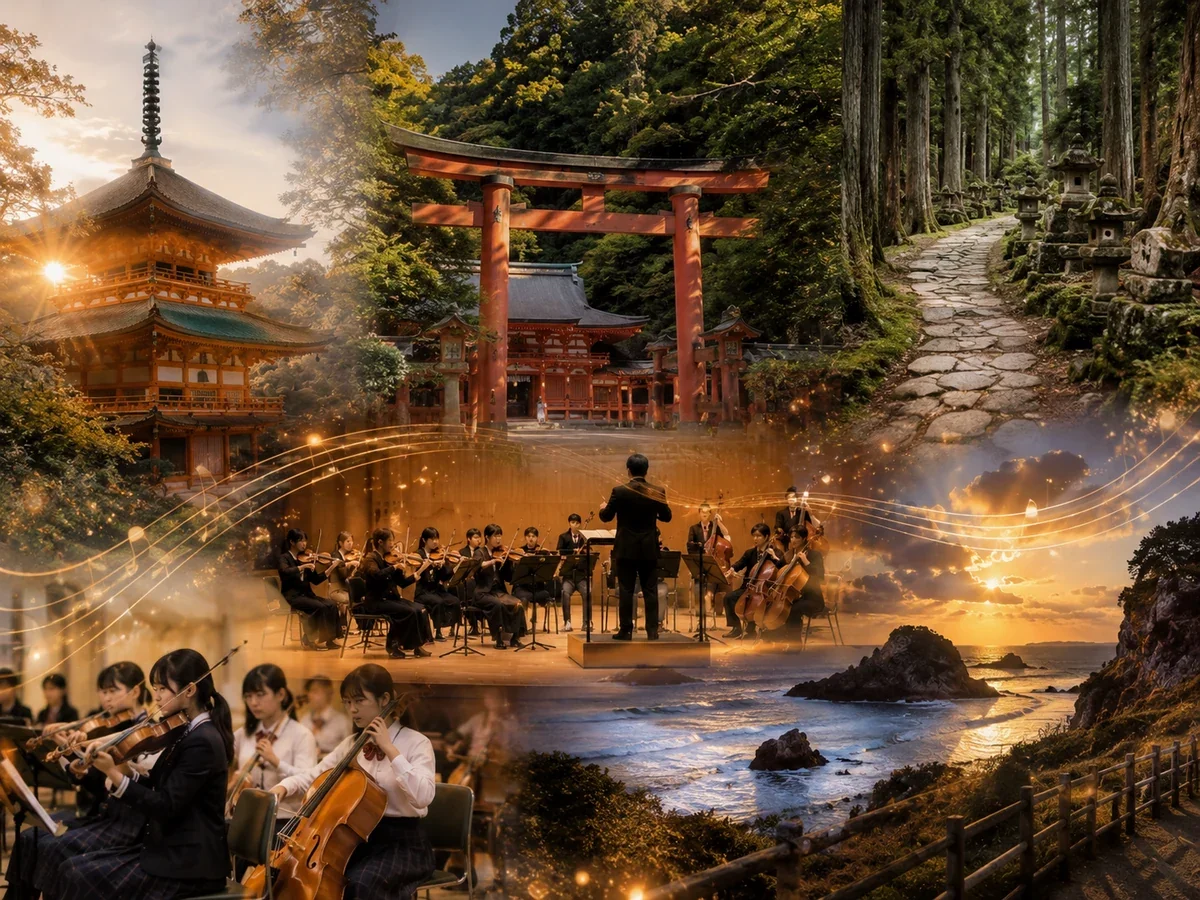
PROGRAMME 02 · CULTURAL LEARNING
Cultural Curriculum Experience
Transforming Wakayama's city, daily life, history, and cultural sites into learning material, building cultural understanding through walking tours, observation, task logs, and guided lessons — not just visiting attractions.
City Walking TourCultural ObservationTask WorksheetsWorld Heritage Extension
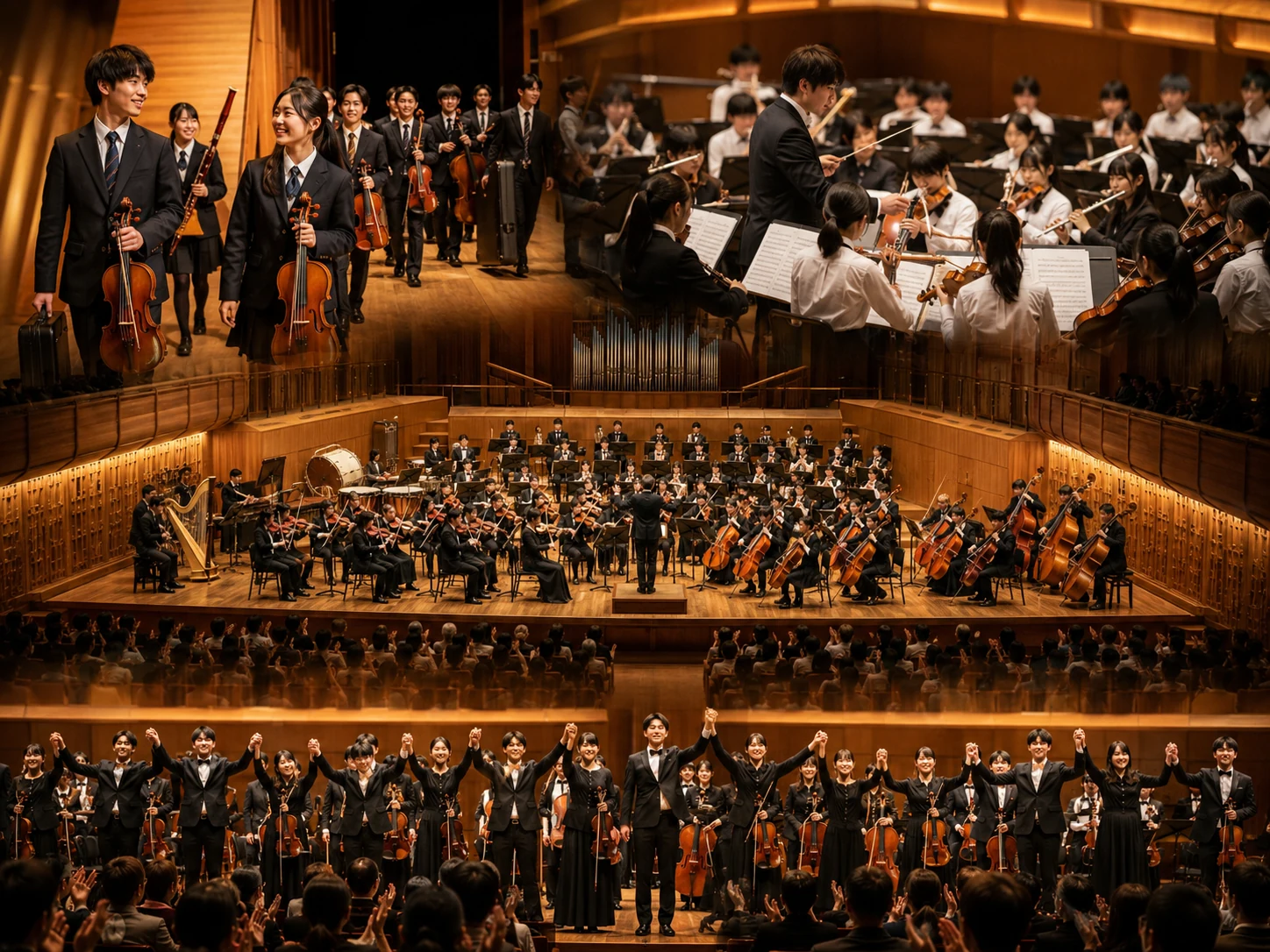
PROGRAMME 03 · JOINT CONCERT
Joint Concert Performance
Letting different schools and orchestras complete stage setup, rehearsals, formal performances, and farewell exchanges on a shared stage, turning individual practice into teamwork and international stage experience.
Stage Setup & AcousticsJoint RehearsalFormal PerformanceStage Retrospective
※ Images are illustrative project visuals; actual partner schools, curricula, venues, performance formats, and dates are subject to official confirmation.
03 · COMPLETE LEARNING JOURNEYFrom departure to return,
From departure to return,
every stage leaves proof of learning
Lexuan Foundation breaks the exchange into six continuous stages; for students, it's a traceable learning journey, and for teachers and schools, a set of international education outcomes that can be organized, presented, and extended.
Learning tasks: observation, communication and reflection students must actively complete
Evidence of outcomes: photos, videos, record sheets, performance results and teacher feedback
01 · PREPARATION
Pre-departure preparation and goal setting
Confirm the exchange theme, shared repertoire, team roles and cultural background knowledge; guide students to set "what I want to learn, what I hope to achieve."
Personal goal cardRepertoire preparation sheetCultural preparation task
02 · SCHOOL ENCOUNTER
Campus encounters and cross-school learning
Enter the partner school, practicing cross-cultural communication, cooperation and respect through self-introductions, campus observation, joint activities and music rehearsals.
Campus observation sheetPeer exchange recordJoint rehearsal notes
03 · CULTURAL FIELDWORK
Cultural walks and site-based tasks
Treat the city, architecture, daily life and cultural sites as teaching material, building the ability to "see differences, understand context" through guided tours, questions and visual records.
Cultural worksheetPhoto/video collectionCity observation journal
04 · JOINT REHEARSAL
Joint rehearsal and stage coordination
Team integration before the formal performance: confirming seating, stage blocking, section coordination and shared repertoire, learning to build rapport quickly in an unfamiliar setting.
Stage run-through recordSection highlightsTeam collaboration feedback
05 · PERFORMANCE
Joint concert and showcase
Perform on the formal stage, responding to earlier preparation with focus, confidence and team responsibility; the performance is also the most tangible shared outcome of the cross-school exchange.
Official performance videoGroup photoStage outcome record
06 · REFLECTION
Return and follow-up
Organize personal reflections, team outcomes, teacher observations and collaboration materials, turning one exchange into the basis for on-campus sharing, a learning portfolio, or the next stage of international cooperation.
Personal reflectionTeacher feedbackOutcome summaryExtended cooperation
PORTFOLIO Turn experience
into something lasting
into something lasting
04 · LEARNING PORTFOLIOAfter the event,
01 · INDIVIDUAL
02 · ENSEMBLE
03 · EDUCATOR
04 · ARCHIVE
After the event,
leave behind outcomes that can keep being used
A learning journey isn't just about keeping certificates — it's about capturing the real changes students experience through preparation, interaction, performance, observation, and reflection. Lexuan Cultural Education Foundation can help build a concrete outcome framework tailored to the form of collaboration.
Personal learning records
Goals, tasks, rehearsal notes, cultural observations, reflections, and personal video clips.
Collective team outcomes
Shared repertoire, rehearsal journey, stage achievements, team photos, and outcome summaries.
Teacher observation feedback
Educational observations drawn from collaboration, discipline, adaptability, listening, and stage performance.
Visual and project archives
Photos, videos, exchange records, and collaborative outcomes, forming an ongoing, cumulative project archive.
05 · PLACE AS CURRICULUMTurning spaces into teaching material,
Turning spaces into teaching material,
Turning the city into a classroom
Exchange locations are more than just travel routes. From Japanese school campuses and urban cultural spaces to music stages, each setting can correspond to different learning questions and tasks, helping students understand how music exists within society, culture, and daily life.
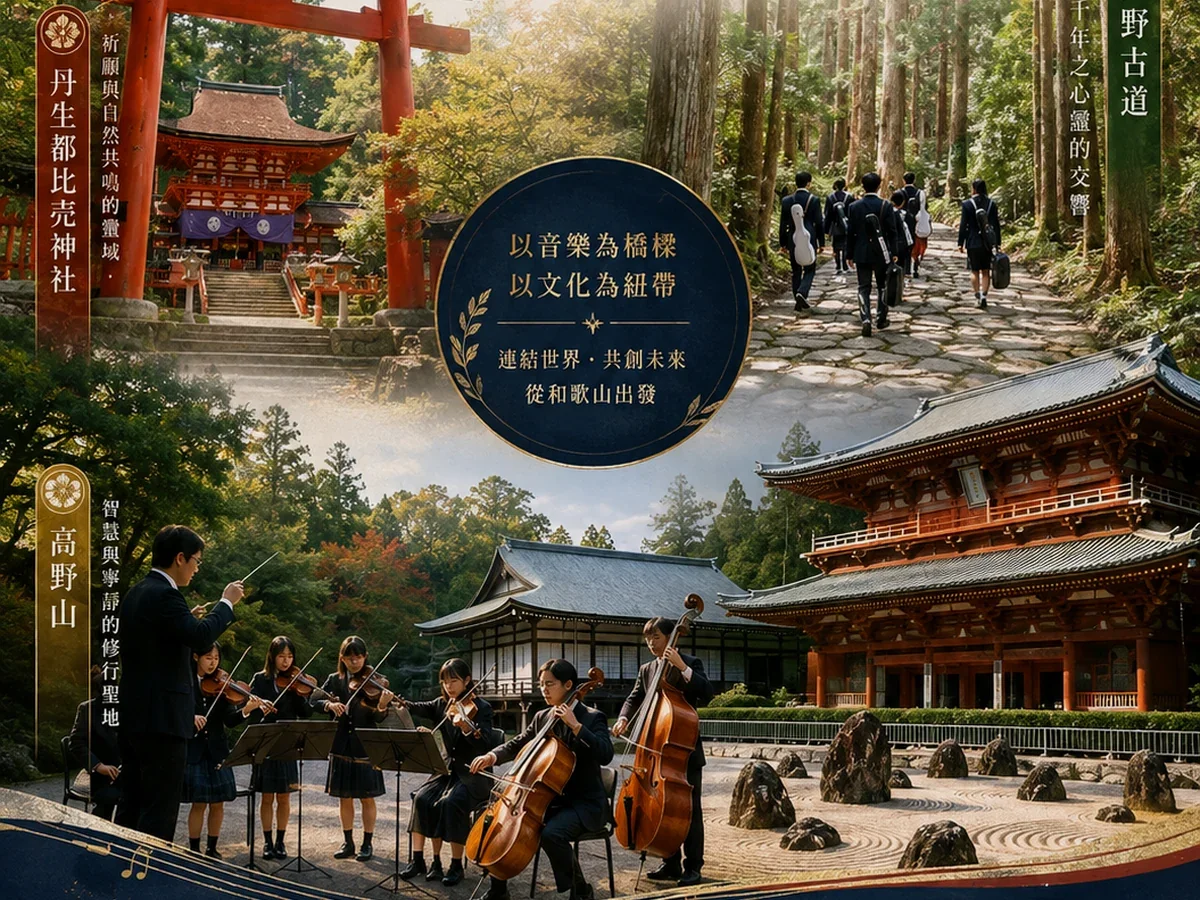
Extensions into Local Culture and World Heritage
Depending on formal approval, school curricula, and partnership conditions, learning content related to Wakayama cultural sites, historical walking tours, or World Heritage sites can be planned.
Japanese School Campuses | Real Educational Settings
Observing classes, clubs, campus life, and student interactions to understand how different educational cultures shape learning styles.
Cultural Sites | Understanding Land and Life
Through guided tours, walking explorations, and task documentation, connecting history, humanities, nature, and local life.
Music Stage | Achieving Shared Outcomes
Practicing stage etiquette, teamwork, listening, and performance responsibility in a formal performance setting.
Actual partner schools, cultural sites, performance venues, formats, and dates will be confirmed based on formal approval and partnership conditions.
06 · WHO CAN JOINDepending on the team,
Depending on the team,
we design learning experiences of varying depth
Module ratios can be adjusted according to age, ensemble size, level, school curriculum, and exchange goals — no two teams need follow the exact same itinerary.
Elementary and Junior High School Orchestras
Centered on campus interaction, cultural experiences, and joint performances, with an emphasis on safety, friendship, teamwork, and building a global outlook.
High School, Music Classes and Arts Talent Classes
Repertoire depth, professional rehearsals, stage assignments, and self-directed learning records can be added to strengthen each student's individual learning journey.
Youth Orchestras and Community Ensembles
Integrates school exchanges, cultural courses, and joint performances according to each team's goals, building a complete overseas music education program.
Teachers and Orchestra Professionals
Through course observation, teaching dialogue, and project collaboration, overseas experience is brought back to support the long-term development of schools and teams.
WHY WE DOCUMENTLooking back is so that next time,
Looking back is so that next time,
goes deeper, better, and lasts longer
The foundation continuously organizes event photos, videos, student feedback, teacher and expert observations, as well as outcomes from school and city collaborations, so that every exchange becomes the foundation for the next.
Event RecordsPhotos, videos, processes, and key moments
Educational FeedbackStudent reflections, teacher observations, and learning evidence
Team GrowthRehearsals, collaboration, performance, and organizational skills
Continued CollaborationInter-school relationships, city connections, and follow-up programs
WAKAYAMA INTERNATIONAL MUSIC EDUCATION EXCHANGELet one exchange with Wakayama,
Let one exchange with Wakayama,
become a learning journey the children can carry with them.
Schools, youth orchestras, music classes, arts-talent classes, and music educators are welcome to inquire about dedicated sessions and program combinations. Our team will help plan exchanges, cultural learning, and joint performances tailored to your group's needs. On the Taiwan side, the Lexuan Foundation co-organises and coordinates the programme as the administrative and communication window for Taiwanese ensembles — exchange applications, documents, pre-departure preparation and liaison with the education authority in Japan are handled in one place.