TAIWAN MUSIC EDUCATION · TEACHER DEVELOPMENT
Teacher Training Camp
Teacher Learning Lab
Continuing from “Youth Orchestra Development” and “School Orchestra Building,” the teacher training camp focuses on frontline educators in Taiwan's schools. Through rehearsal leadership, lesson design, section training, student support, orchestra administration, and event planning, we help teachers turn training content into methods they can apply in their very next class or rehearsal.
The visual identity of this “Music Education” section centers on Taiwanese students, campuses, and orchestras; this page uses an independent design language built around teachers' desks, training handbooks, and lesson-plan notes.
PROFESSIONAL LEARNING MANUAL
Taiwan School Orchestra Teacher Training Handbook
Train
Teaching DesignRehearsal PracticeTeam Governance
KEY QUESTIONHow can training content truly return to the next rehearsal and classroom?
WHY TEACHER DEVELOPMENT
How far an orchestra can go
often depends on how its leader learns.
Teachers of campus orchestras must juggle music instruction, student diversity, rehearsal discipline, administrative communication, parental expectations, and performance outcomes. Truly effective training cannot just convey ideals—it must break complex challenges down into workable rehearsal language, lesson steps, and team systems.
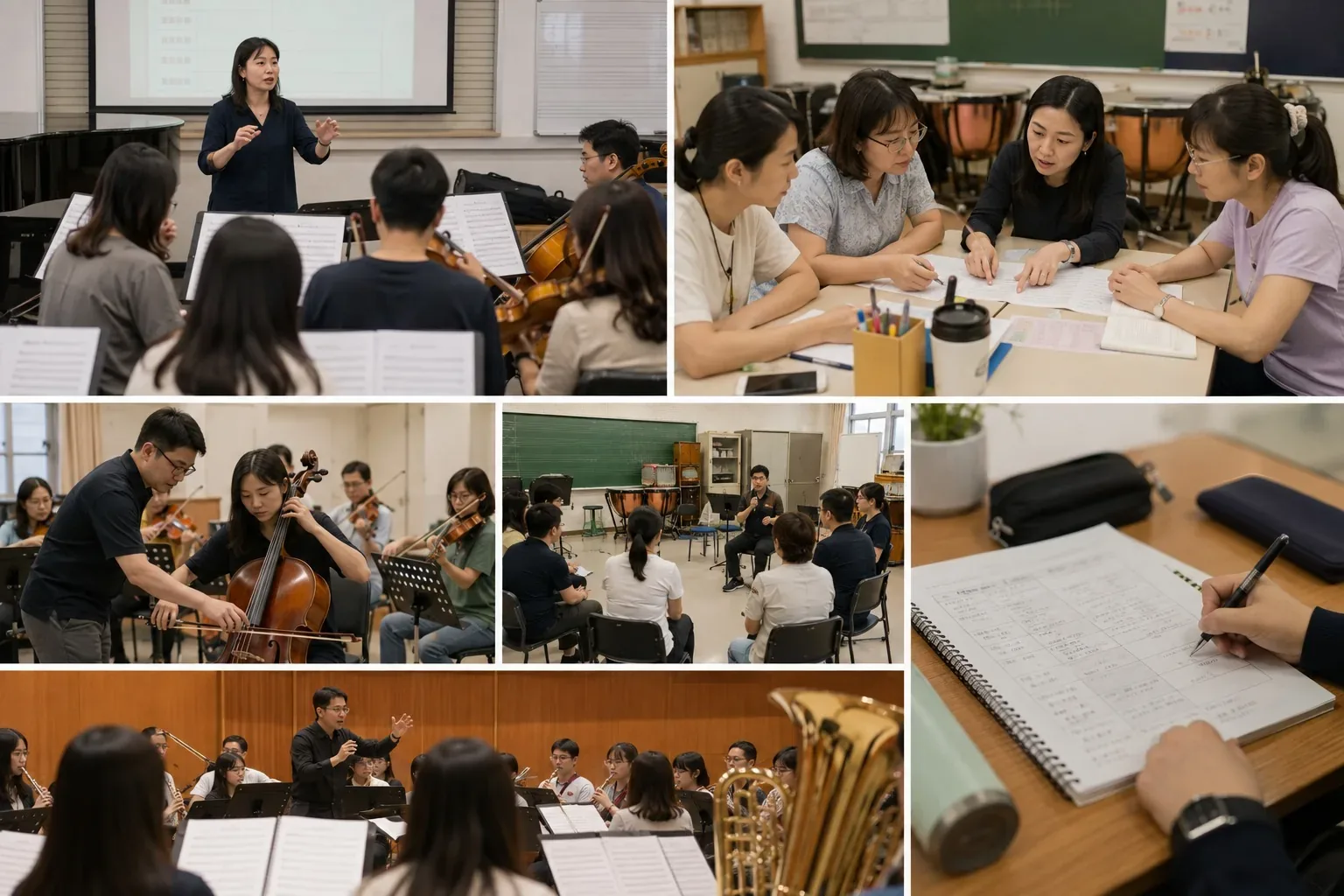
That is why our teacher training adopts a cycle of "demonstrate—break down—practice—give feedback—bring back to school," so teachers not only understand the ideas but can rehearse them firsthand, redesign their approach, and form their own action plan.
"The best teacher training isn't measured by how many notes you take home, but by whether you bring back a method that can change your students' learning right away."
OBSERVE · PRACTISE · REFLECT
06 LEARNING STUDIOS
Six Teacher Professional Growth Workshops
Each module addresses real issues Taiwanese school orchestras face, and can be combined into half-day, one-day, 1.5-day, or two-day sessions based on school conditions.
Rehearsal Leadership and Conductor Communication
Turning abstract musical demands into rehearsal instructions students can understand and act on.
- Rehearsal Pacing and Problem Prioritization
- Coordinating Gesture, Language, and Demonstration
- Managing Whole-Ensemble Attention and Efficiency
Curriculum Design and Learning Progression
From a single class to a full semester, building clear pathways for skills, repertoire, and outcomes.
- Tiered Goals and Curriculum Mapping
- Beginners and Advanced Students Together
- Formative Assessment and Learning Records
Section Training and Ensemble Diagnosis
Identifying root causes in pitch, rhythm, tone, and breath, and designing effective practice accordingly.
- Section Division and Small-Group Collaboration
- Phrasing, Listening, and Balance
- Real-Time Diagnosis in Rehearsal
Student Support and Team Culture
Understanding different ages, levels, and motivations to build a safe, responsible team.
- Encouragement, Boundaries, and Team Norms
- Conflict Resolution and Student Leaders
- Belonging and Long-Term Retention
Administrative Collaboration and Orchestra Governance
Turning staffing, equipment, funding, space, and parent communication into sustainable systems.
- Annual Planning and Role Division
- Instrument Resources and Risk Management
- Internal Communication and Showcasing Outcomes
Exchange Planning and International Perspective
Turning performances, inter-school exchanges, and international activities into complete educational journeys.
- Exchange Goals and Shared Repertoire Preparation
- Cultural Preparation and Reflection for Students
- Documentation and Sustaining Relationships
WORKSHOP AGENDA
The Rhythm from Demonstration to Practice
Unlike typical lectures, this training is structured around observation, deconstruction, practice, and feedback. Switch between the options below to see the suggested rhythm for one-day and 1.5-day courses.
Demonstration Rehearsal & Observation Task
Real rehearsals are presented using common Taiwanese school ensembles or demonstration orchestras, with teachers recording issues and intervention strategies on observation sheets.
Rehearsal Language & Teaching Breakdown
Analyzing how instructions, demonstration, questioning, grouping, and feedback affect students' attention and learning efficiency.
Teacher Group Practice
Participating teachers take turns leading rehearsal segments, with instructors and peers offering concrete feedback.
Campus Action Plan
Complete a teaching or rehearsal improvement plan tailored to each school's situation, ready to launch the following week.
Full Demonstration & Problem Diagnosis
From score preparation and rehearsal order to sectional issues and student responses, building a shared observation framework.
Group Practice & Lesson Plan Redesign
Participating teachers lead segments themselves, receive feedback, and redesign a rehearsal or teaching unit.
Teacher Sharing & School-Based Plans
Complete team governance, curriculum, or exchange plans on a school-by-school basis, establishing follow-up methods after training.
TAIWAN TEACHING SCENES
Starting from Taiwan's classroom reality
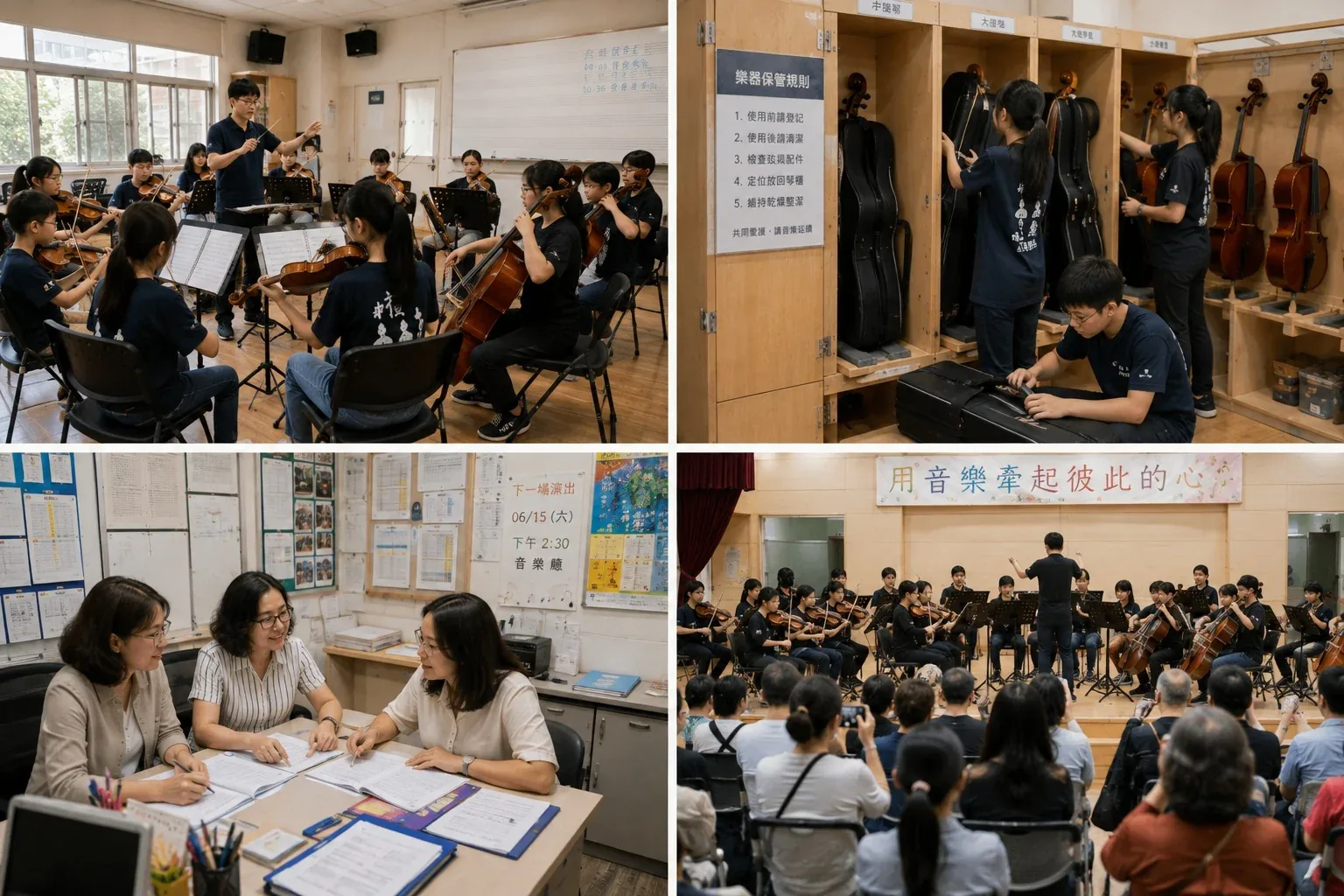
The training content uses spaces, student profiles, and ensemble setups common in Taiwanese schools as its context, so methods can return directly to the classroom rather than staying on an idealized professional stage.
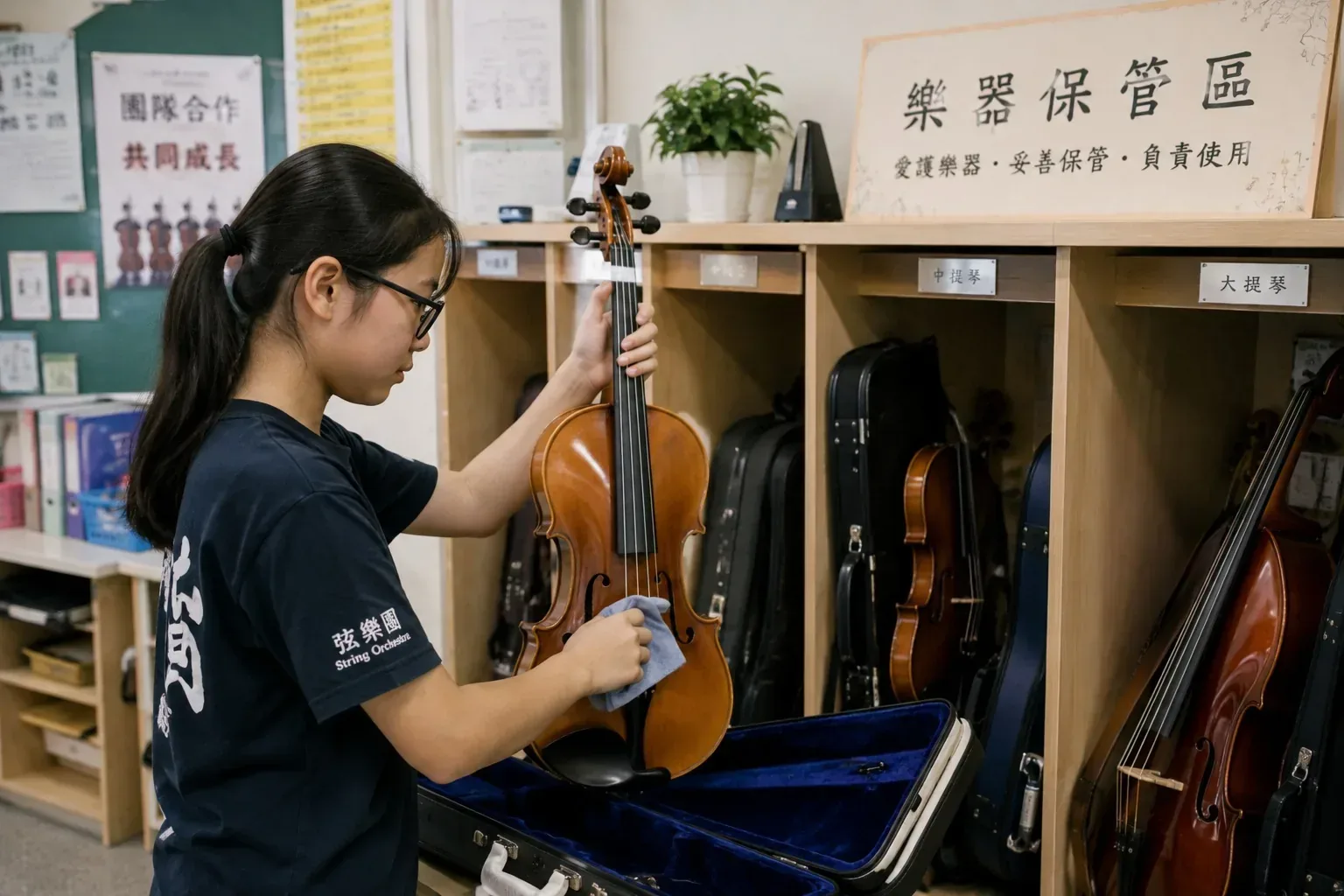
DEMONSTRATION
Demonstration and Observation
Through real teaching footage, see how teachers adjust language, pacing, and student engagement.
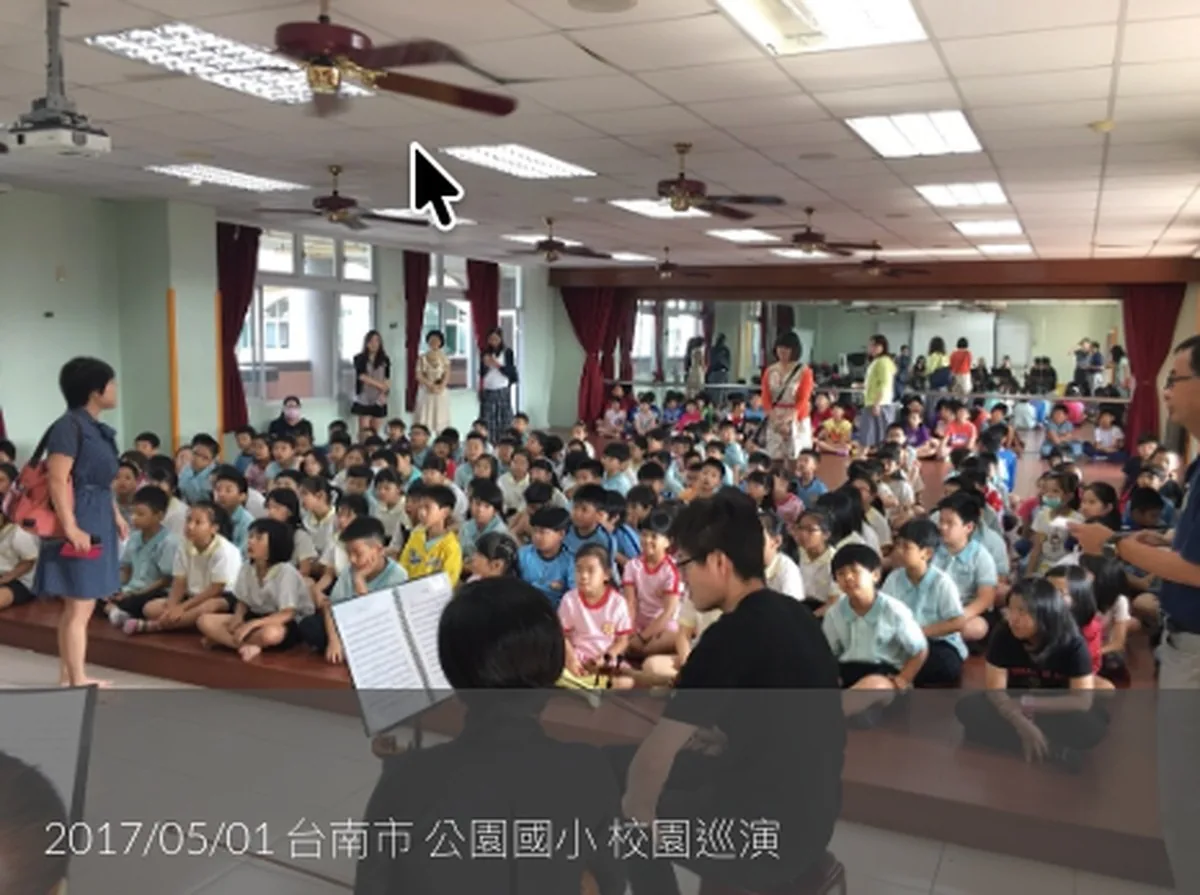
STUDENT RESPONSE
Understanding Student Responses
Every intervention a teacher makes affects students' focus, understanding, and sense of security within the group.
ENSEMBLE PRACTICE
Ensemble Practice and Feedback
Practicing listening, diagnosing, and giving feedback in small groups, building methods that can be applied to full-ensemble rehearsals.
Teacher Training Needs Assessment & Course Matching Tool
LEARNING OUTCOMES
After training, change should return to four levels
The results of teachers' professional growth are not just a certificate, but whether they can transform rehearsals, student learning, in-school collaboration, and the orchestra's long-term development.
Teaching Methods
Observe issues more clearly, plan practice, set expectations, and give students effective feedback.
Student Learning
In a more orderly and supportive environment, enhance understanding, engagement, responsibility, and ensemble skills.
In-School Collaboration
Teachers, administrators, and parents form a shared language on the orchestra's goals, roles, and development path.
Professional Network
Through cross-school exchange, demonstration observation, and follow-up, accumulate experience in Taiwan's campus music education.
TEACHERS GROW · ORCHESTRAS GROWSupporting every teacher's continued growth,
Supporting every teacher's continued growth,
is supporting the musical future of a whole generation of children.
We welcome schools, teacher teams, campus orchestras, and educational institutions across Taiwan to inquire about school-based training, regional joint training, demonstration orchestra workshops, and teacher professional development programs.