
Connecting the World through Music, Inspiring the Future through Education
News
INTERNATIONAL MASTERCLASS

International
Masterclass

OBSERVE · DIAGNOSE · COACH · TRANSFORM

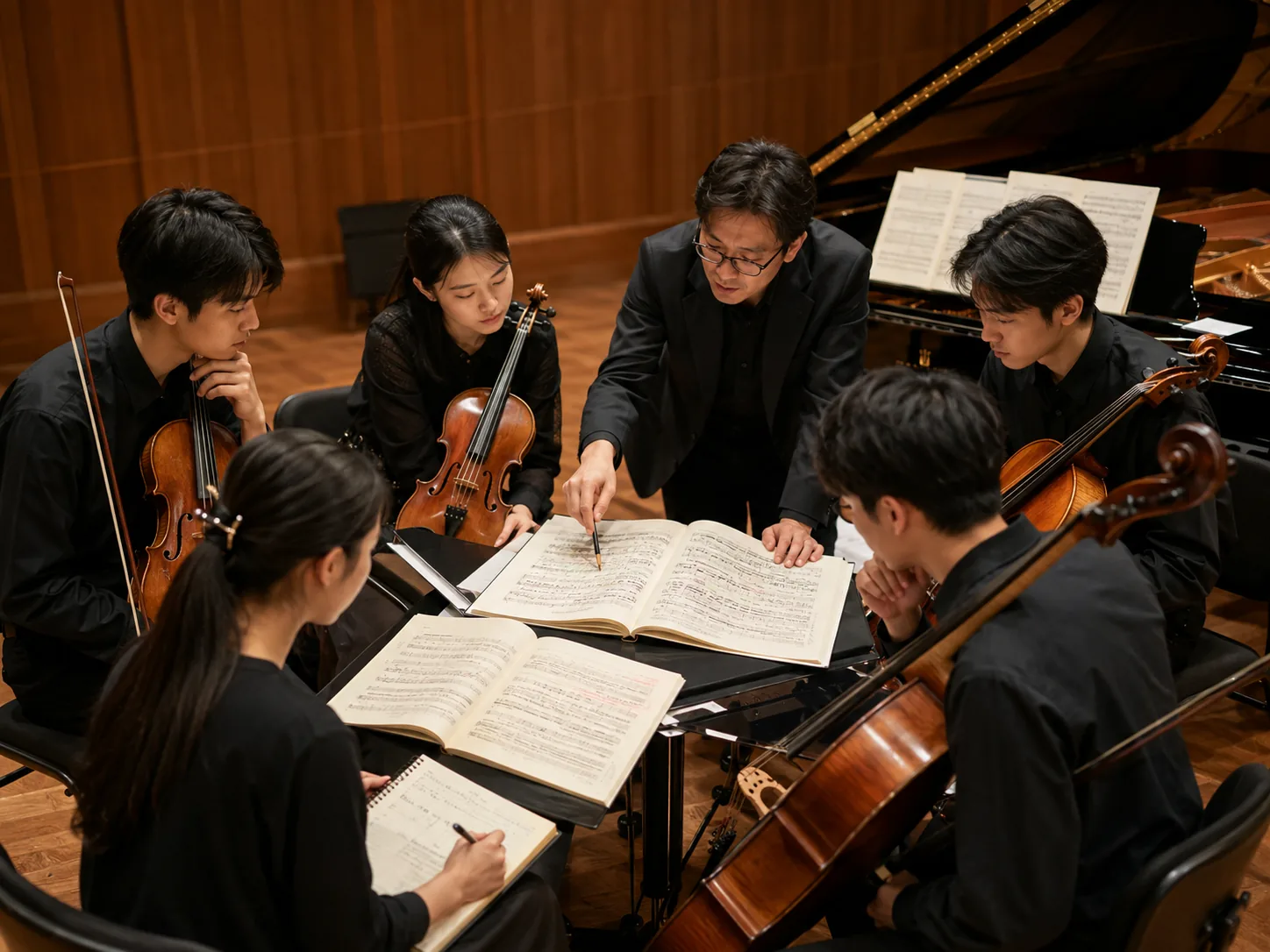
Centered on live diagnosis by the masters, demonstrative coaching, open rehearsals, and repeated verification, this brings conductors, performers, teachers, and the demonstration orchestra together in one learning space to see how works, techniques, and rehearsal methods are reorganized.
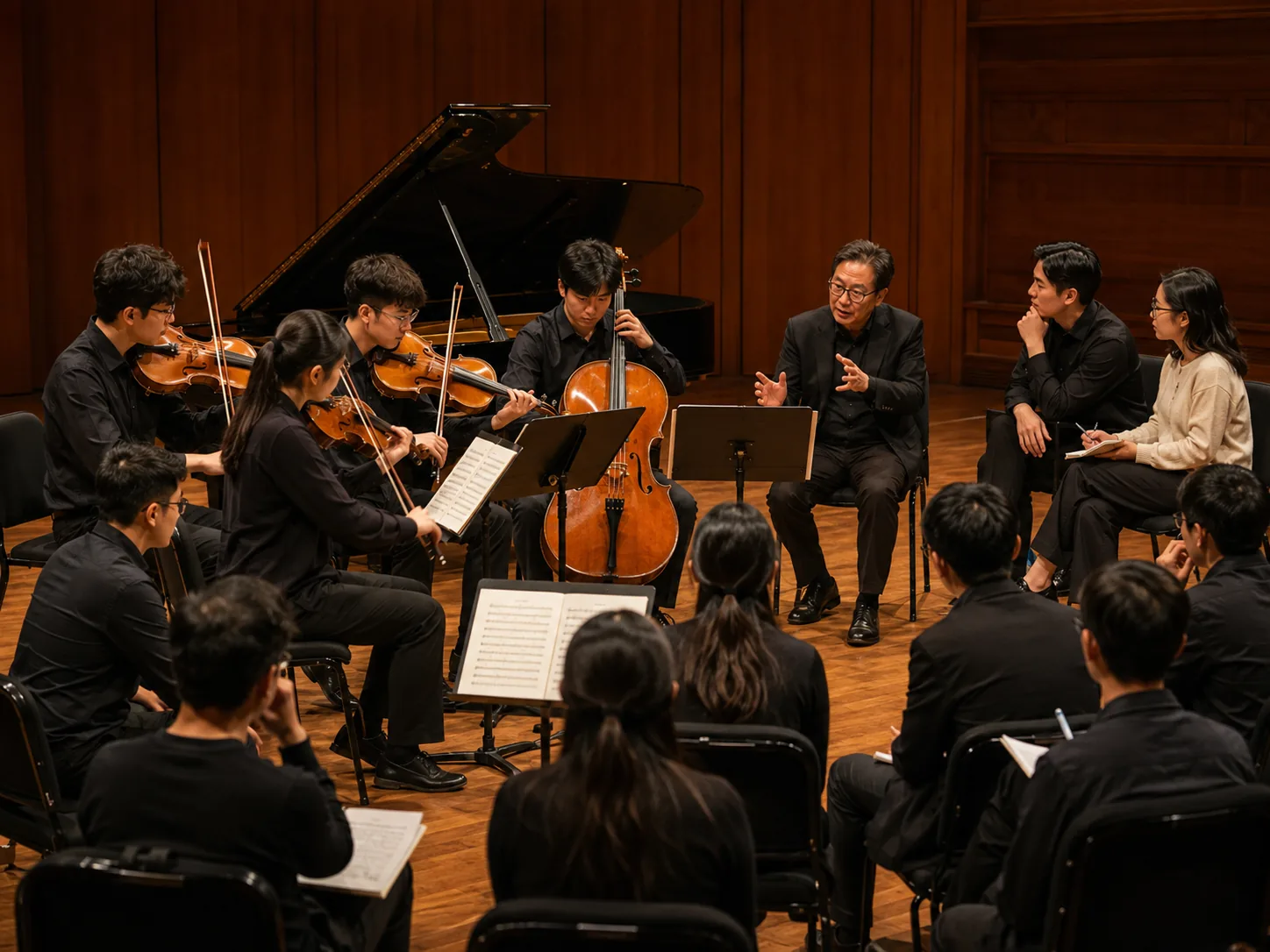
Live Coaching and Demonstration by Masters
Not a lectureA masterclass is not a one-way lecture — it places real problems into live performance and rehearsal, testing new approaches on the spot.
WHY MASTERCLASS MATTERS

A truly effective masterclass makes change happen in the moment.

A professional masterclass does more than convey concepts — through the score, sound, movement, rehearsal language, and ensemble response, it quickly identifies the root of a problem, then verifies change through demonstration, questioning, and replaying. Participants come away not only knowing "what's wrong," but also "why" and "how to practice next."

Observe Precise ObservationIdentifying root issues through tempo, tone, breath, posture, and ensemble response.
Ask Guided QuestioningHelping students build their own judgment, not just copy the master's answers.
Show Instant DemonstrationEstablishing clear reference points through sound, movement, rehearsal language, or phrase modeling.
Verify Repeated VerificationReplaying, comparing differences, and recording methods so change can be sustained.
LEARNING TRACKS

Five learning tracks, matched to the real needs of different roles

Within the same masterclass, active students, the demonstration ensemble, observing teachers, and general auditors each carry different learning tasks; only with clear tracks can we avoid everyone simply "watching the master teach."
Conducting students receive guidance from the master
ACTIVE CONDUCTING TRACK Conducting Students

From gesture correction to building rehearsal decision-making ability

Centered on score preparation, movement efficiency, aural judgment, rehearsal language, and time management, so students understand that conducting is not "making gestures," but continuously making musical and team decisions.
Pre-Class PreparationAssigned repertoire, score annotations, rehearsal plans, and personal video.
On-Site TasksConducting the demonstration ensemble, receiving real-time interruptions and reworking passages.
Core AssessmentBeat, preparation, phrasing, listening, and rehearsal efficiency.
Recommended Capacity4–8 active conducting students per session.
Outcomes Individual coaching records, priority order for post-class practice, rehearsal language recommendations, and video of assigned passages.
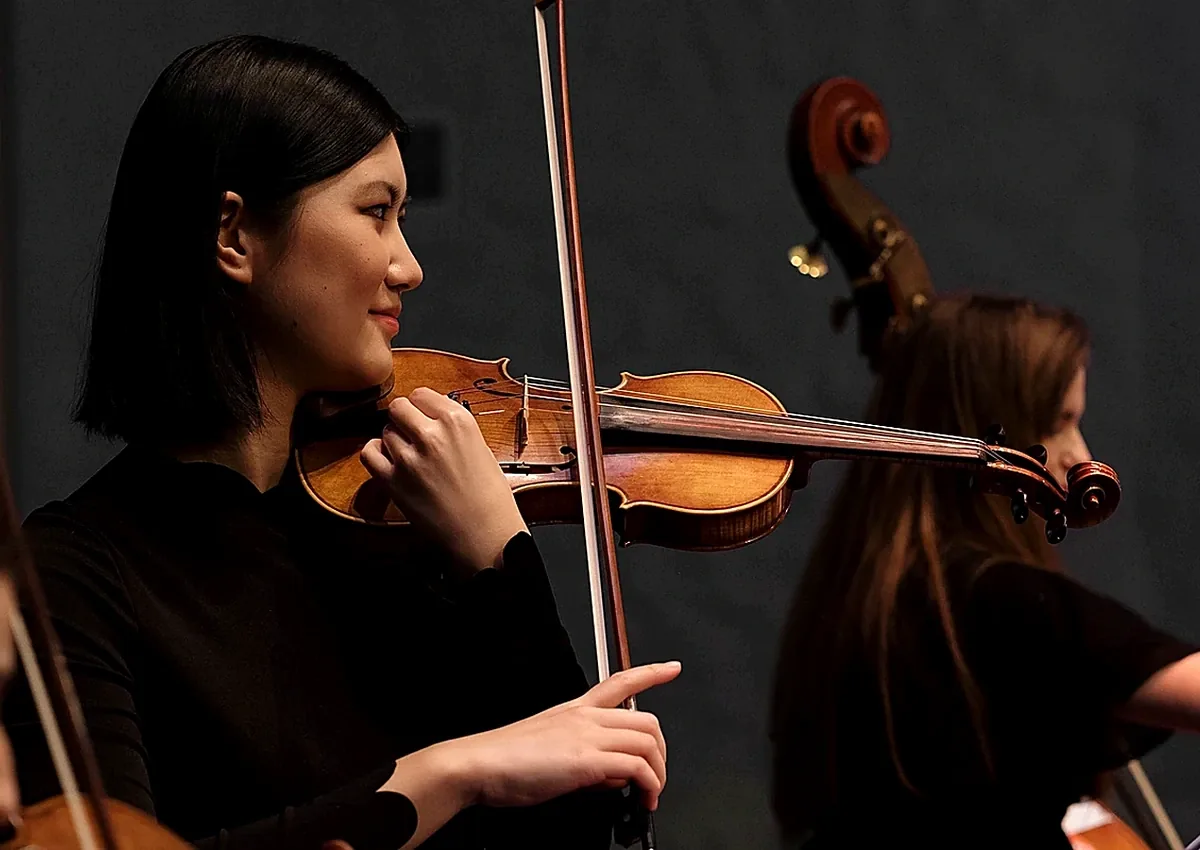
Instrumental students receive guidance from the master
ACTIVE PERFORMANCE TRACK Instrumental Students

Placing technical issues back into the work, phrasing, and stage expression

Starting from intonation, tone, bowing, breath, rhythm, and body use, further connecting to stylistic understanding, structural analysis, and personal interpretation.
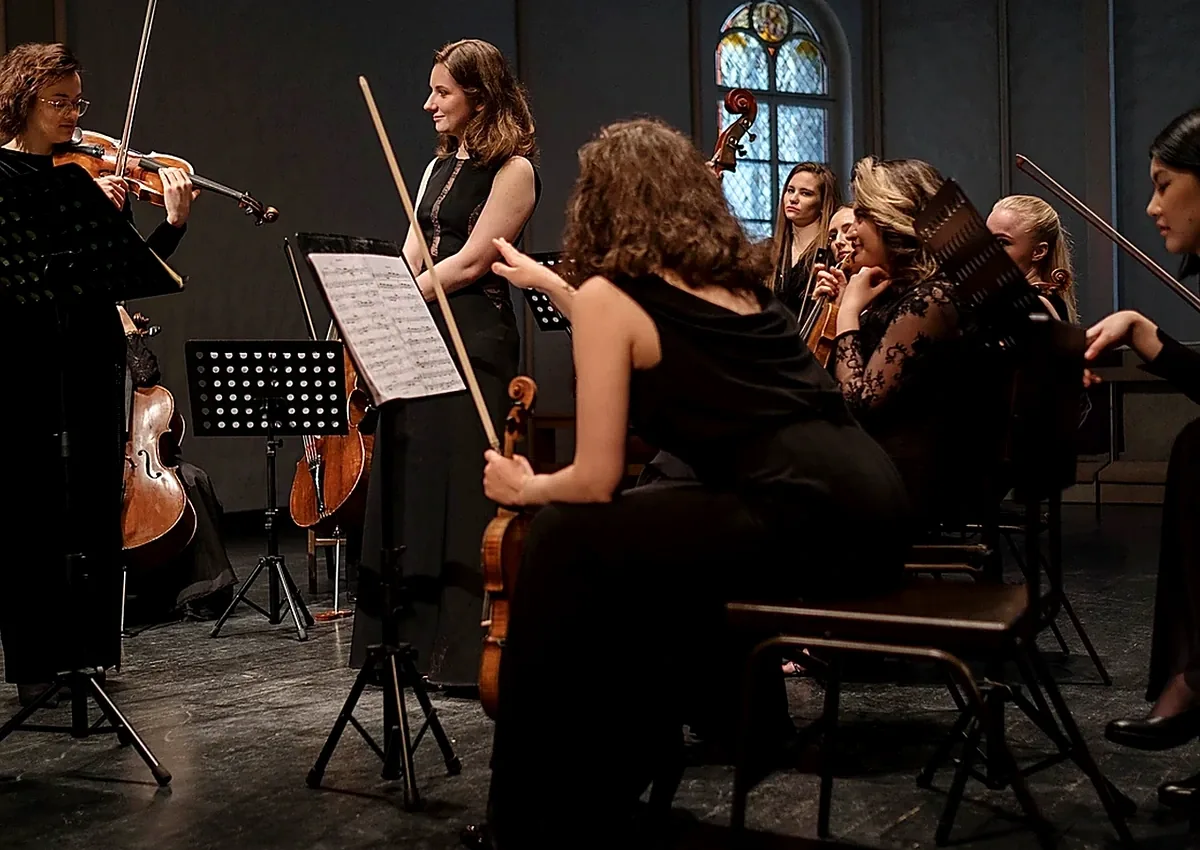
Pre-Class PreparationComplete score, accompaniment needs, performance video, and learning questions.
On-Site TasksPerformance, sectional diagnosis, demonstration comparison, and re-performance.
Core AssessmentTechnical efficiency, understanding of the work, sound control, and stage expression.
Recommended Capacity25–40 minutes per student, arranged by repertoire and level.
Outcomes Personal technical checklist, practice methods, interpretive suggestions, and trackable short-term goals.
Public Rehearsal of the Demonstration Ensemble
DEMONSTRATION ENSEMBLE Demonstration Ensemble

Turning the whole ensemble into an observable classroom

The demonstration ensemble is not a backdrop but the core medium of the master's teaching. Through shared repertoire, sectional rehearsal, and before-and-after comparison, it reveals how a team's sound is organized.
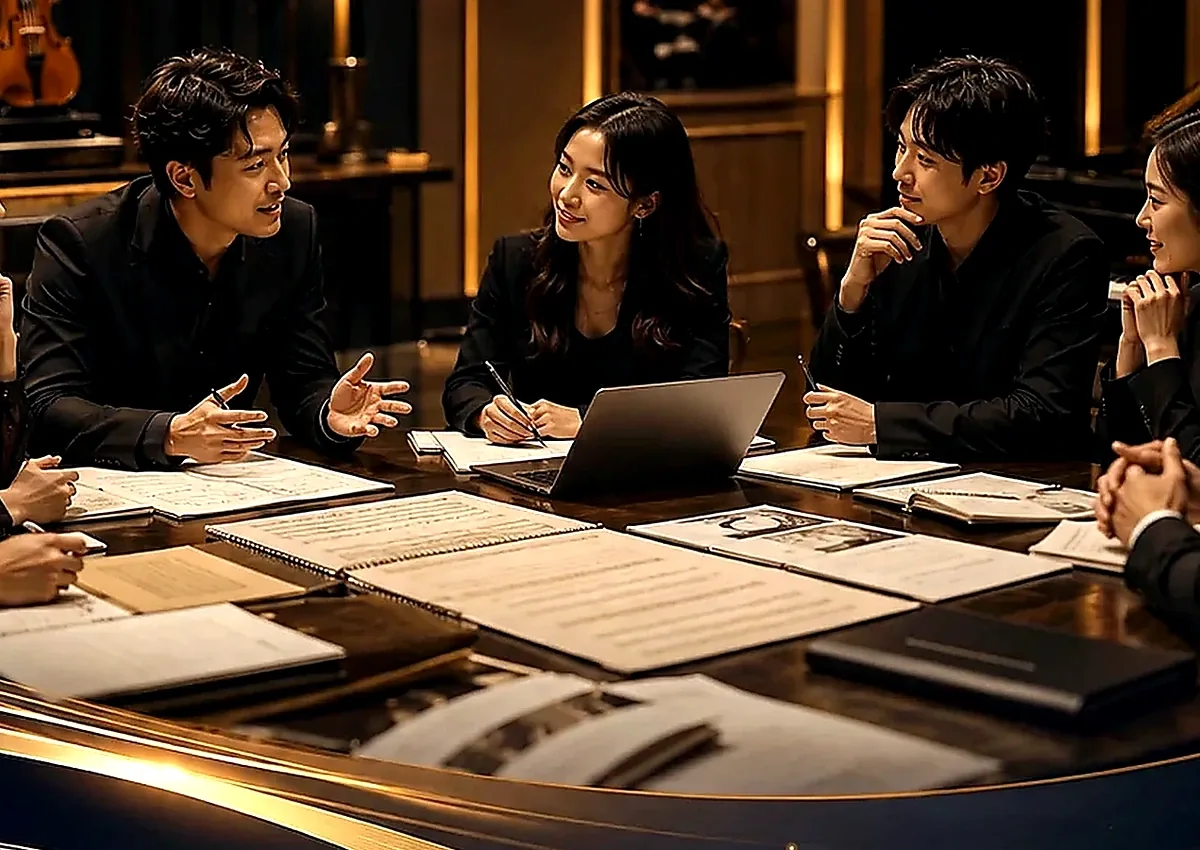
Pre-Class PreparationRoster, instrumentation, repertoire editions, rehearsal progress, and stage plan.
On-Site TasksFull performance, sectional breakdown, rotating conductors, and public re-performance.
Core AssessmentEnsemble cohesion, balance, listening, response to conducting, and rehearsal discipline.
Recommended ScaleAnything from a chamber ensemble to an 80-member orchestra can be assessed.
Outcomes Team feedback, key points for sectional improvement, rehearsal recommendations, and showcase concert excerpts.
Teacher Observation and Pedagogical Discussion
TEACHER OBSERVATION LAB Teacher Observation

Turning the master's judgment into usable teaching methods

The teacher track is not mere auditing—through observation tasks, pedagogical breakdown, and post-session discussion, teachers come to understand problem diagnosis, language choice, and rehearsal pacing.
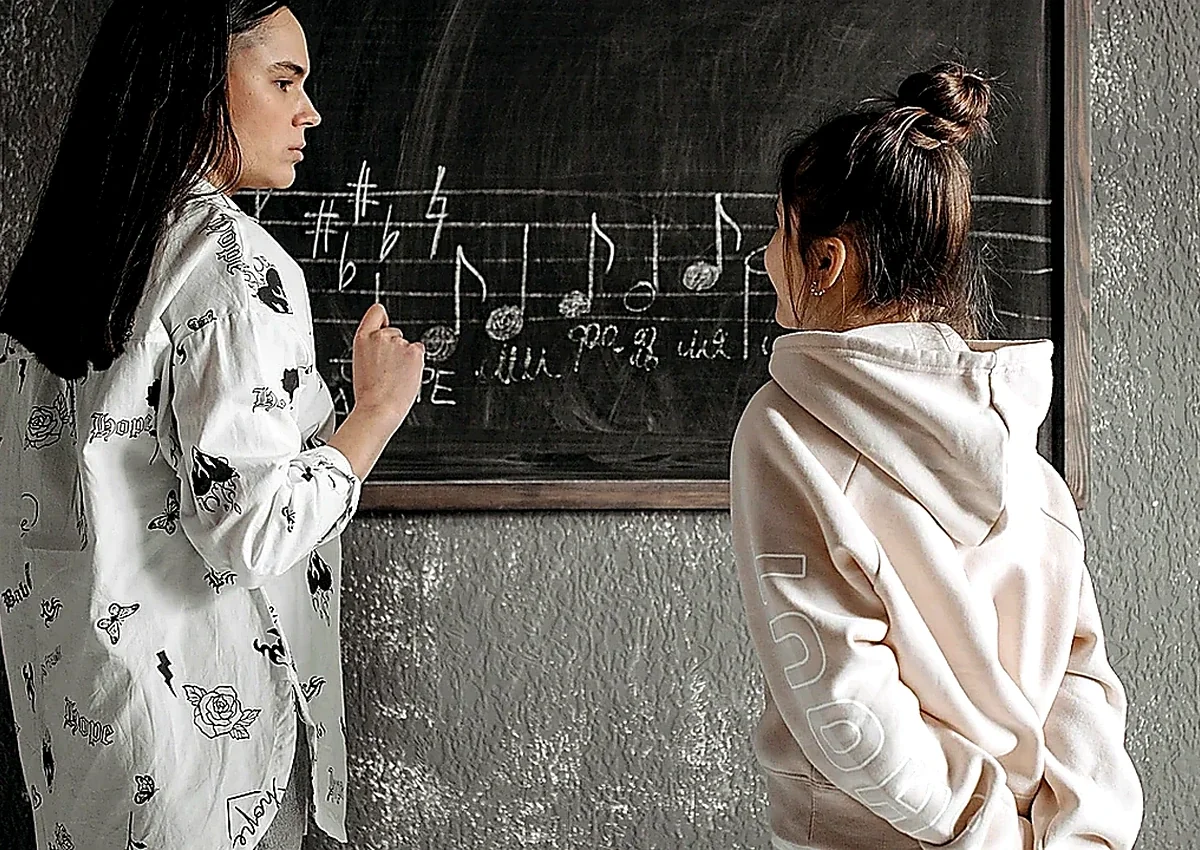
Observation ToolsTeaching observation forms, key-phrase records, and rehearsal timelines.
Discussion TasksComparing different approaches and discussing how to adapt them to classroom settings.
Core AssessmentDiagnostic logic, feedback language, demonstration methods, and pedagogical transfer.
Recommended FormatPublic class plus a closed-door teacher discussion or workshop.
Outcomes Teacher training hours, observation notes, a teaching toolkit, and a classroom application action plan.
Youth Music Learning and Guided Listening
YOUTH APPRENTICE TRACK Youth Program

Building young students' first entry point into understanding professional work

Focused on guided listening, rehearsal observation, questioning, and reflection, this track allows students not yet ready to perform actively to still understand how professional musicians work.

Mode of ParticipationAuditing, score reading, observation tasks, and small-group discussion.
Learning TasksIdentifying what the master changed, how, and with what result.
Core AbilitiesFocused listening, questioning, note-taking, and musical language expression.
Suitable ForJunior high, senior high, and young students with basic performance experience.
Outcomes Youth program handbook, learning reflections, observation tasks, and certificate of participation.
THE COACHING CYCLE

A five-step coaching cycle that turns abstract feedback into audible change

Each passage should go through “listen, judge, propose a method, replay and compare, plan the next step,” so the class leaves more than scattered soundbites.

01
Score Analysis

Reading the Score and Setting Goals

Confirm the work's structure, edition, technical challenges, and the core issue this coaching session aims to address.
02
Live Listening and Diagnosis

Full Listening and Diagnosis

First observe the original state, identifying the link between the sound produced and its true cause.
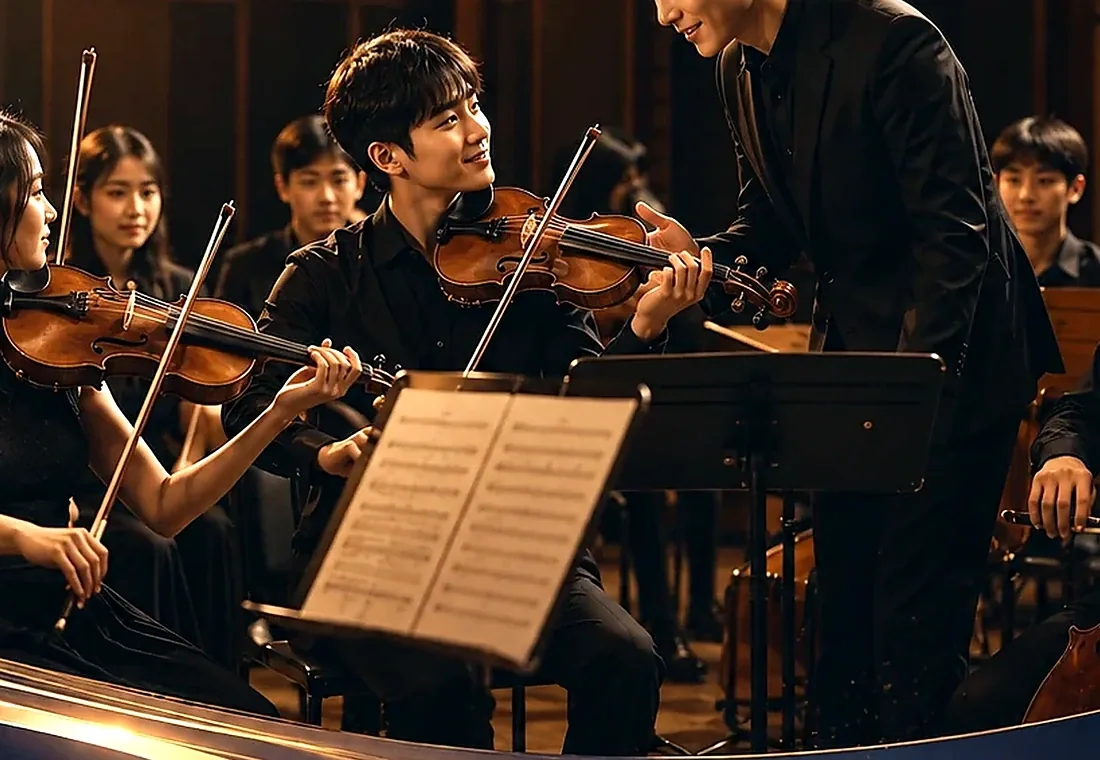
03
Masterclass Demonstration and Coaching

Demonstration, Questions, and Correction

Offer immediately actionable methods through gesture, sound, metaphor, or rehearsal language.
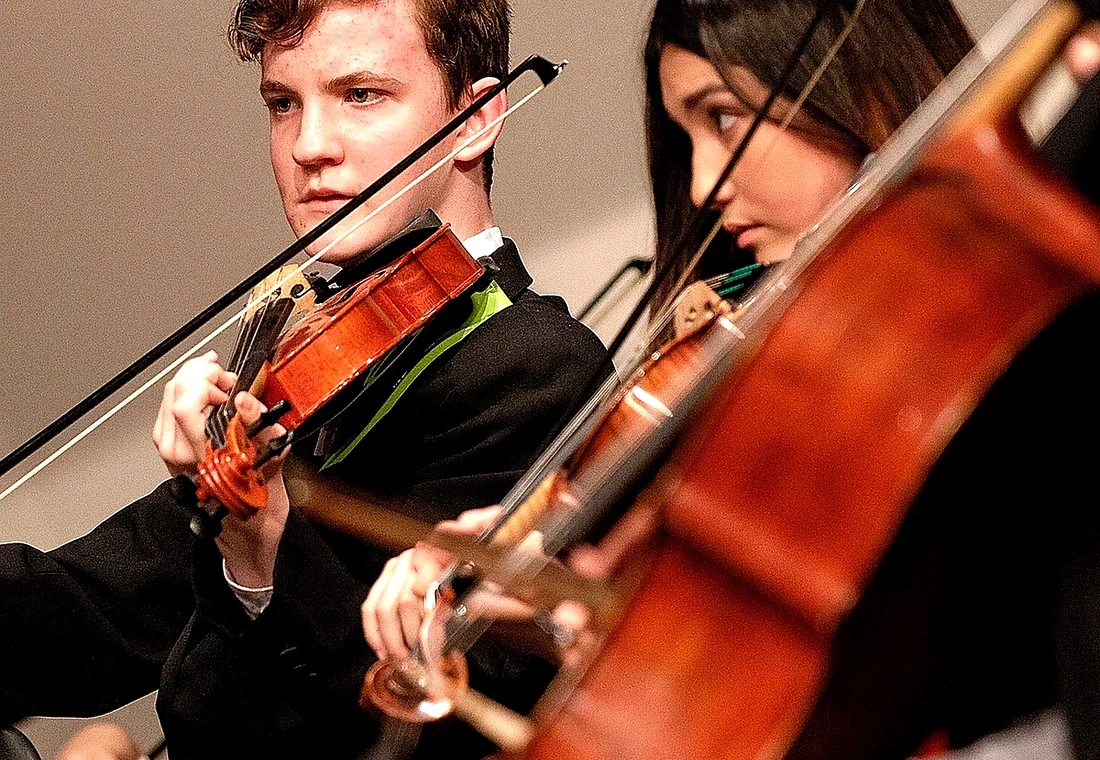
04
Replaying to Verify

Replaying and Comparing

Test the changes on the same passage to confirm which methods work and which still need adjustment.
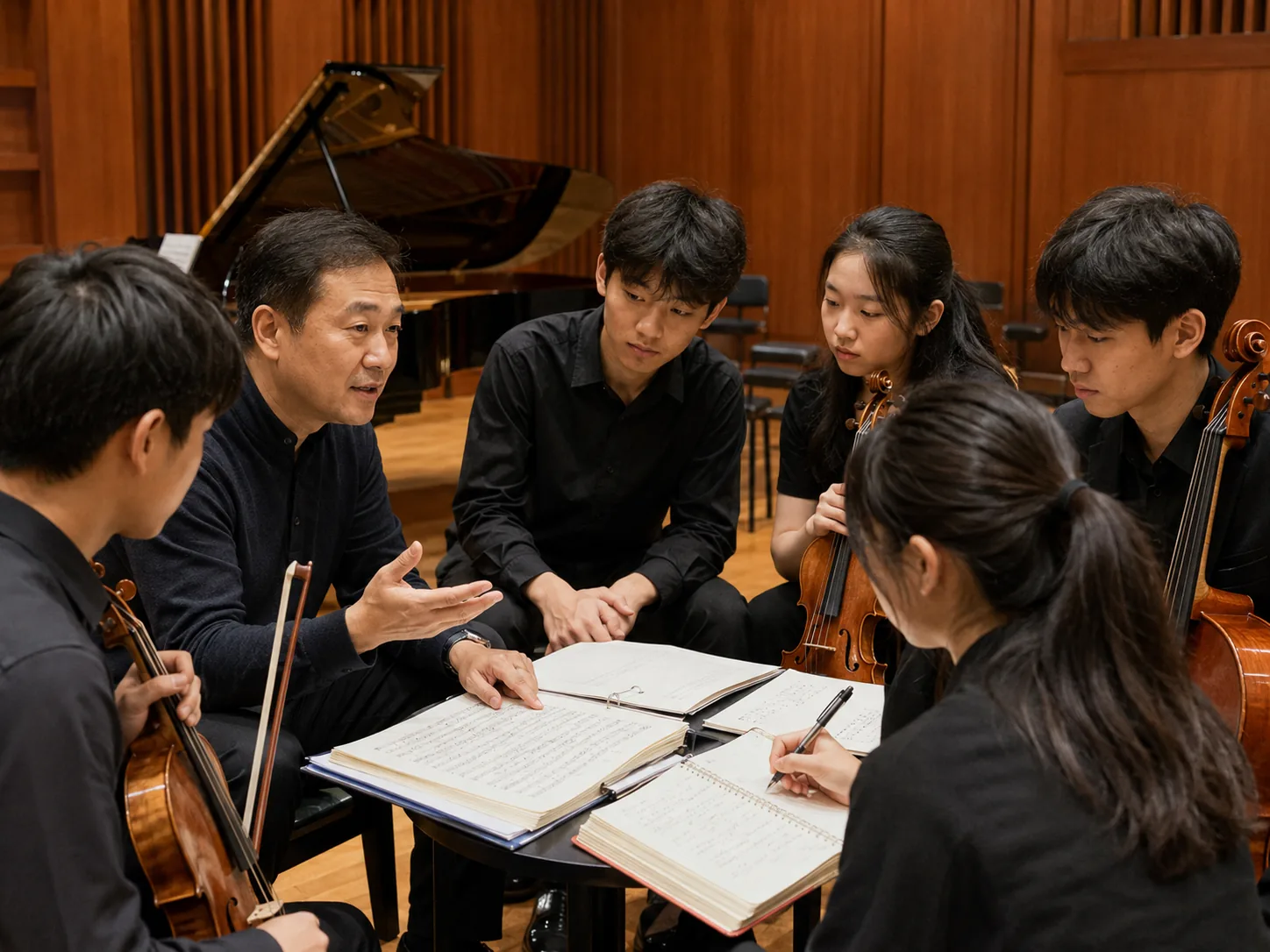
05
Post-Class Discussion and Reflection

Consolidating Methods and Next Steps

Turn the live experience into tasks that can be carried forward into practice, rehearsal, or teaching.

PROGRAM FORMAT BUILDER

Choose a one, two, or three-day format based on your goals and depth

Course length isn't just about adding hours; each extra day should bring a new learning cycle, teacher discussion, or showcase, not repeat the same content.

Choose a Course Format

Switch formats to view suggested schedules and suitable scenarios.

Suited for first-time collaborations, a single theme, or a city stop on a masterclass tour; the focus should stay sharp, not overloaded with students and repertoire.
SAMPLE AGENDA

One-Day Public Masterclass

Open Class + Demonstration Rehearsal
Times shown are a template; actual scheduling must be adjusted for the master's travel, number of students, demonstration ensemble, venue, and interpretation needs.
DEMONSTRATION ORCHESTRA LAB

The demonstration orchestra is the most important shared learning interface in a masterclass

Conductors, teachers, players, and observers all learn live through the same sound, so repertoire, instrumentation, rehearsal schedule, and stage order must be managed in advance.
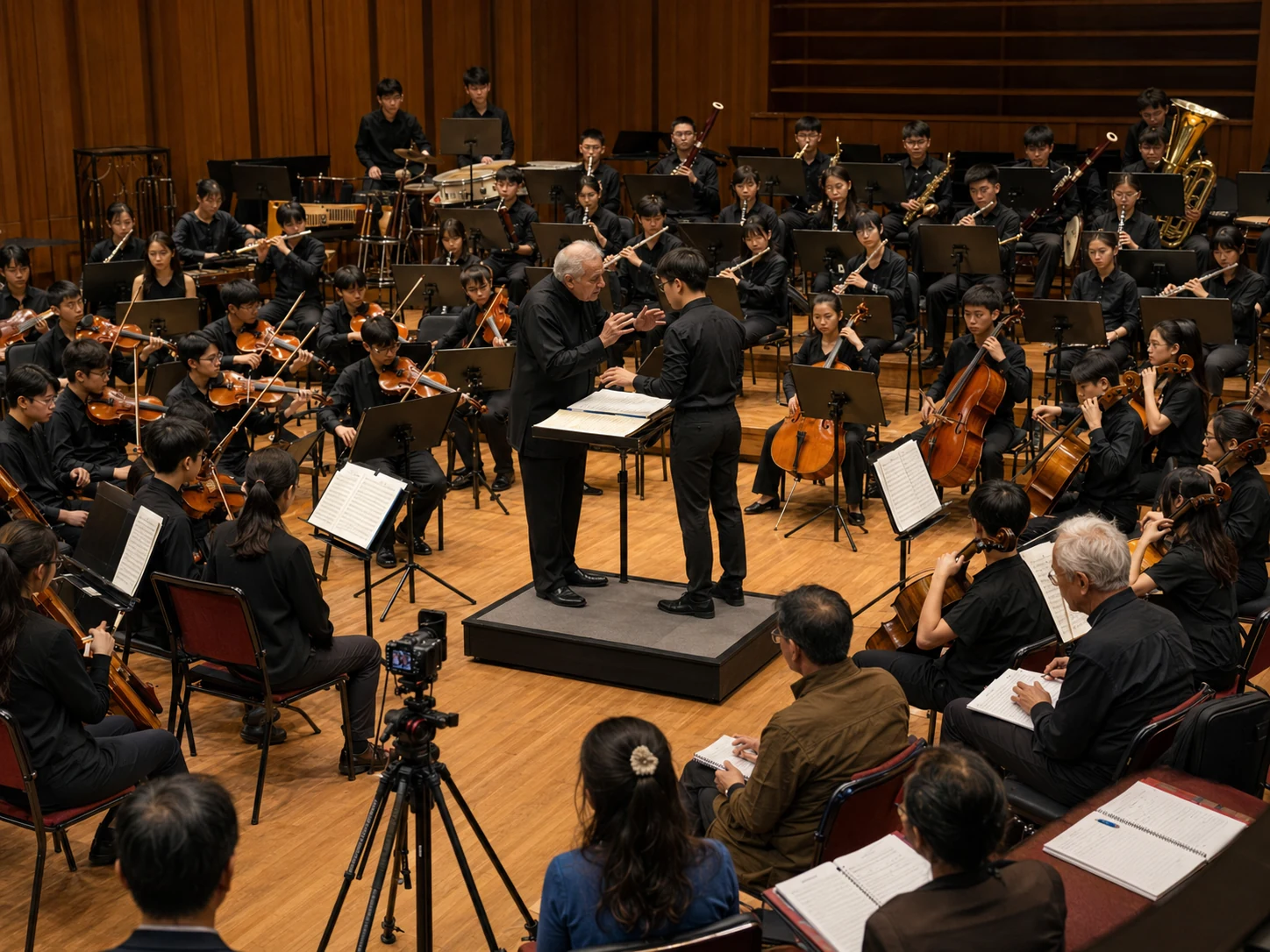
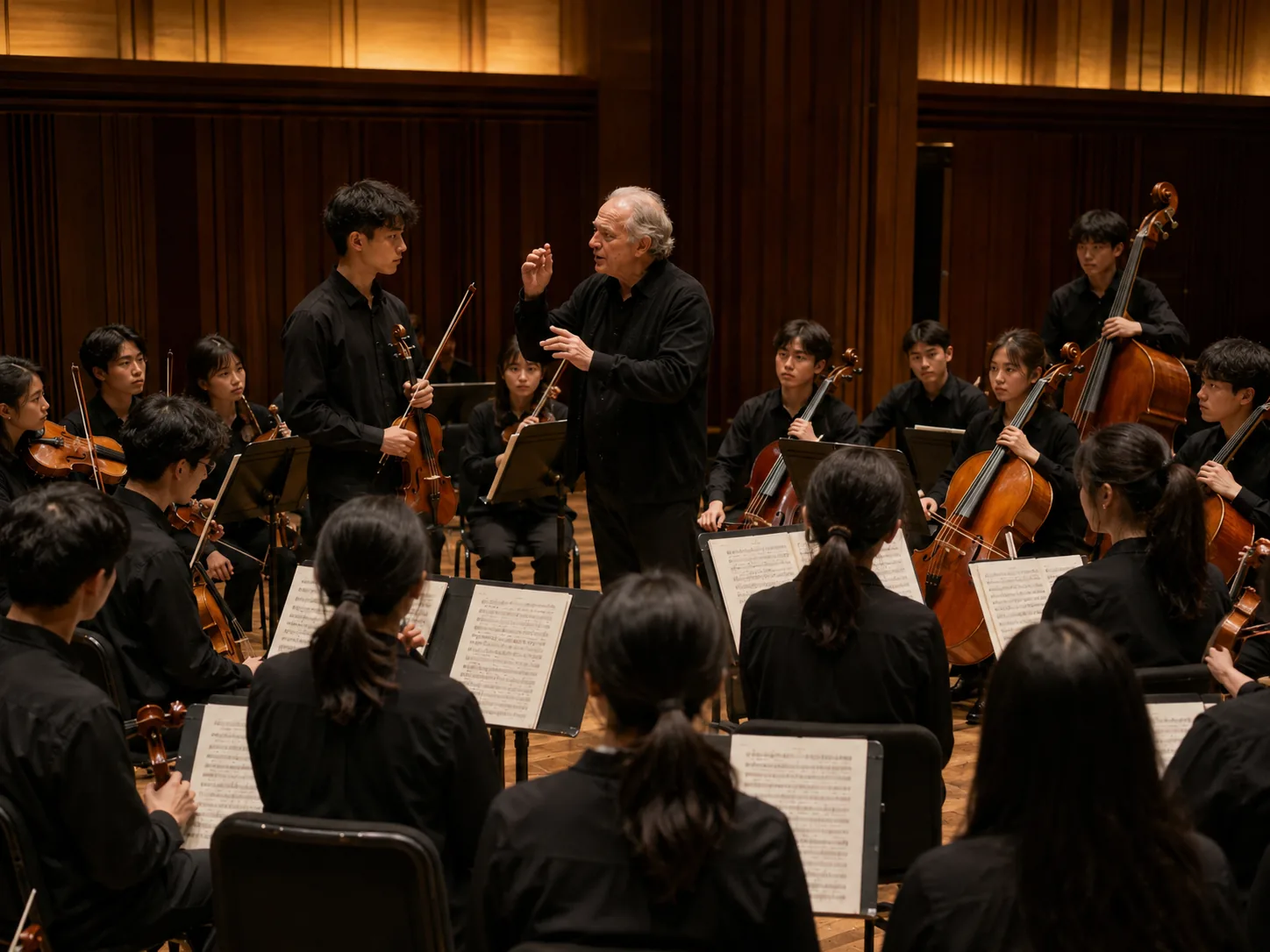
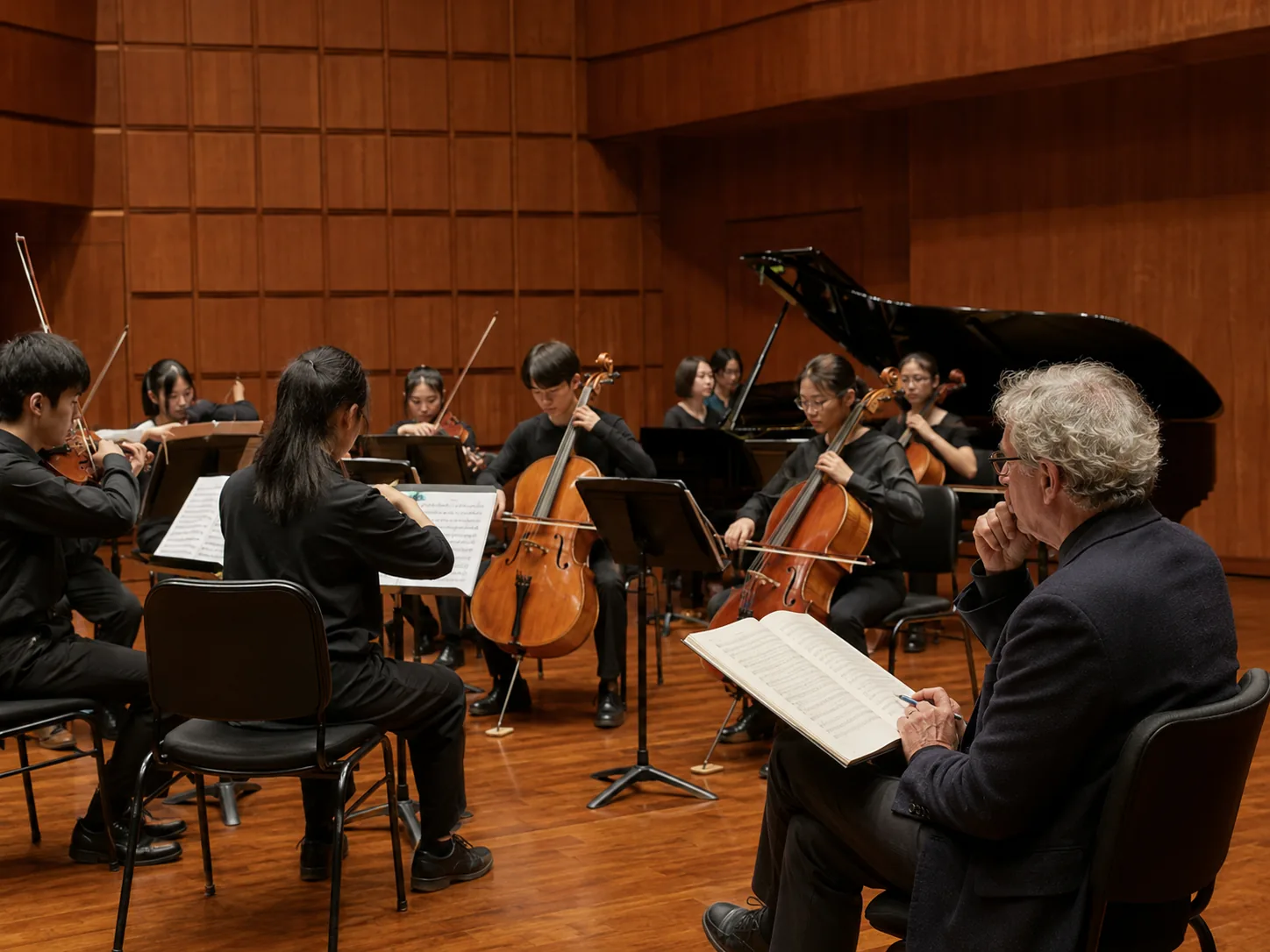
Demonstration Orchestra and Public Rehearsal with the Master Conductor
LIVE REHEARSAL LAB

From the first full performance to the final run-through

Preserving the differences before and after, so all participants understand how the master listens, chooses problems, and changes the ensemble's sound within limited time.

Pieces

Repertoire must be teachable, breakable down, and repeatable

Choose passages with clear structure and pedagogical value, rather than pursuing difficulty or surface effect alone.

Seats

Stage layout supports sightlines and quick rotation

Conducting students, the master, photographers, and players all need clear positions and safe pathways.

Scores

Editions, bowings, and scores must be unified in advance

All participants use the same edition, completing necessary part preparation before class.

Demonstration Orchestra Readiness Checklist

Player roster and instrumentationFull score and part editionsRehearsal schedule and recordingsStage seating layoutList of large instrumentsAuthorization and photography consent
FACULTY & LEARNING ROLES

A complete masterclass takes more than just one master

Beyond the lead master, it also requires a course facilitator, demonstration ensemble coaching, translation, teaching observation, and stage production — all working together to sustain both depth and on-site efficiency.
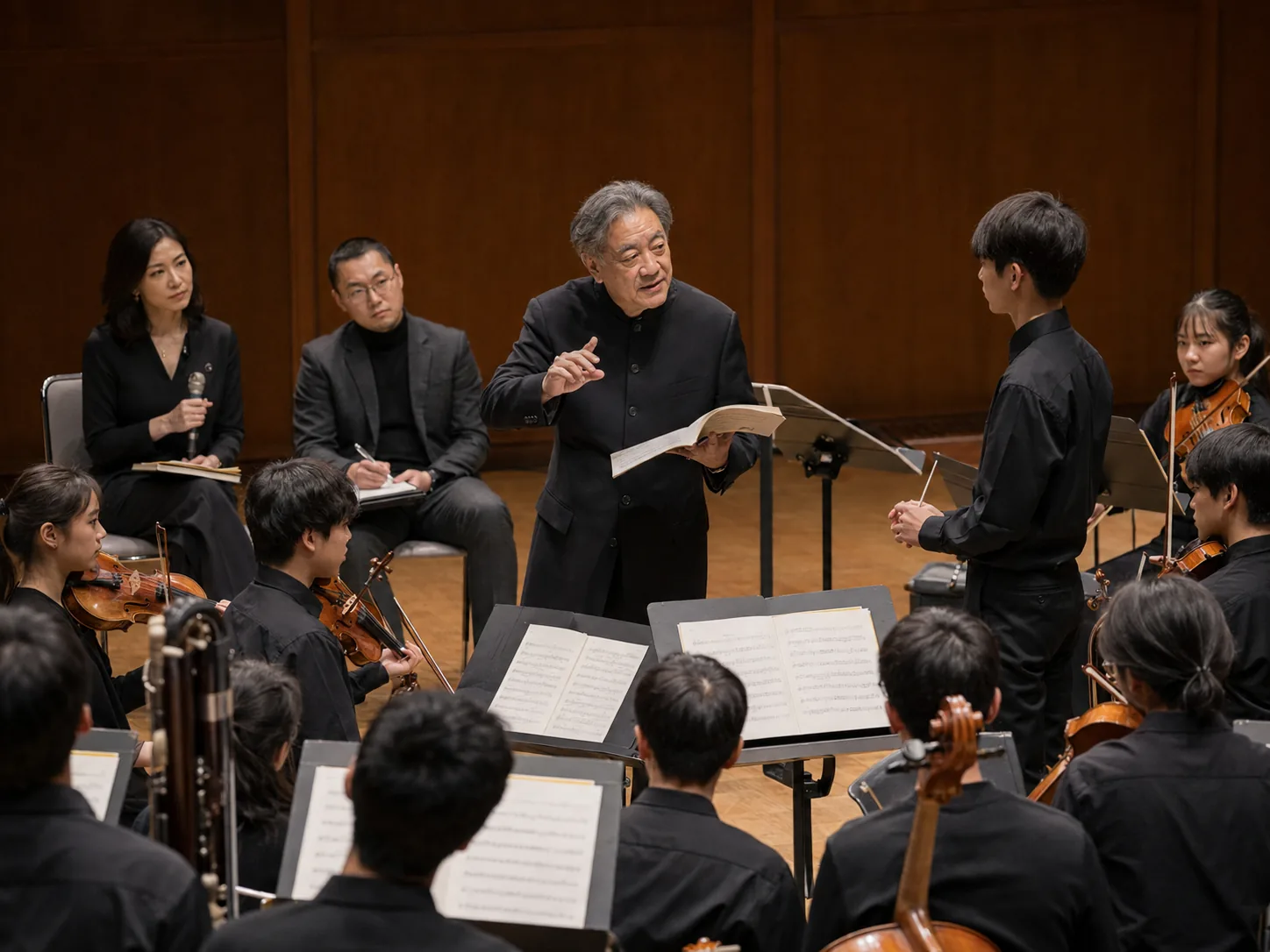
International Masters and Instrumental Teaching
LEAD MASTER

Lead Master / Artistic Mentor

Responsible for core teaching, repertoire diagnosis, demonstration, and summary; to be replaced with the confirmed master's name, title, and licensed photo before launch.
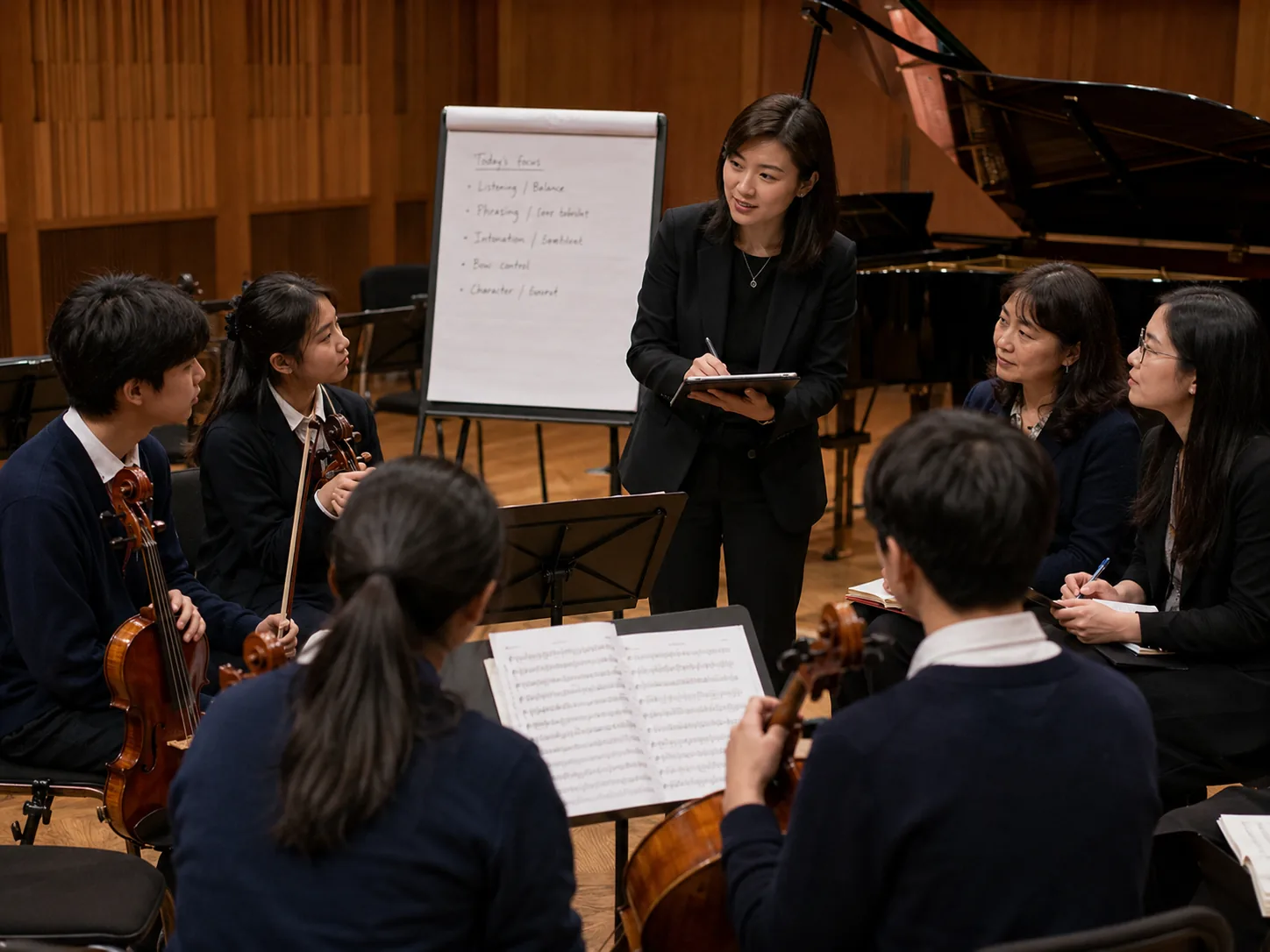
Teacher Observation and Course Facilitation
FACILITATOR

Course Facilitation and Educational Observation

Helps organize questions, keep pace, and connect classroom teaching with follow-up action.
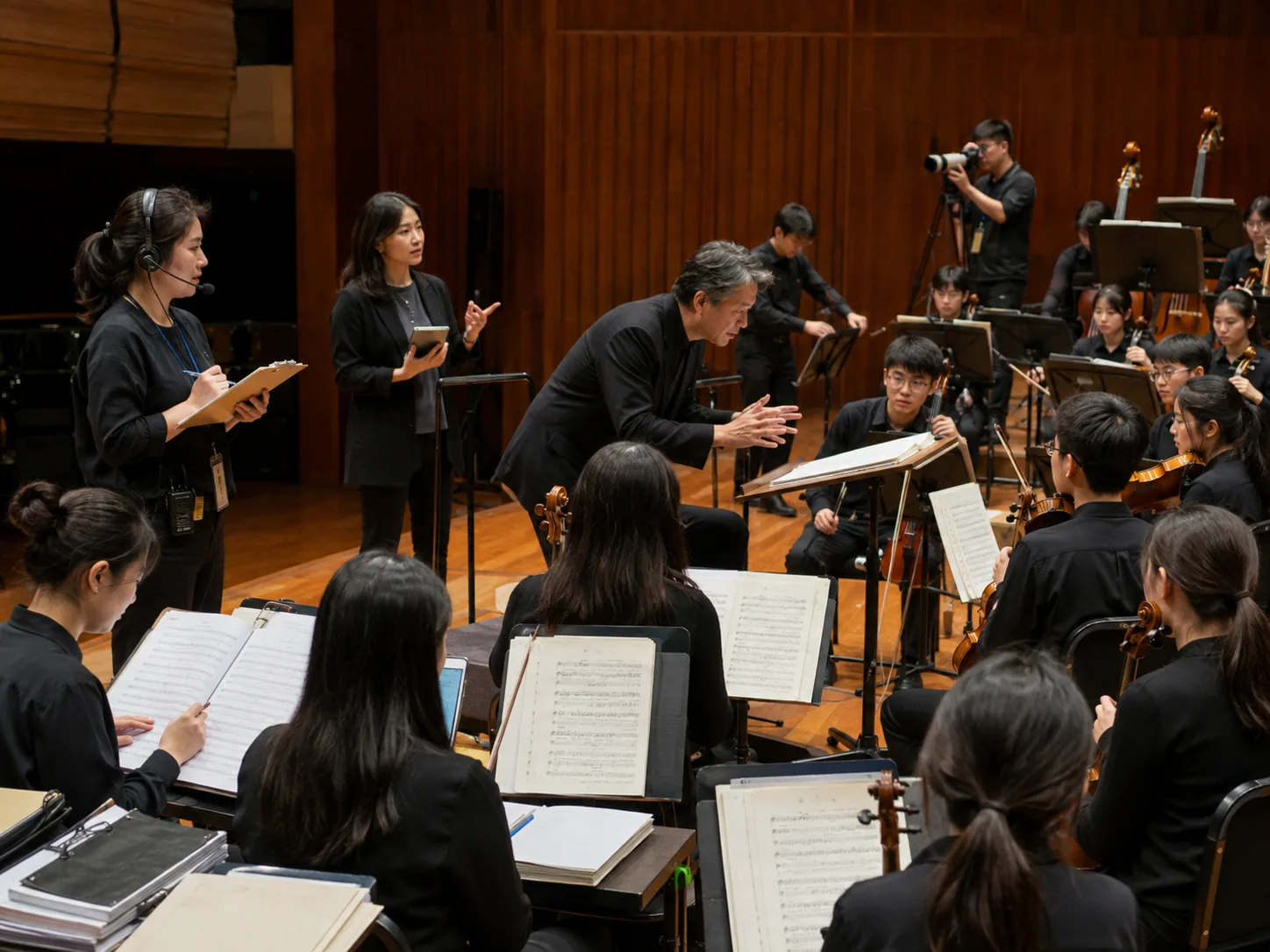
Demonstration Ensemble and Stage Production
ENSEMBLE & PRODUCTION

Demonstration Team and Production System

Supports score preparation, rehearsals, translation, staging, photography, and on-site workflow.

The images and roles in this section are placeholder mock-ups, not the Foundation's published faculty list or records of actual events.
APPLICATION & SELECTION

Selection isn't about finding the most skilled, but confirming who's the best fit for this learning experience

Places for active participants are limited; selection should weigh overall level, readiness, clarity of questions, repertoire fit, and follow-through ability — not resumes alone.

Suggested Application Materials

Different tracks may require different attachments, but all materials should serve pre-session review and on-site teaching.

  • Basic information and learning background of the individual or ensemble
  • Recent performance, conducting, or rehearsal footage
  • Planned repertoire, edition, and performance excerpts
  • 2–3 specific questions you'd like the master to address
  • Available time slots, interpretation, and special equipment needs
  • Confirmation of authorization for recording, open classes, and use of outcomes
Prep

Completeness of Preparation

Whether the materials, scores, footage, and questions allow the master to understand in advance.

Fit

Repertoire Fit

Whether the repertoire matches the course theme, time, and demonstration ensemble size.

Ask

Clarity of Learning Questions

Whether specific, observable questions can be raised and addressed on-site.

Follow

Follow-Through Ability

Whether participants have the environment and willingness to keep applying the methods afterward.

01 Read the GuidelinesConfirm track and requirements
02 Submit applicationMaterials, footage, and repertoire
03 Professional reviewLevel and fit assessment
04 Pre-session preparationEdition, schedule, and tasks
05 On-site participationGuidance, documentation, and feedback
LEARNING OUTCOMES

After the program ends, tangible learning outcomes should remain in use

Certificates are just one part; what matters more is that students, teachers, and teams leave with clear methods, records, and next steps.
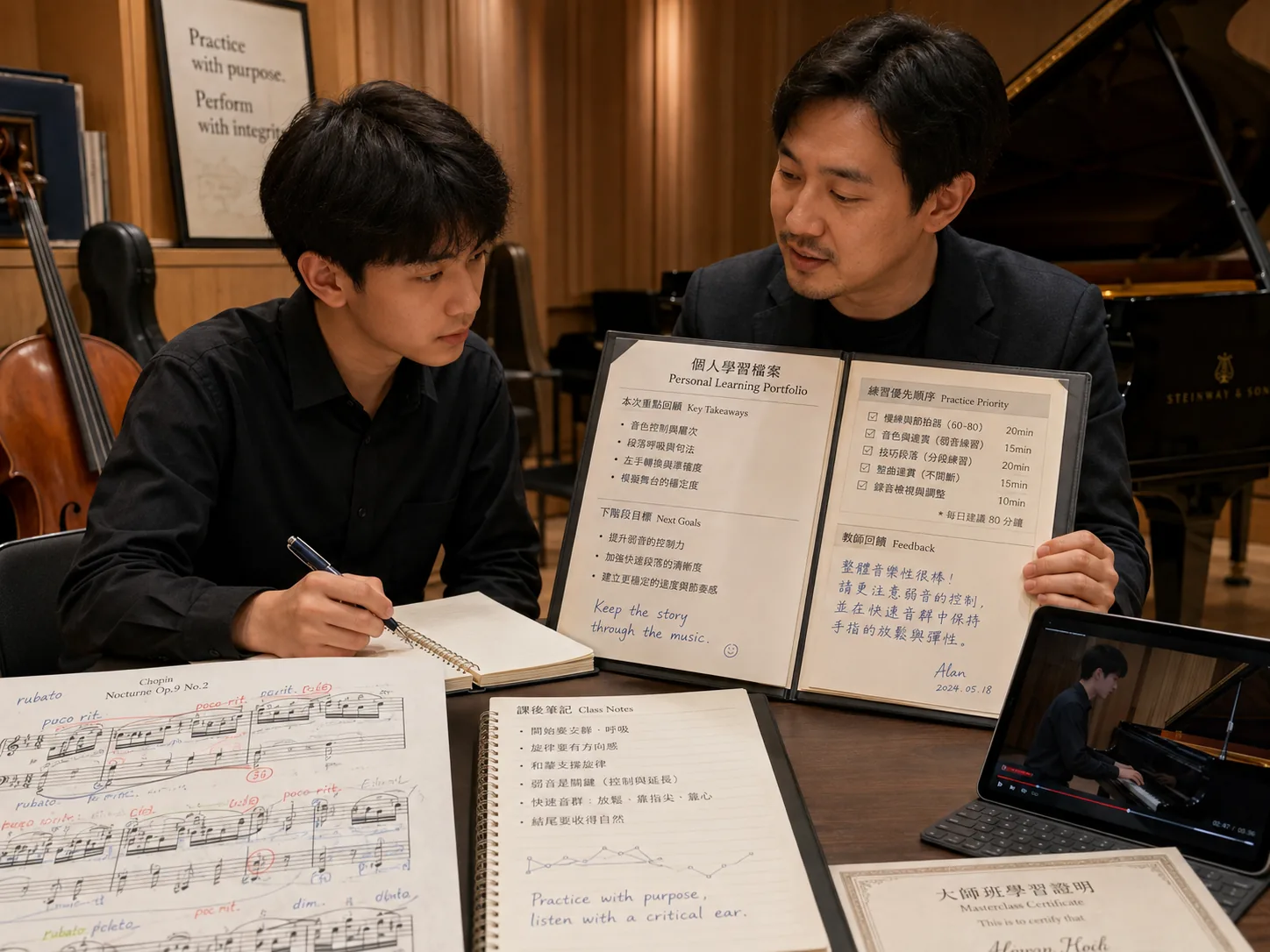
Individual Learning Outcomes and Video Records
items

Individual Learning Portfolio

Organizes on-site highlights, technical issues, practice priorities, and personal video clips.

Individual FeedbackAnnotated ScorePractice Assignments
Teacher Tools and Observation Records
items

Teacher Training Toolkit

Turns the masters' judgment, language, and rehearsal logic into teaching materials usable in schools.

Observation FormTraining HoursAction Plan
Demonstration Orchestra and Showcase Concert
items

Team Outcomes and Extensions

Preserves before-and-after comparisons, team critiques, public performances, and the basis for future collaboration.

Rehearsal RecordsPerformance VideoCollaboration Recommendations
FREQUENTLY ASKED QUESTIONS

Frequently Asked Questions

Final quotas, fees, repertoire, licensing, and observer rules are subject to each session's official announcement.

Active participants actually conduct, perform, or receive individual coaching; observers mainly watch, take notes, and join designated discussions, usually without guaranteed stage time.
It's generally recommended for active participants, so the course team can assess level, repertoire, and teaching fit; teacher observers or general audit applicants may be exempt per the guidelines.
You may propose one, but factors such as the master's expertise, the demonstration ensemble's size, edition, copyright, rehearsal time, and course theme must be considered, with final confirmation by the organizer.
Professional interpretation can be arranged for international masterclasses as needed, but language, musical terminology, consecutive or simultaneous mode, and fees should be confirmed in advance.
Applications can be made according to partner organizations' and authorities' regulations; the template can retain necessary steps such as sign-in, course records, training certificates, and outcome feedback.
Consent must be obtained from the master, participants, demonstration ensemble, venue, and repertoire rights holders. Licensing may range from full documentation and internal learning use to promotional highlights and public livestreaming.

Plan a Masterclass That Truly Transforms the Way Students Learn