
WORLD HERITAGE MUSIC PROJECT
Let music,
return to millennia-old mountains
in dialogue with civilization
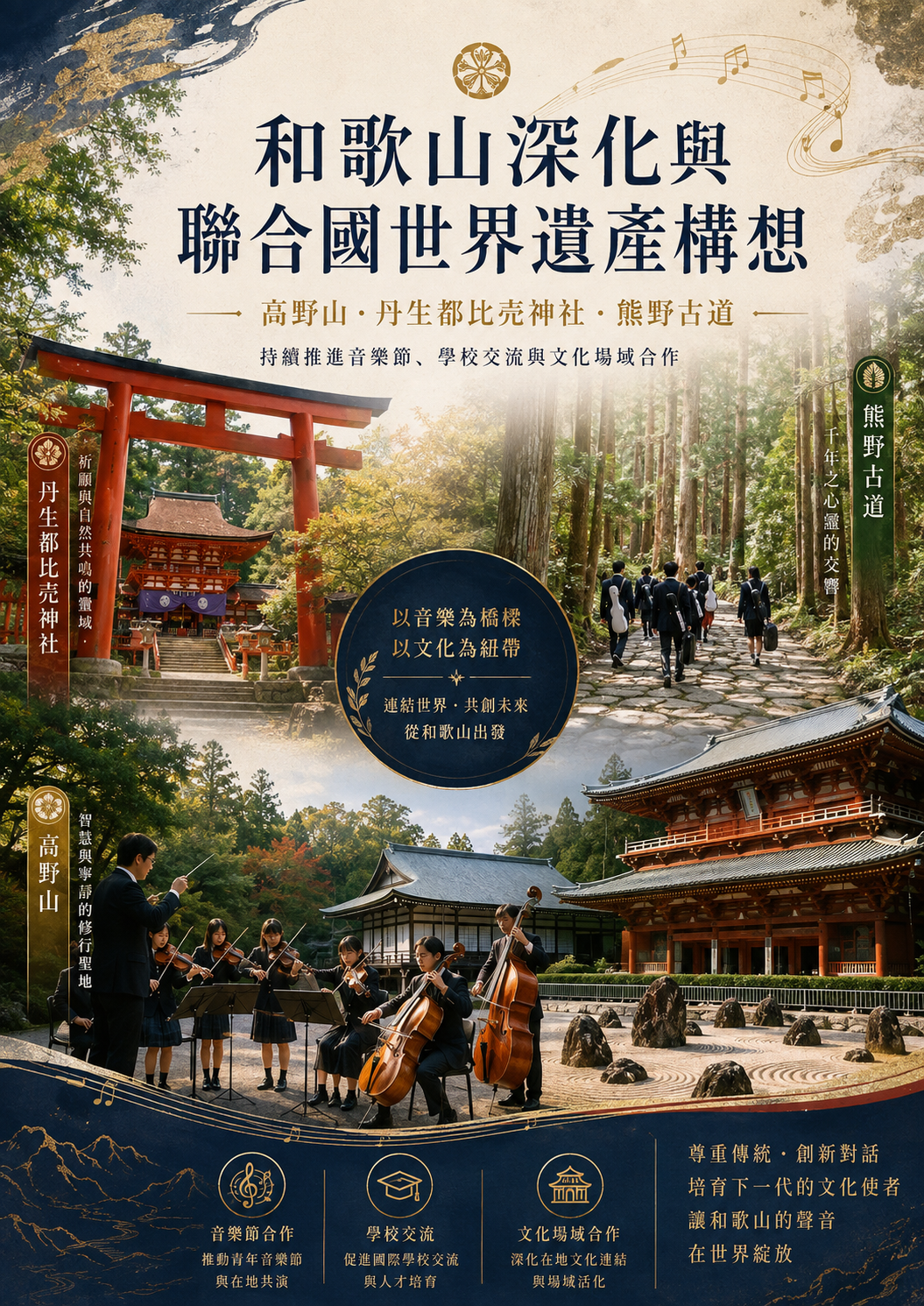
Rooted in the sacred sites and pilgrimage routes of the Kii Mountain Range, this journey connects Koyasan, Niutsuhime Shrine, Kumano Kodo, and Mount Nachi—crafting for each group a music education journey that honors the land, understands its faith, and responds to nature.
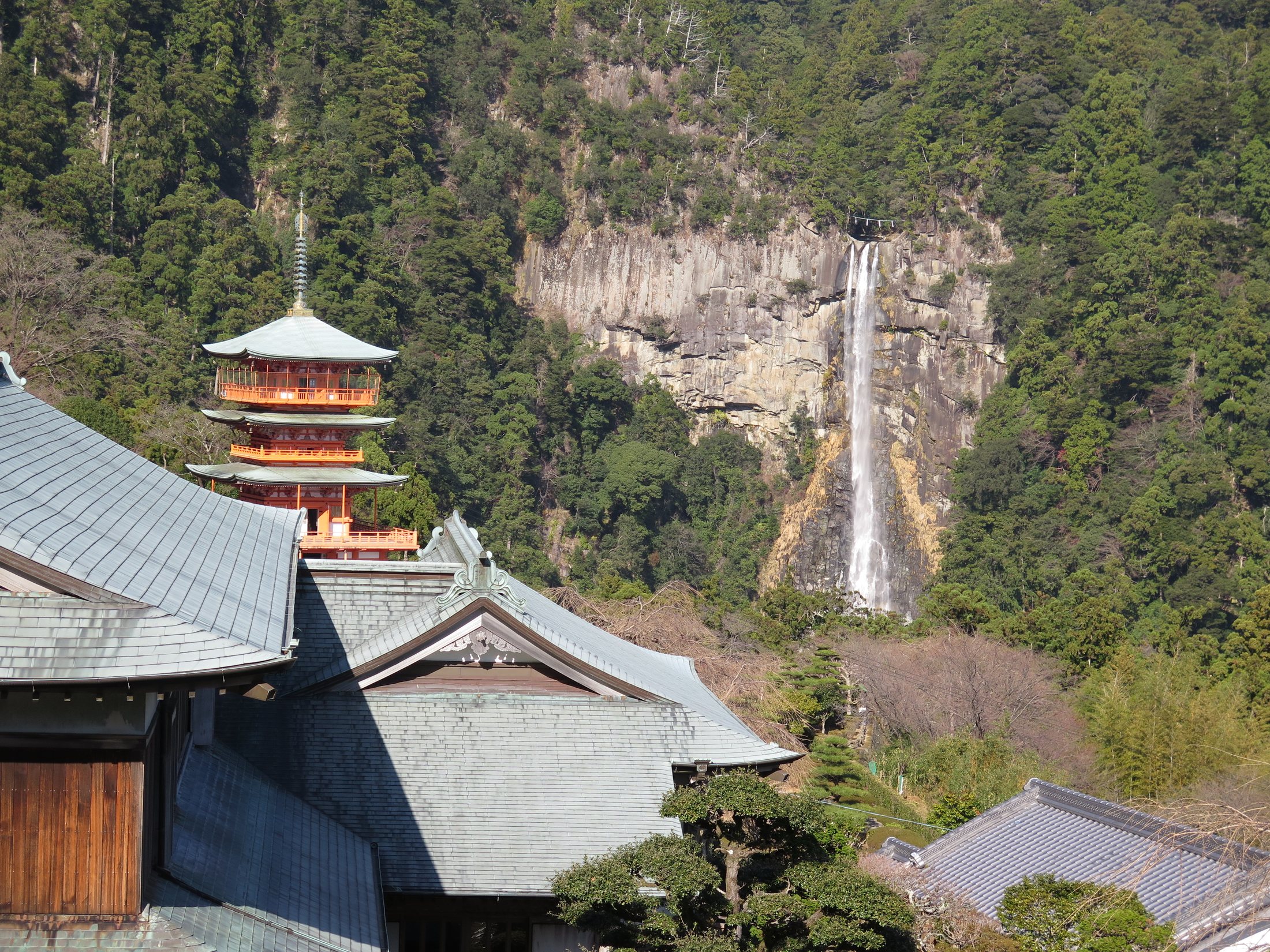
SACRED SITES · KII MOUNTAIN RANGEAmong the mountains, paths, shrines, and falls,
hear the echoes time has left behind.
hear the echoes time has left behind.
Pray Music and
World Heritage
World Heritage
2004Inscribed on the UNESCO World Heritage List
3 Sacred AreasYoshino/Ōmine, Kumano Sanzan, Koyasan
Music × HeritageMusic Education in Dialogue with Cultural Sites
Project in DevelopmentProceeding per site approval and collaboration terms
A LIVING CULTURAL LANDSCAPEThis is not a single tourist spot,
but a cultural landscape continuously shaped by faith, pilgrimage, and stewardship.
but a cultural landscape continuously shaped by faith, pilgrimage, and stewardship.
UNESCO CULTURAL LANDSCAPE
Sacred Sites and Pilgrimage Routes of the Kii Mountain Range
This World Heritage site comprises three sacred areas—Yoshino/Ōmine, Kumano Sanzan, and Mount Koya—along with the pilgrimage routes connecting them, presenting a unique landscape shaped by the long-term intermingling of Shinto nature worship and Buddhist culture in Japan.
This project therefore does not aim merely to "perform at a scenic site," but to let students understand, through mountains, forests, shrines, temples, trails, and local memory, how music responds to space, history, and the human spirit.
THREE SACRED CHAPTERS
Within cultural chapters・Experiencing diverse sonic imaginations
Each site carries its own history, spatial scale, and etiquette. This program designs repertoire, ensemble, and learning content according to cultural context, rather than applying the same performance approach everywhere.
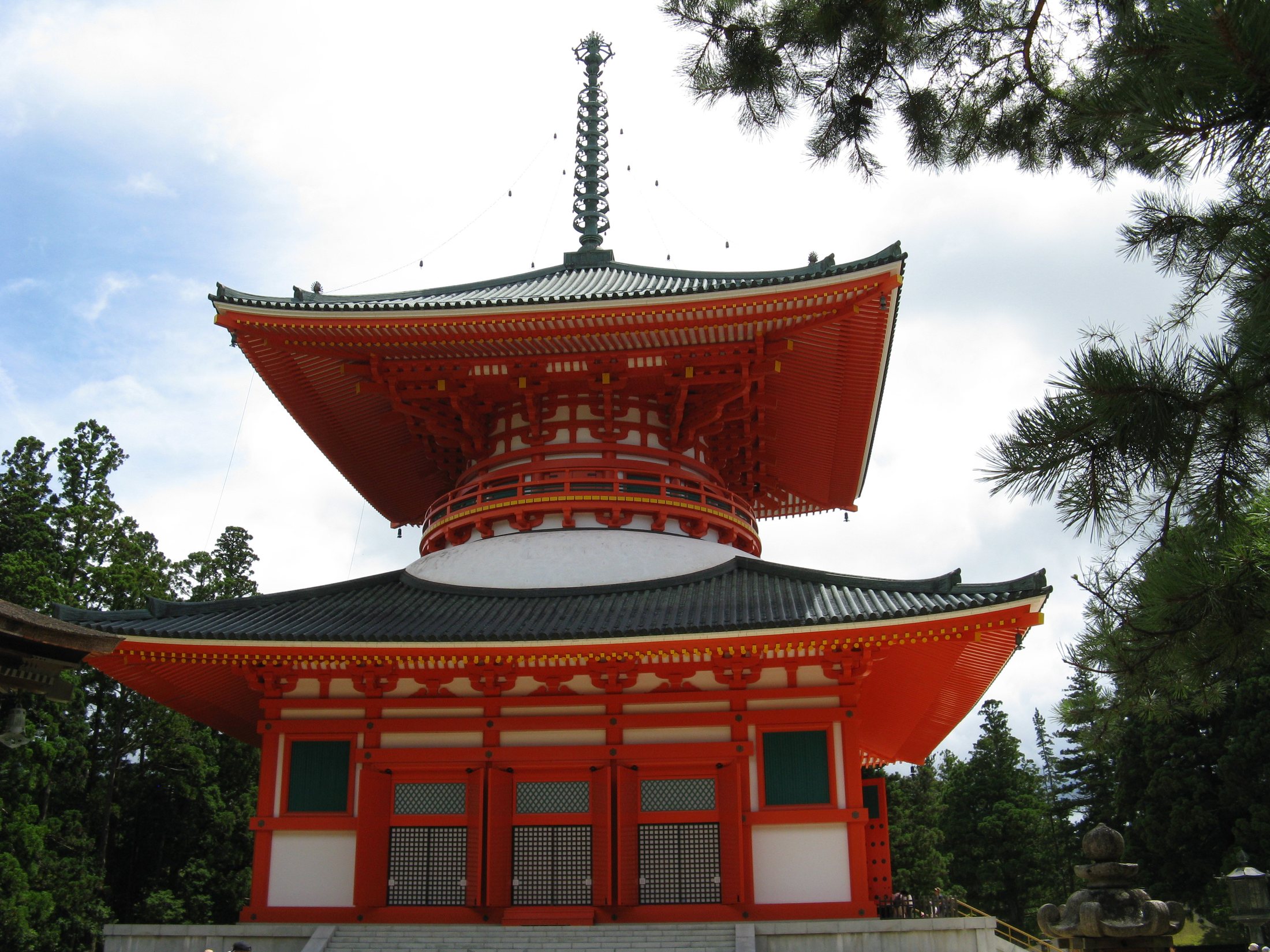
CHAPTER I · KOYASAN
Koyasan
Centered on the spatial spirit of the Buddhist mountain town, Danjo Garan, and Okunoin, reflecting on order, silence, breath, and solemnity in music.
Stillness・Solemnity・Inner listening
CHAPTER II · NIUTSUHIME
Niutsuhime Shrine
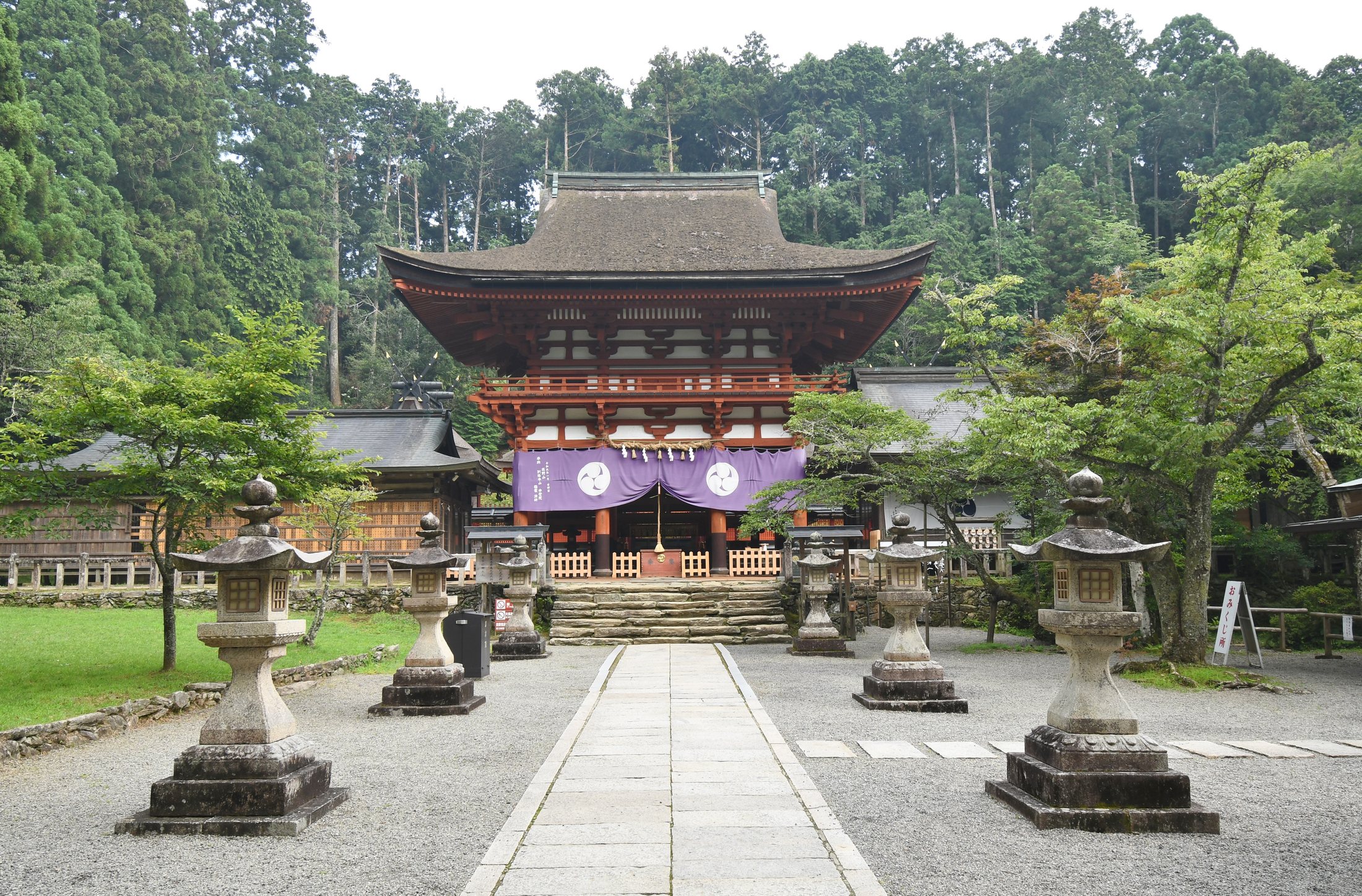
Through shrine architecture, the Rinbashi Bridge, and the natural surroundings, understanding the fusion of Shinto and Buddhism, local guardianship, and the reverence carried by dedication culture.
Guardianship・Dedication・Cultural connection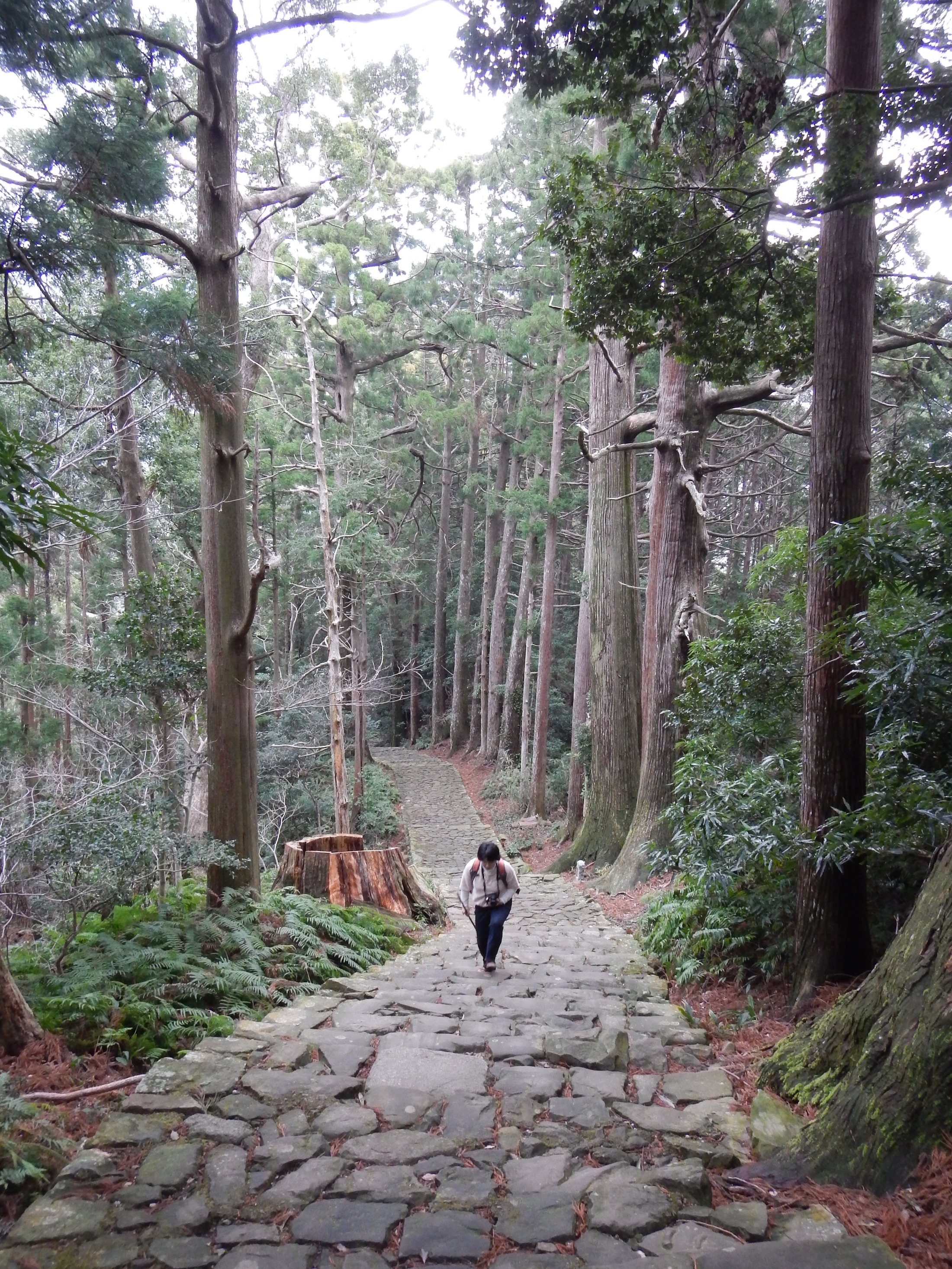
CHAPTER III · KUMANO
Kumano Kodo
Incorporating walking, the sounds of mountain forests, and the pilgrimage journey into learning, so students understand that "before reaching the stage" is itself cultural education.
Walking・Nature・Spiritual journeyMUSIC AS A CULTURAL OFFERINGNot moving the stage into a heritage site,
Not moving the stage into a heritage site,
but teaching music to respect the site
The World Heritage Music Project puts "cultural understanding before performance" at its core. All performance formats, repertoire, volume, timing, and scale of participation must be adjusted according to site management, religious protocol, safety capacity, and formal approval.
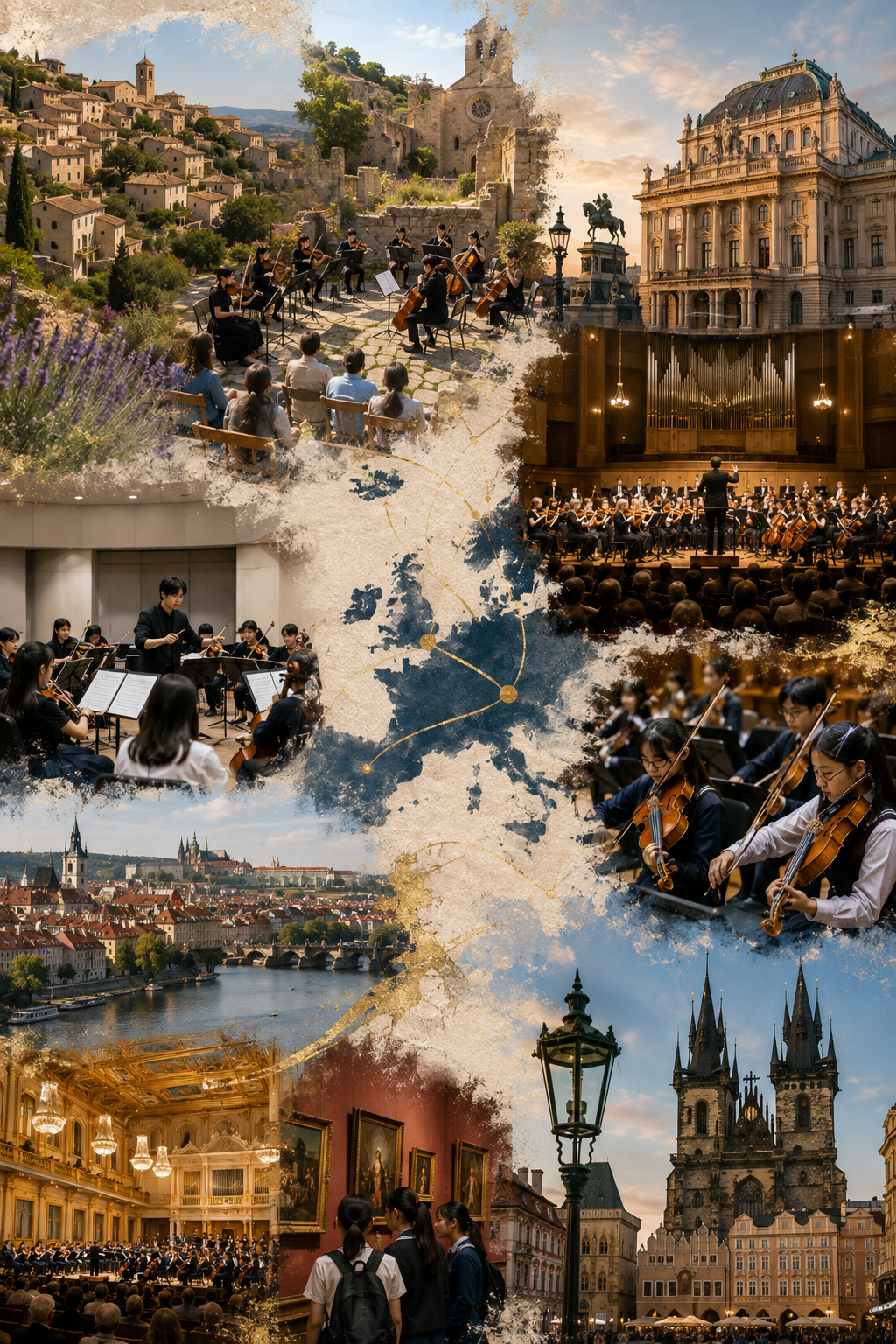
Possible educational content includes cultural orientation, pre-trip courses, site etiquette, site-appropriate repertoire, chamber or small-ensemble performance, discussion of offering formats, documentation production, and post-visit reflection.
- Whether the performance suits the site, not just visual effect
- Integrating music, history, faith, and nature education
- Prioritizing small ensembles, low disruption, and high quality
- All activities are subject to the management unit's formal approval
Music・Culture・Respect
FOUR PRINCIPLES OF STEWARDSHIP
Protect the place first, then speak of inspiration
World heritage sites and sacred spaces are not ordinary event venues. Program design must honor cultural ethics, religious ritual, environmental capacity, safety, and educational quality all at once.
Respect for Ritual
Observe shrine, temple, and local cultural norms, understand ceremonies and daily operations, and never disrupt acts of faith.
Scale Control
Choose ensemble size, volume, audience numbers, and flow according to the space and acoustics, avoiding over-programming.
Environmental Care
Reduce equipment, waste, and transport impact, making protection of mountains, forests, and cultural assets part of the standard.
Authentic Learning
Centered on students' understanding, reflection, and long-term growth—never reducing sacred spaces to a photo op or résumé backdrop.
FROM DIALOGUE TO RESPONSIBLE PRACTICEFrom dialogue with the site,
From dialogue with the site,
toward responsible performance
This page presents the project's methodology and collaborative direction; actual locations, formats, dates, and performance content must be formally confirmed by the site's managing authority and partners.
- 01
Cultural and site research
Understanding the value of the World Heritage site, its religious context, management regulations, seasonal and spatial conditions.
- 02
Partner agreements
Clarifying responsibilities and approval procedures with local governments, site managers, schools, and cultural institutions.
- 03
Repertoire and ensemble design
Selecting suitable works and performance scale based on acoustics, etiquette, timing, and environmental capacity.
- 04
Pre-trip education and on-site practice
Completing cultural training, etiquette, safety, and performance preparation, carried out in a low-impact manner.
- 05
Documentation, feedback and continuity
Compiling footage, student reflections, and partner feedback to build a sustainable rather than one-off cultural relationship.
VISUAL NOTES FROM THE KII MOUNTAINS
Mountains, Shrines, Waterfalls, and Time
Visuals are not decoration, but an entry point for understanding cultural landscapes. Each image points to a different spatial experience: scale, material, light, and the traces left by nature and people.
BUILD A RESPONSIBLE HERITAGE MUSIC PROJECTLet a single performance,
Let a single performance,
become the start of understanding culture and safeguarding the world
We welcome inquiries from schools, youth orchestras, chamber ensembles, cultural and educational organizations, and corporate partners. Programs will be designed based on venue approval, educational goals, ensemble size, and formal application requirements.
World Heritage information sources: UNESCO World Heritage Centre, Wakayama Prefecture Official Tourism Website.Scene photo credits: Wikimedia Commons; see IMAGE_CREDITS.txt for detailed authorship and licensing.