Start with a love of music
Build steady practice habits, correct posture, and foundational performance skills.
Starting from Taiwan's schools, local orchestras, and students' learning environments, Lexuan Cultural Education Foundation gradually brings children into ensemble playing, rehearsals, the stage, and international exchange. Youth orchestra development is not a short-term training camp, but a system rooted in Taiwan's music education environment that lets students build fundamental skills, team responsibility, stage confidence, cultural perspective, and long-term learning habits growth system.
The backgrounds and images in this "Music Education" section consistently feature Taiwanese students, Taiwanese schools, and Taiwanese orchestras as the primary visuals; publicly sourced images depict Taiwan's music education context and do not represent actual records of the Foundation's activities.
Build steady practice habits, correct posture, and foundational performance skills.
Understand parts, rhythm, pitch, conducting, and mutual cooperation.
Through rehearsal, refinement, and stage practice, build shared achievements.
Connect through inter-school exchanges, music festivals, masterclasses, and international stages.
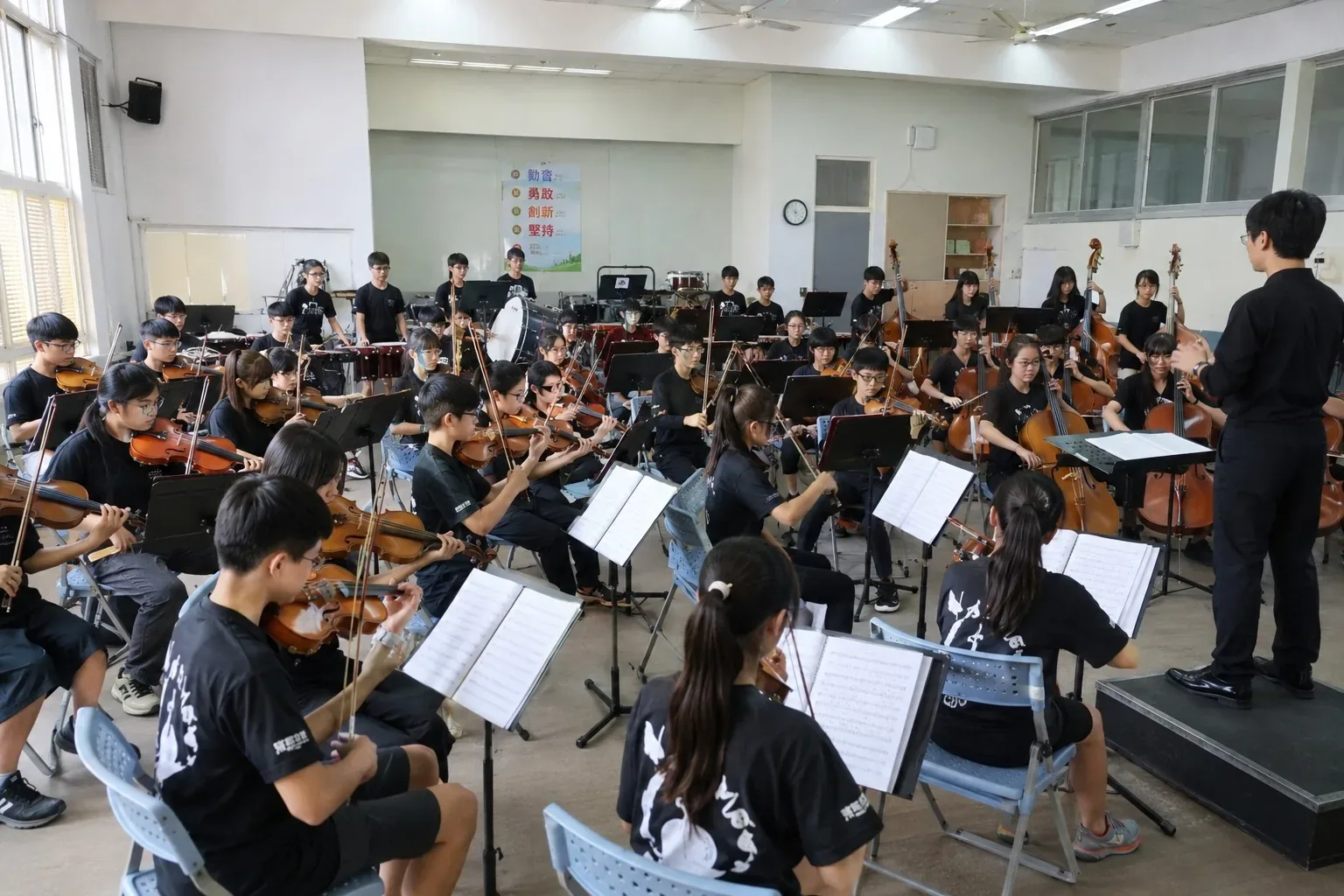
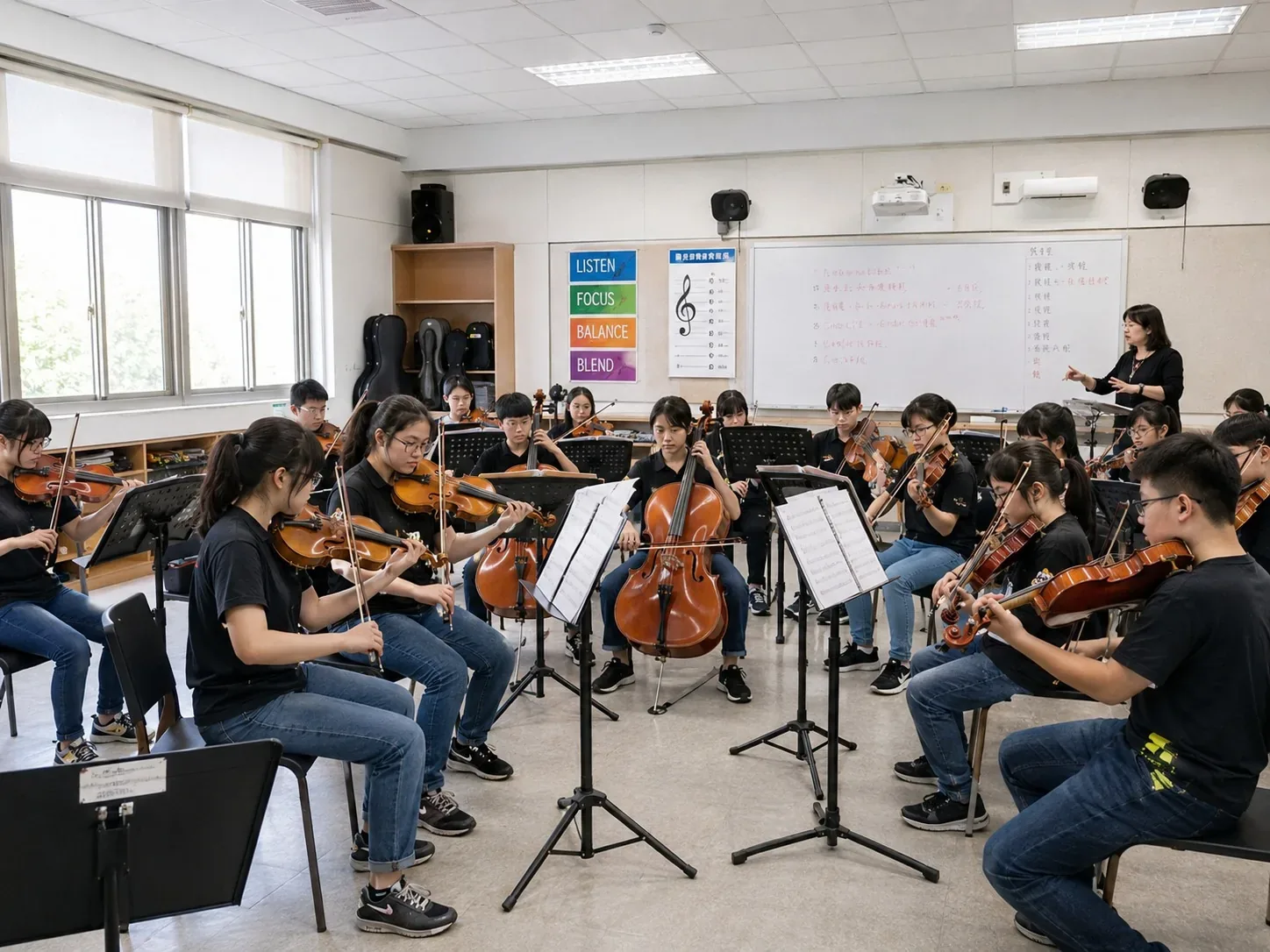
Since May 2013, the Foundation has driven the “Philharmonic Sharing Program,” starting from instrument resources and campus needs, and continually exploring how music learning can go beyond individual lessons to form ensembles, orchestras, and long-term educational support.
The value of a youth orchestra lies in children learning to face themselves, their peers, the conductor, and the music all at once. Every moment of waiting, listening, adjusting, and working together builds focus, responsibility, communication, discipline, and cooperation.
“When one child learns to play, that is the beginning of ability. When a group of children learn to listen to and play with each other, that is the birth of an orchestra.”
An orchestra's growth relies on more than weekly rehearsals. From joining the orchestra, building basic skills, section cooperation, and rehearsal culture, to stage practice and international perspective, every stage needs clear methods and ongoing support.
Understanding each student's age, instrument level, reading ability, learning habits and ensemble experience, to arrange suitable sections, courses and growth goals.
Starting from posture, bowing, intonation, rhythm and sight-reading, building the personal skills and daily practice habits that support ensemble playing.
Learning to follow the conductor, understand the beat, adjust tone, listen to other sections and maintain overall balance—moving from individual playing to collective music-making.
Building a rehearsal culture of punctuality, score preparation, marking, listening, responding and mutual support, so students understand their responsibility within the team.
Through campus concerts, exchange performances, chamber music, music festivals and competitions, students turn rehearsal results into full stage experience.
Connecting with Taiwan-Japan school exchanges, Chinese city exchanges, European music festivals, masterclasses and World Heritage projects, linking the orchestra's growth to a wider world.
Students don't need to start at the same level. With staged goals, beginners can build confidence, advancing students can take on section responsibilities, and mature members can move toward the stage, exchange, and leadership.
Suited for students new to ensemble playing or still building performance stability.
Suited for students with a stable foundation who need to deepen ensemble understanding and piece completion.
Suited for students with mature ensemble skills who can take on key parts and international exchange tasks.
A complete training cycle links basic training, repertoire study, sectional rehearsals, stage practice, and outcome review into one flow. Students understand why they practice at each stage, and can see how they and their team progress step by step.
Confirming ensemble size, student levels, section needs, and this semester's educational and performance goals.
Choosing repertoire suited to each level, breaking down technique, rhythm, pitch, and sight-reading needs to build a shared musical language.
Addressing technical and collaborative issues within each section first, then returning to full rehearsals to gradually shape the work's structure and musical expression.
Completing stage blocking, performance etiquette, transitions between pieces, and the formal performance, so students take on both achievement and team responsibility.
Compiling audio-visual materials, teacher observations, and student feedback to adjust member placements, next season's repertoire, and directions for future exchange.
A child's growth doesn't happen in a fixed classroom alone. Individual practice, sectional collaboration, full ensemble rehearsal and on-stage exchange connect together to form a complete orchestral learning experience.
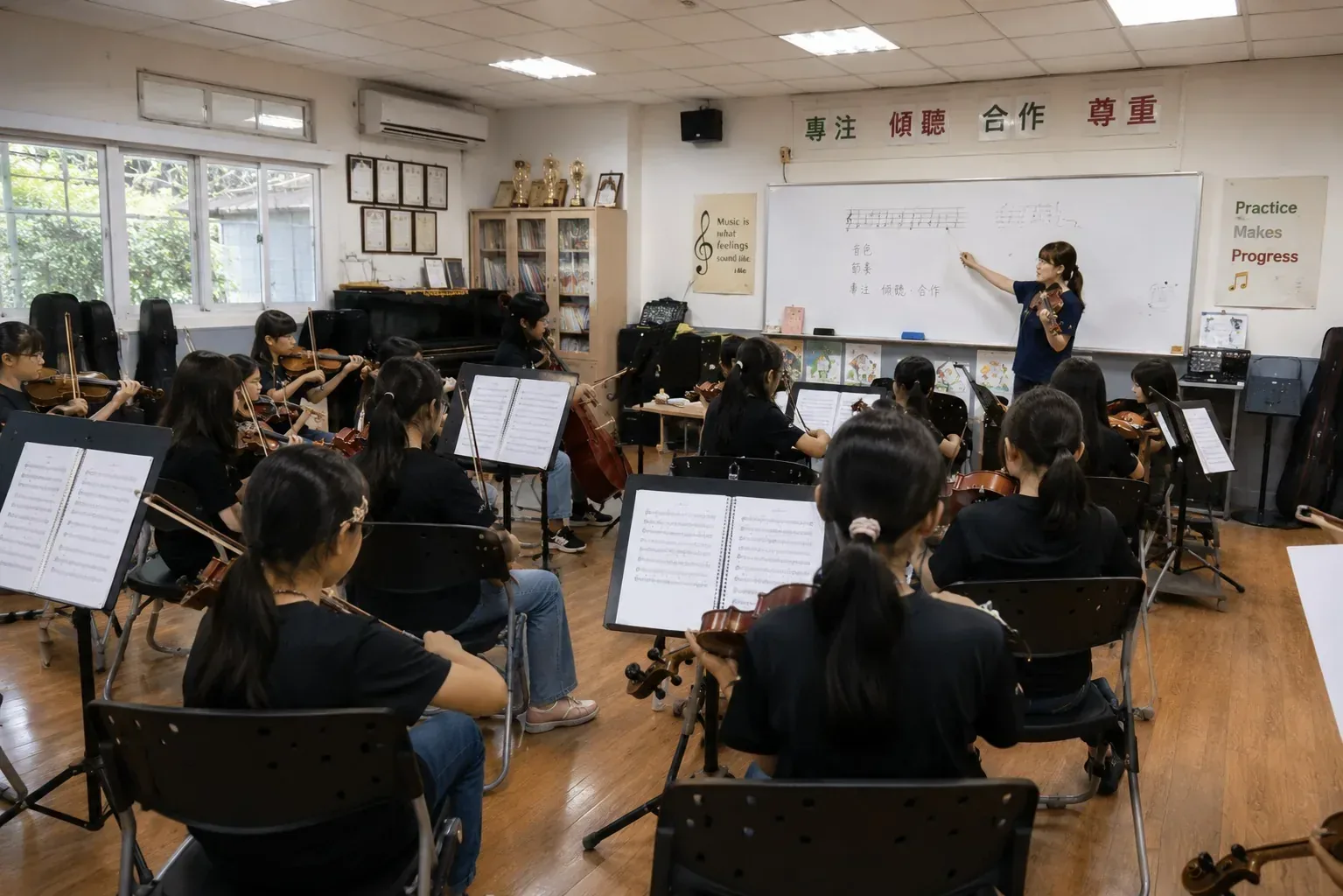
Starting from classroom understanding, daily practice, posture, tone, rhythm and sight-reading, giving children a stable foundation for joining the team.
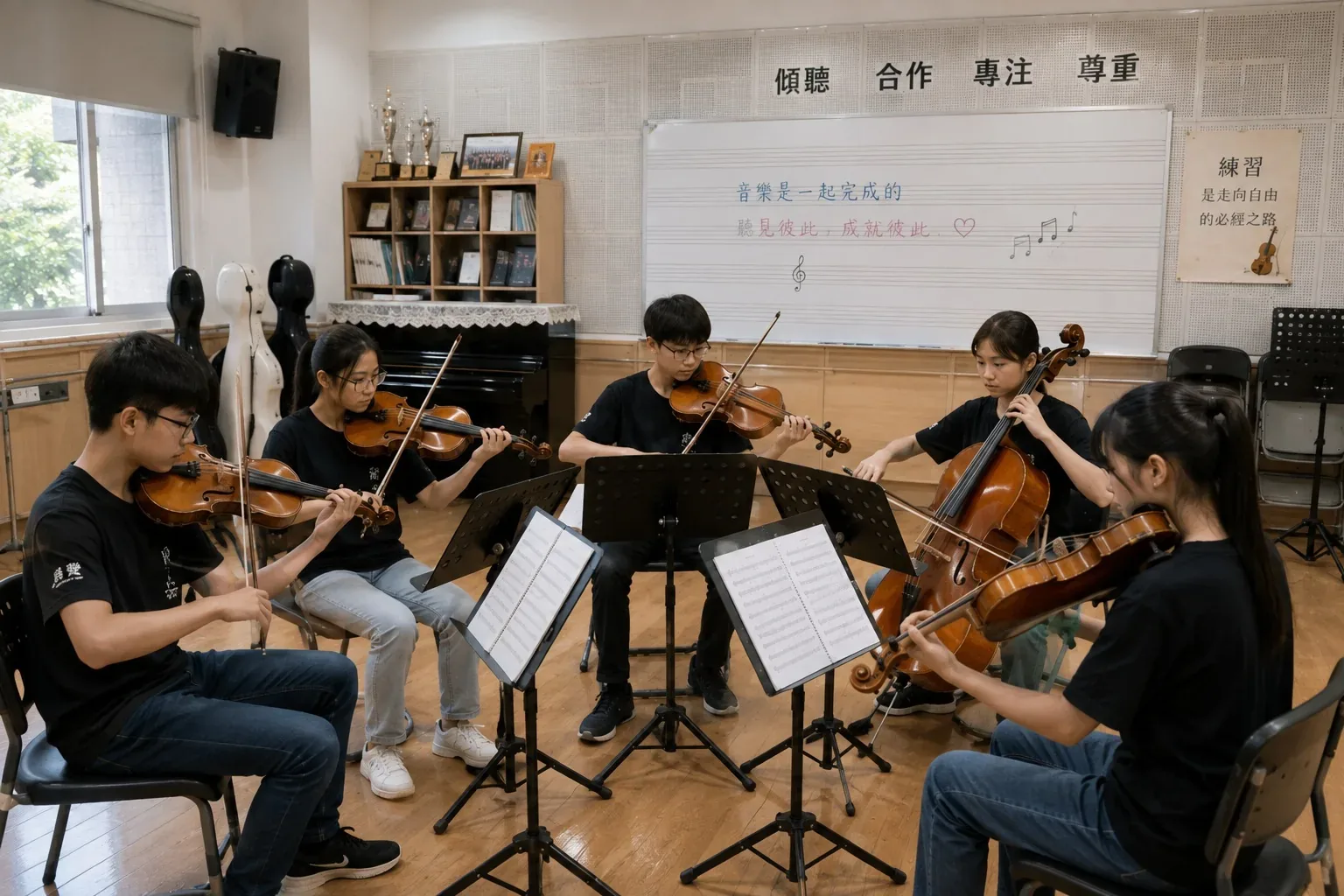
Smaller groupings let students hear each other more clearly, facing rhythm, breathing, intonation and responsibility more directly.
Understanding the work as a whole under the conductor's guidance, learning to follow, listen, adjust and complete it together.
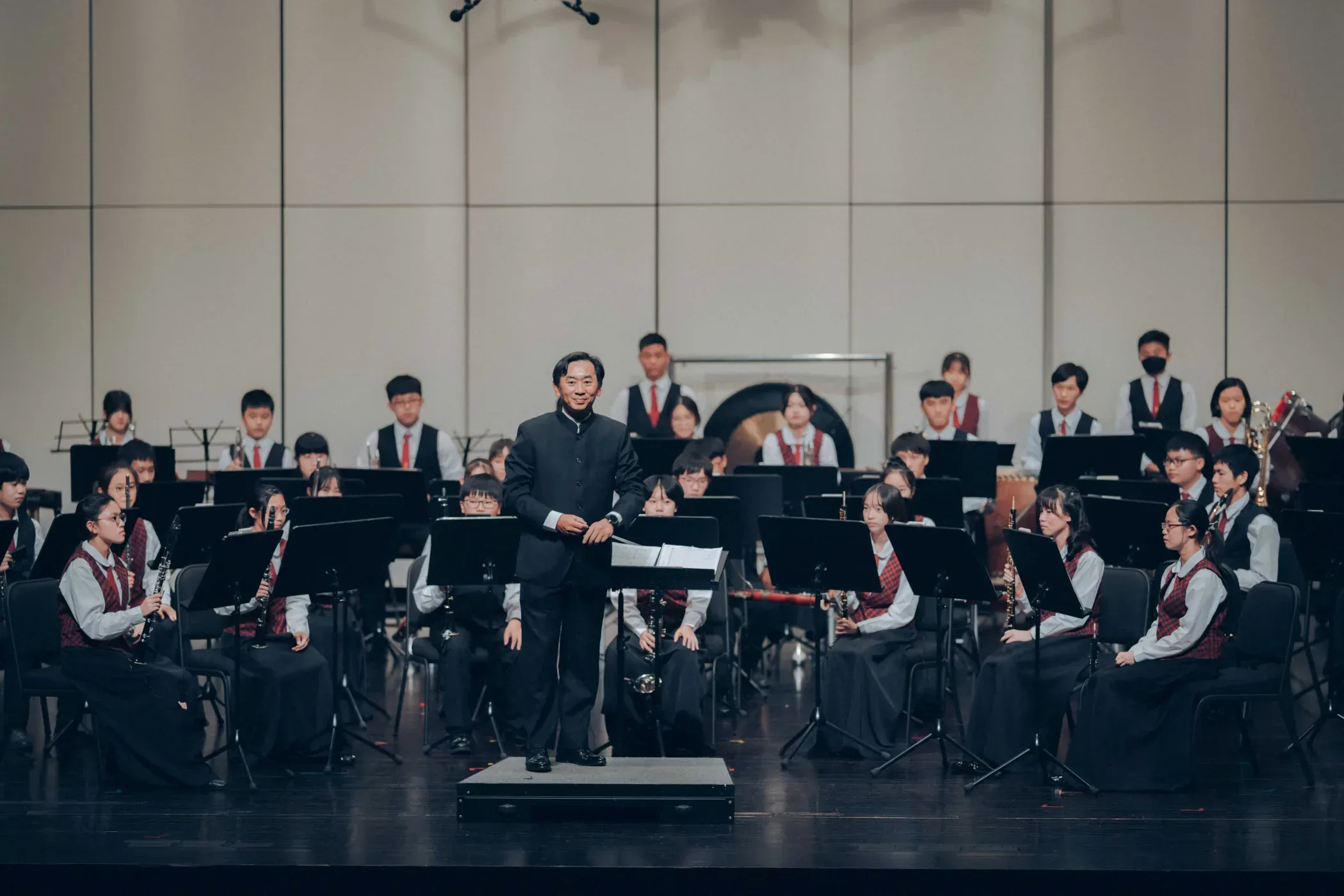
Through formal performances, inter-school exchanges and international events, students turn long-term effort into confidence and memories.
The results of orchestra training go beyond the stage. On a deeper level, students learn to take responsibility, teachers develop methods, schools build culture, and families witness their children grow steadily through long-term commitment.
Through sustained practice and shared achievements, students build the ability to face challenges, take responsibility, and believe in themselves.
Through curriculum design, sectional methods, conducting communication, and assessment, sustainable orchestra teaching capacity is formed.
The orchestra becomes a vital cultural asset for campus education, ceremonies, exchanges, and international collaboration.
From practice and rehearsals to performances, families witness their children's dedication and come to understand the value of long-term artistic learning.
The youth orchestra is the starting point of the music education program. As students, teachers, and schools build a solid foundation, this can extend to campus orchestra development, teacher training, masterclasses, talent cultivation, charitable education, and inter-school exchange.
Building beyond a single ensemble to establish school-wide structure, faculty, administration, curriculum, and sustainable operations.
TEACHERHelping instructors strengthen skills in rehearsal, ensemble training, conducting, curriculum design, and team management.
MASTERCLASSConductors and experts lead demonstration orchestras directly, deepening understanding of works and rehearsal methods.
EXCHANGEAllowing different schools and orchestras to learn from one another through joint rehearsals, shared concerts, and special courses.
Schools, educational institutions, youth orchestras, and partner organizations are welcome to consult our team on evaluations, curriculum planning, teacher training partnerships, rehearsal guidance, showcase concerts, and international exchange connections.